INTRODUCTION
I attended the Women in Sport and Exercise Science Academic Network (WiSEAN) Conference last June; it was a fantastic two days of research and information supporting the growth of girls’ and women’s sport and exercise. WiSEAN was founded in 2017 with the aim of bringing together leading academics and practitioners from a range of disciplines to grow, strengthen and promote research into women in sport and exercise, the ultimate goal being to optimise women’s athletic success and their participation.
For S&C, the current rise in women’s sport in the UK provides a very exciting development in which we can look for and create opportunities. One of the aims of this column is to help identify areas for opportunity, as well as to build and lead change for both female S&C coaches as well as girls and women in sport. It also serves as a learning platform to develop knowledge and understanding. After the conference, I was lucky enough to interview two of the speakers – Anyika Onuora and Professor Lauren Sherar – for this article. They provide interesting perspectives on some of the challenges faced from the point of view of sports performer and academic.
Representation matters: gender and race in sport
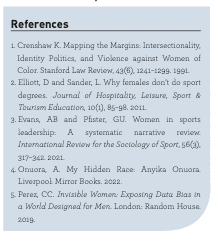
In the social sciences, the work of Kimberlé Crenshaw[1] was key in addressing the difference in our experiences of life – depending on the convergence of different parts of our socio-political make-up. She coined the term intersectionality to describe this. In her work, she emphasised that as a black woman, her experience of life was different to that of black men, as well as to that of white women, due to the convergence of being both a woman and black.
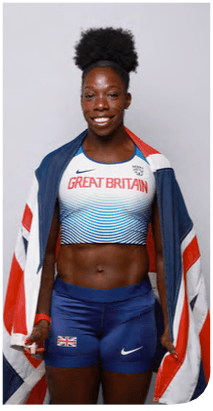
Anyika Onuora is a decorated British sprint track athlete, with medals from the European Championships, World Championships, Commonwealth Games and Olympics. During my interview with her, I was reminded that intersectionality is very relevant in the sporting context; however, as yet I haven’t heard it talked about very much in terms of how we may or may not disadvantage particular athletes through systems and practices (with or) without realising. Anyika’s story of her time in athletics was both inspiring and upsetting. It is upsetting that even as recently as this last decade, Anyika experienced unfairness in sport due to being both black and a woman.
Listening to Anyika’s experiences demonstrated to me the need to have such stories told so that we can all learn from them, in order that the same thing does not happen to future athletes and those that we work with. For if we don’t realise that something is an issue and is disadvantaging someone or a group of people, how can we know that something needs to change?
One of the aims of this column is to open our awareness to the wide-ranging experiences we have within sport and sports coaching. Interviewing Anyika was incredibly inspiring, despite the difficulties she faced both on and off the track, as she had the drive and vision to continue and pursue her dreams.
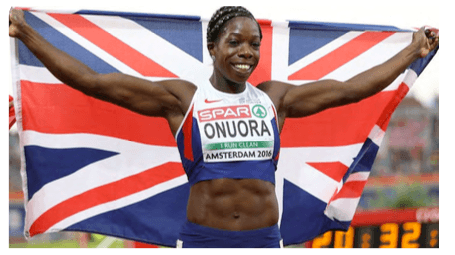
INTERVIEW WIETH ANYIKA ONUORA
‘What was it like to compete as a female athlete compared to your male teammates and fellow competitors?’
‘There were some good parts and there were some crappy parts. I would say that the biggest difference between males and females is financial. When I began competing in the sprint events, I realised that the men’s 100m is the main event in the eyes of event organisers, the ‘blue-ribbon’ event. When it came to me competing abroad or to the prize money, being female was always an issue. Sometimes you wouldn’t get paid the same based purely on the fact that you were a woman.
‘People assume that men and women in the same sport are treated equally, but when it comes down to finances it’s a completely different ball game. I remember one meet where I went to run the 100m and 200m. In the 100m, I ran a personal best, breaking the track record for the meet and winning the race. In the 200m, I broke the track record and also won my race. Back then they had time bonuses, so that if you won in a certain time, you would get an additional bonus on top of your prize money. I hit five bonuses between the two events but when I went to the room to collect my prize money, the meet director only decided to pay me for the 100m. He didn’t pay for the 200m and he didn’t pay my bonuses. I refused to leave the room until I was paid, but was told to take it up with my agent. More annoyingly, there was a guy there who competed in the 100m after me. He didn’t run that quickly at all and he didn’t get any track records or bonus points. But he was paid on top of what he was initially going to get for the 100m alone.
This is what I mean when I say there isn’t equality, even when you do the same sport or even the same event.’
‘Did you notice any differences as a black female athlete compared with white female athletes?’
‘Yes, I was definitely treated differently as a black woman in sport compared with white women. There’s a lot of conversations around desirability politics. Black women are often seen at the bottom end of the spectrum in terms of desirability. When it came to being a black woman in sport, I felt I had to present myself in a different way so as not to come across as a stereotypical black woman. You’re trying to be light and delicate, and that’s not me. I’ve always tried to just be myself and hope that people gravitate towards me regardless.
‘But when it comes to the treatment of black girls and white girls in sport, it’s different because white women are seen as more desirable by those in power and with the finances. I personally had an experience where I saw a white female athlete come into the sport and doing really well. She was a lovely, lovely girl, but very naive in the differences between us financially. She was world champion over several years, winning lots of medals, but she also gained lots of endorsements outside of track and field. Clothing endorsements, car endorsements, food endorsements. She also got to work with amazing charities and invited to some amazing events.
‘It was all about her marketability as a white sprinter in a sport dominated by black athletes, but black athletes just didn’t have the same opportunities. It was difficult for me to see, but it became the norm. People can say it’s not based on your race or your ability, but when you find out that white athletes are on more money than black athletes, running the same events with similar times and on a similar trajectory, the maths doesn’t work. Seeing that, and being a part of it, isn’t a nice experience.’
‘How important do you think it is to have more black representation within sport – from athletes to coaches to managers?’
It’s very important. I had a lot more male white coaches in my career, but I also got to work with some incredible black coaches, both male and female. But it was always a case where I felt, and you could see it, that they had to work ten times harder than the white coaches, even though they were performing as coaches just as well as the white ones. I think there needs to be more black coaches and staff in positions of power rather than always hiring white coaches, which sometimes drives organisations to hire from overseas rather than promote a black person. It took George Floyd and Breonna Taylor to be murdered in order for certain organisations to understand the severity of not having people in positions of power who are black. It felt like they were clutching at straws when these headlines hit, because half the team was black, but they didn’t have anyone of colour who looked like those athletes in managerial and leadership positions. So, don’t wait until black people get murdered in order to make noise and make change.
A couple of weeks ago I did a talk for an organisation and it was about diversity and inclusion and I asked them who’s in your team and they were all white women. I said: “ok, that’s not an issue but you’re asking me as a black woman to come in and speak about diversity: what are you doing in your own house to make change happen? Is it not better to clean up your own house before you tell others what they should do?” Not only were there no people of colour, but there was no one from the LGBTQ community and no one with a disability. So I said: “you can’t scream that we need to do X, Y and Z when the leading team is made up of white women alone. You’re not caring about LGBTQ people, you’re not caring about people who look different, you’re not caring about people who have a disability. It goes beyond we want you to come in and speak. There needs to be action.”
‘I knew I wanted to be part of the change. When I began writing my book,[4] I went on a course with the FA and it was called On the Board training. It involved a lot of ex-footballers from Premiership down to Conference league who had been trained and part of a board for the last year. They talked through what it was like to sit on a board, what types of discussions are had as the CEO, as a non-executive director, as a trustee, as a committee member. They talked through what it was like so that we could learn and then go into these positions. At the moment, we have the same people making the top decisions that may impact a lot of people, but they don’t really know what’s going on for the people they serve. So, change needs to happen. I was adamant that I wanted to be involved and I wanted to be that change. I am now currently a governor for one of the schools in Liverpool. I was also offered many board positions.
‘I feel like people like me deserve to have their voices heard and I am all about creating change. I love challenging people on their decision-making. Before I was pretty scared about it, whereas now I’m forced to, as a board member. Change needs to happen. It is happening, but it’s very slow. I do believe we will get there eventually, and it takes representation to make that happen.’
BREAKING DOWN THE NUANCE OF LANGUAGE AND THE IMPORTANCE OF MENTORS
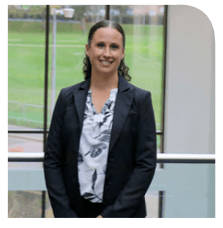
One of the closing keynote speakers at the conference was Professor Lauren Sherar, Associate Dean for Education and Student Experience in the School of Sport, Exercise and Health Sciences at Loughborough University. I am always in awe of women who have succeeded in leadership roles, since historically such positions have been dominated by men. In their review, Evans & Pfister[3] emphasise that there is still under- representation of women in leadership positions within sport globally and that male nuanced language, structures and polices impact this. Having female perspectives in leadership positions is the key to ensuring that organisational structures and policies can begin to speak to and make allowance for the female experience. The book Invisible Women, by Caroline Criado-Perez, is a real eye opener to the differences between male and female nuances in sport, and why it is important to have both perspectives in organisational management and strategy roles, in order to elevate and support women. I believe that in S&C this also extends to elevating and supporting the female athletes with whom we work, whether we are male or female ourselves as coaches. This can also be extended to include the voices and experiences of all under-represented groups and gender identities.
Lauren spoke about a subject close to my heart. When I was asked last year at the UKSCA Conference why they aren’t more female S&C coaches, part of my answer was that the profession itself is steeped in maleness by its very title. During my undergraduate degree, I studied language and the unconscious meanings given to particular words in our cultural contexts. For example, the word ‘strength’ is a fairly innocuous word in and of itself. However, within Western culture, in particular, it has been gendered and aligned with being a masculine trait. This is I believe one of the difficulties that S&C faces as a profession and I think it is our job as S&C coaches to help break down this masculine stereotype of the word and of strength training to help make it more accessible for women. In the local commercial gym on a busy weekday evening, I counted around 15-20 men in the free weights area while resting between my sets, compared to only one other female in that area. The whole time I was there, only three other females entered that space.
I know from coaching strength training to women that the free-weights area – and the masculinity associated with it – can create a very intimidating space for them to access. And this is not to mention LGBTQ identities who are also underrepresented and often disadvantaged, in part due to masculine culture. I also believe the title ‘strength and conditioning’ limits the understanding of what it is we do as S&C coaches. I personally prefer to think of myself as a movement specialist since I am involved in far more than simply developing attributes of strength in the athletes I coach. It is therefore important for us all to break down what it is we do and to ensure that thoughts of our profession are not forever impacted by masculine gendered cultural nuance. Lauren raised a similar question regarding the language of sports courses at university and questioned whether this affected girls’ and women’s choice of application for higher education in sports sciences.
AN INTERVIEW WITH PROFESSOR LAUREN SHERAR
‘What made you begin to question language and access to sports courses?’
‘The paper that I referenced in my presentation at the conference, ‘Why females don’t do sport degrees’,2 discussed the fact that the predominance of the word ‘sport’ in degree titles may put females off applying, as sport is so often considered a male-dominated arena. However, it is not an easy solution to change the name of a course/degree. For example, replacing the word ‘sport’ with ‘movement’ in a title could, at least in the short term, have less relevance to potential students especially at a university like Loughborough University which is so well-known for sport. Having said that, North America has opted for the term ‘kinesiology’, which is derived from the Greek word ‘kinesis’ for movement: this is the study of the mechanics of bodily movements, instead of sport (and exercise) science. Kinesiology is a more holistic term, which I believe in North America resonates with the majority, and perhaps more with females.
‘How did this paper come to your attention?’
Although we have seen a promising rise in females undertaking sport undergraduate and post-graduate degrees within the UK, there are still some disciplines such as sport management and strength and conditioning programmes that are dominated by males. I wanted to understand a little more about how the titles of programmes may influence the gender balance of the students, which led me to read this paper as well as many others on the subject. My interest partly stemmed from studying (an MSc and PhD) in Canada, where the term ‘sport (and exercise) science’ has been replaced with the term kinesiology. I always liked this title because I came from a physical activity and health background and so to me kinesiology was a more inclusive term.
‘I think it also comes back to the first keynote speech of the day where Anyika Onuora and Hannah Cockroft talked about there being very few females across the board in leadership positions in sport. I’m interested in this because graduate destinations from sport degrees are diverse, and many will be well placed to enter into sporting organisations via graduate routes. If we want to improve the representation of women in leaderships positions in sport, we need to change the culture within these organisations, but also ensure there is a pipeline of strong, talented women entering into higher education and choosing sport courses/degrees. To do this, we need to consider how we market our courses including considering the titles of degrees and how we describe the content (courses, modules, units etc.). Understanding how certain language resonates and is understood with females should be a routine and crucial part of the market research. We also need to ensure the full scope of potential careers is highlighted throughout our marketing and considered within programme design. Finally, including female lecturers, as well as research and evidence from female researchers and female industry experts, as part of the university experience is essential in order to make sure that degrees are inclusive and inspiring for female students.
‘What do you think we as practitioners within the sports science world can do to help address this issue?’
‘I think there needs to be much more authentic collaboration between sporting organisations and universities – from course/ programme design and marketing to open, critical debates about topical issues such as the impact of gendered language and gender imbalance. At postgraduate level we know that students want to see a clear route to a job/career. If there isn’t formal accreditation, the best way to do this is to align with industry. For example, universities offer performance analysis programmes/courses because this is the industry accepted term. Any new terms adopted would need to be agreed in collaboration with a wide range of stakeholders. Collaboration and dialogue are also needed between higher education establishments and industry in order to help create a workforce with the necessary skills and competencies; they are also crucial in addressing issues such as a lack of diversity in the workplace. In an ideal situation, industry would be involved from the onset – for example, helping shape what degrees are offered by universities as they understand best the market demand. It is essential to have female perspectives on both sides during these conversations.
I also think it’s more than just the male/ female issue. As I mentioned in my presentation, we need to ensure our degrees and careers are attracting diverse students across gender identities. For me it starts at the university, but this can’t be done without collaboration with organisations and the wider sector. Our diverse graduates need to feel that they are all welcomed into the workplace.
‘What advice would you give to any aspiring female coaches and S&C academics who want to work within leadership and strategic roles in their future careers?’
‘Many females in leadership positions like me likely did not enter their career with this aspiration. I feel strongly that for females to be represented in positions of leadership, we need to start to ensure that all females know and genuinely believe that any role is open to them. Thus, my advice is to seek out positive mentors, more than one – you can never have enough! Good mentors that believe in the importance of females in leadership are essential to help support and hone leadership skills and also to help navigate career routes. I strongly feel that as a society we need to recognise varied effective leadership types and traits that females might be more likely to possess, rather than just favouring males, or females that emulate male leadership traits. If you do not see yourself reflected in other leaders within your workplace that may not be a bad thing. You may be the leader that the future of your organisation needs!
‘Finally, policies that support women to progress a career alongside other roles – such as raising a family and/or caregiving – are essential. I had three children during my Doctoral studies and if it was not for the support of many colleagues, family, and friends I would not have had the career I have had today. Seek out and celebrate organisations that support women and where organisations do not, do your part to change the culture for yourself and other women following behind you.
‘My advice would be to keep every door open and do not let others (or your younger self) define who you are and what you can do. Early on in my career I was quiet, an introvert, terrified of public speaking. I was surrounded by peers (mostly males) that seemed to me to be confident and “natural academics”. However, I took my career one step at a time and was strongly encouraged by amazing mentors who saw traits, skills and competencies in me that I did not always see. I was open to every opportunity and was continually surprised in what I could do and what I enjoyed.’
ACKNOWLEDGEMENT
Thank you to the WiSEAN executive board - Dr Jacky Forsyth, Dr Claire-Marie Roberts, Dr Rachael Bullingham and Dr Nicola Brown - for the conference. And a huge thank you to Anyika and Lauren for allowing me these interviews: I really enjoyed the depth and breadth of the conversations with you both.
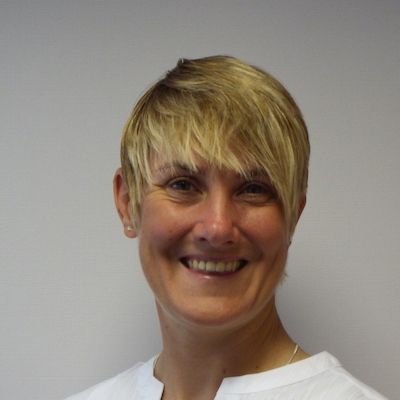
Val’s work predominantly supports teaching on the MSc in S&C at Loughborough University, while studying for a PhD on the under-representation of Women in S&C Coaching. She has a wealth of diverse experience with over 20 years of experience in fitness and sports coaching, experience in elite sport as an exercise physiologist, and experience within the social sciences. Her private coaching focuses on athletes, putting their health at the core. Youth and community work, as well as life coaching, combine her interests in the body and the mind for improving health and performance for everybody.