The aim of the present study was to compare the acute effects of a maximal swing speed potentiation protocol using a speed sticks product vs. a driver, in high-level NCAA Division 1 male (n = 6; age = 19.7 ± 1.5 years; height = 186.8 ± 7.8 cm; body mass = 93.1 ± 25.8 kg) and female (n = 8; age = 20.7 ± 2.2 years; height = 168.2 ± 2.7 cm; body mass = 69.8 ± 11.3 kg) golfers. Each golfer performed baseline golf shot data using their own driver, where clubhead speed (CHS), ball speed and carry distance were recorded using a Trackman 4 launch monitor. For testing session one, a 3 x 3 maximal effort swing protocol (without hitting a ball) was employed using the Stack System product, with subsequent shot data recorded at 0, 4, 8 and 12 mins. For testing session two, the same protocol was repeated, but each player used their own driver to undertake the 3 x 3 potentiation protocol, without hitting a ball. The mass of the Stack System and each player’s driver were equated. Given the volume of data points, comparisons were made back to baseline, with trivial to small non-significant changes evident for either protocol, in any metric (males: g = -0.40 to 0.41; p > 0.05; females: g = 0.01 to 0.23; p > 0.05). Individual data analysis was also conducted comparing the change in golf shot data to the baseline measurement error, enabling an understanding of ‘true’ changes at the individual level. In male players, true changes were evident for CHS (Stack System: n = 11; driver: n = 18), ball speed (Stack System: n = 4; driver: n = 12) and carry distance (Stack System: n = 8; driver: n = 10). In female players, true changes were evident for CHS (Stack System: n = 8; driver: n = 16), ball speed (Stack System: n = 9; driver: n = 14) and carry distance (Stack System: n = 4; driver: n = 5). Despite the lack of meaningful group differences, individual differences were evident more frequently after the driver protocol. Although one aim of using speed sticks in golf is to manipulate the load to gain either an overload (when heavier) or overspeed (when lighter) effect; when mass is equated, some individual golfers who use their own driver may be able to elicit greater acute responses to maximal swing speed training.
Physical performance science in golf has advanced rapidly in recent years, with a number of empirical investigations outlining the relevance of different physical attributes on golf shot data, such as clubhead speed (CHS), ball speed and carry distance.12, 23, 24, 28 Collectively, this body of evidence shows that whilst measures of strength in both the lower and upper body exhibit weak to moderate associations with CHS, explosive strength measures (e.g., jumping and medicine ball throws) often display stronger relationships.18, 20, 29 Although somewhat anecdotal, this is likely down to the fact that this type of training better reflects the movement characteristics (i.e., velocity of movement) of the golf swing. Consequently, these data have provided a better understanding regarding testing and training for golfers, especially at the elite amateur level (where most of these studies have been conducted). In turn, this has led to some recent narrative reviews and opinion pieces highlighting the importance of explosive and ballistic force production for golfers.3, 10 Additionally, improvements in physical capacity will likely help a golfer improve their over-arching resilience and robustness, which in turn, will help them withstand greater volumes of practice and competition and may ultimately, enhance sustainability and overall health.6, 22
Despite the usefulness of this information, golf remains a highly technical sport, with a high degree of skill and precision required to perform well. Some aspects of the game are largely unaffected by physical capacity (e.g., chipping and putting), whereas other aspects such as driving, using woods and long irons, are where superior physical attributes can play an important role.8 This is because golfers apply greater levels of force with these clubs,11 where the aim is to maximise distance, especially off the tee on Par 4 and Par 5 holes.7 With this in mind, it is common practice in golf for professional and elite amateur players to practice ‘speed training’.13 Put simply, this is where players practice swinging either a club or a shaft with the ability to change attachments at the bottom, as fast as they can, in an attempt to provide some coordinative overload (if using heavier than their driver) or overspeed (if using lighter than their driver), for enhanced CHS. Increases in CHS have been shown to improve driving distance off the tee, which in turn, has a positive effect on strokes gained – a measure of performance which aims to determine how close a given shot brings a player to ‘holing out’, relative to the competitors in the field.9 However, and to the best of our knowledge, it is surprising to note that minimal empirical studies have been conducted investigating the efficacy of this common practice in golf.
Hebert-Losier and Wardell,17 investigated the effects of two different warm-up protocols: one where golfers utilised their own driver and the second which utilised a speed stick product, examining the difference between conditions on CHS, ball speed and smash factor (a ratio constructed by dividing ball speed by CHS). This comparison was repeated over five sets, each separated by a total duration of 7 mins 30 seconds (which included 6-mins of active walking). Results showed the speed stick protocol resulted in trivial to small changes, yet significant increases in CHS in all five sets (d = 0.16-0.26, p < 0.05), with only set four exhibiting trivial yet significantly greater ball speed (d = 0.11, p < 0.05) and set one exhibiting significantly lower and large reductions in smash factor (d = -0.82, p < 0.05). Whilst CHS showed improvement in every set, the lack of comparable findings for ball speed would indicate that players were unable to consistently find the centre of the clubface with this increase in CHS. In a similar study design, Bliss et al.5 compared the effects of a control condition (using a driver) vs. a bodyweight warm-up vs. a speed sticks warm-up on CHS, ball speed, carry and total distance. Both interventions elicited significant small increases in CHS (bodyweight warm-up: d = 0.28, p < 0.05; speed sticks: d = 0.28, p < 0.05) and carry distance (bodyweight warm-up: d = 0.37, p < 0.05; speed sticks: d = 0.41, p < 0.05), compared to the control condition. Collectively, these two studies show some supporting evidence for the use of a speed sticks product to provide acute enhancements in some golf shot metrics.
In light of this evidence, numerous players, coaches and practitioners trust this method and as consequence, different speed stick products are now available to use, such as: SuperSpeed, Relentless Golf and The Stack System, to name a few. For many of these products, different attachments are available at the bottom of the shaft, enabling different loads to be used when practicing swinging a club or shaft fast. Importantly though, when comparisons were being made in these aforementioned studies,5, 17 the mass of the speed sticks were not equated to that of the driver condition. The relevance here being that if different mass is used during such comparisons, we would expect different swing speeds between conditions and consequently, different effects. Furthermore, Hebert-Losier and Wardell,17 reported notable differences between the mass of the speed sticks that are reported by the manufacturers and what they measured themselves, indicating that practitioners may wish to undertake some additional testing themselves, to quantify the mass of any speed stick product being used – especially given their use commonly relates to adjusting the mass for an overload or overspeed effect. Thus, an empirical investigation that equates the mass of a golfer’s own driver and a speed sticks product is warranted to provide a direct comparison of these two methods, noting that such an investigation has not yet been conducted and thus, was the primary aim of the present study. Given the distinct lack of directly comparable investigations conducted to date, a true hypothesis was challenging to formulate. However, given the nature of this investigation aiming to elicit improvements in golf shot data which have been previously shown to be sensitive to both acute and chronic changes from somewhat similar methods, it was hypothesised that small improvements in golf shot data would be achievable from both acute interventions.
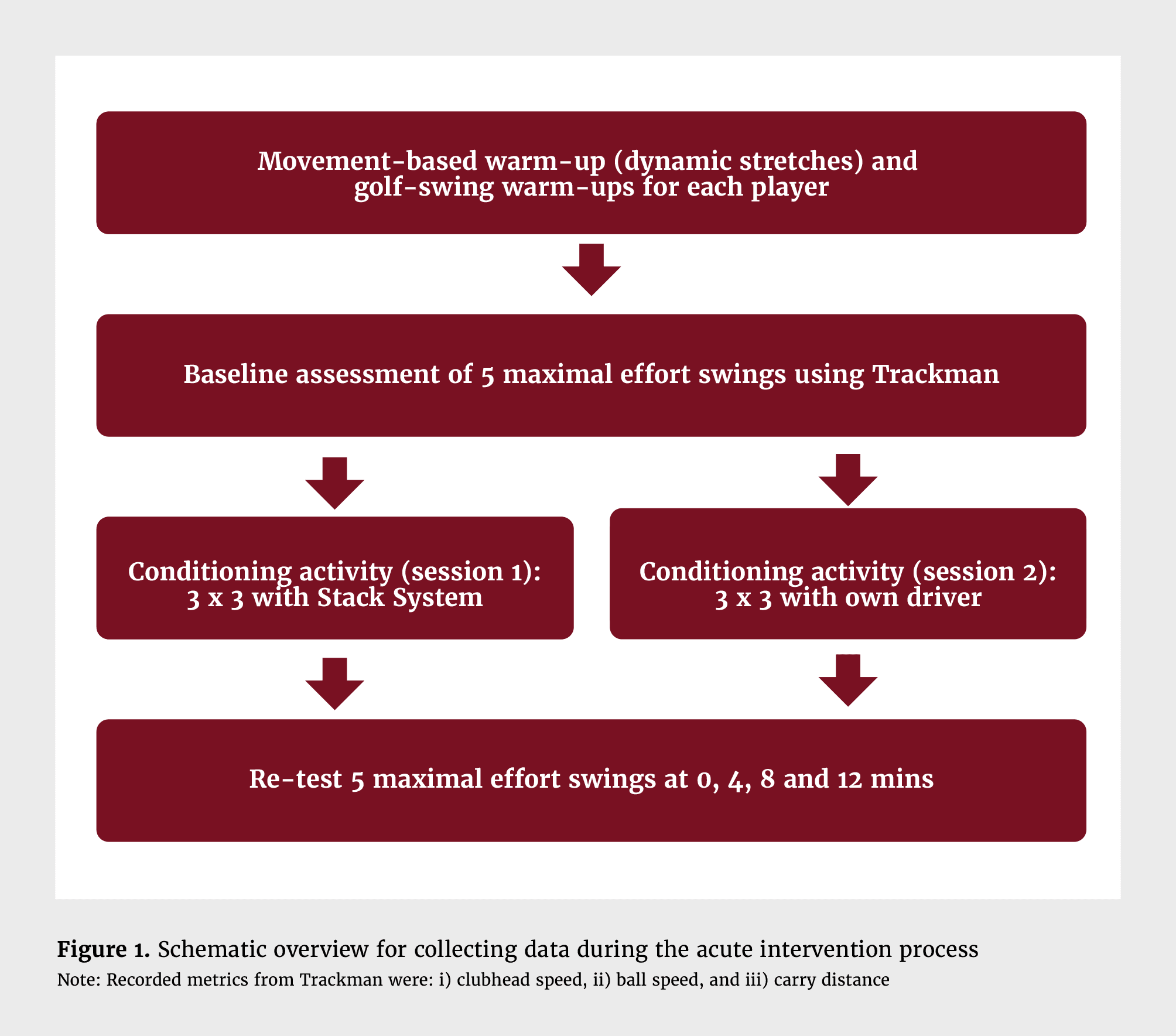
A repeated measures design in male and female collegiate golfers, at an NCAA Division 1 golf programme was used to compare the acute effects of a swing speed product vs. each golfer’s own driver, on measures of golf shot data. Given the comparison being made between the Stack System and each golfer’s own driver, testing days were identical with the exception of the equipment used. A schematic of the experimental design is provided in Figure 1. The 3 x 3 protocol was selected based from previous potentiation-related studies in both the upper19 and lower body,14 which have employed three repetitions per set, for high-intensity conditioning activities. In addition, owing to the variable load that can be applied to the Stack System, each golfer’s driver was weighed using a ‘Golfsmith Precision Club-making Equipment’ scale (Golfsmith, Austin, Texas) and the load matched in the Stack System, with the largest difference being 5.0 grams in 5 of the 14 golfers (males: mean mass for driver = 332.5 ± 16.1 grams; mean mass for the Stack System = 335.0 ± 15.8 grams; females: mean mass for driver = 311.4 ± 5.6 grams; mean mass for the Stack System = 312.5 ± 6.1 grams). Shaft length and stiffness were also recorded for each golfer’s driver (males: mean length of driver = 44.55 inches with all drivers being ‘stiff’ or ‘extra stiff’; females: mean length of driver = 44.25 inches with all drivers being ‘regular plus’). Upon liaising with the support services for the Stack System, the author team were informed that stiffness is not measured. However, once load was added to the stack shaft, the recorded length was 42 inches.
A convenience sample of six male (age = 19.7 ± 1.5 years; height = 186.8 ± 7.8 cm; body mass = 93.1 ± 25.8 kg) and eight female (age = 20.7 ± 2.2 years; height = 168.2 ± 2.7 cm; body mass = 69.8 ± 11.3 kg) NCAA Division 1 golfers volunteered to participate in this study. All golfers had a handicap of scratch (zero) or better, a minimum of six years’ competitive golf experience, and 18-months experience of structured strength and conditioning training, as part of the collegiate golf programme. All participants provided written informed consent to take part in the present investigation and ethical approval was granted by the ethical review board at Oklahoma State University.
Initially, golfers performed any preferred static stretches that they desired in line with what had been prescribed by their strength and conditioning coach, as part of this collegiate golf program. Following this, all players participated in the same warm-up protocol, which consisted of a range of dynamic flexibility exercises such as forward and lateral lunges, forward and lateral hip swings, lunge to elbow to instep rotation and standing thoracic spine rotations (with a golf club). Once completed, all players undertook their own preferred golf swing warm-up routine, which has been suggested to be appropriate given the subjective nature of golfers needing to ‘feel’ as though they are ready,4 which lasted approximately 10-15 minutes per player.
Data collection protocols took place on two separate days with 72-hours rest between test sessions. The first and second day of data collection were almost identical with the only difference being the equipment used in the swing speed intervention and the weather conditions. For testing session one, weather conditions were 75° Fahrenheit, 20% humidity and 17 mph cross winds. For testing session two, weather conditions were 66° Fahrenheit, 45% humidity and 20 mph cross winds. Post warm-up, baseline data collection consisted of all players hitting five shots with their own drivers, swinging at maximal speed. A Trackman 4 launch monitor was used to collect data for: i) CHS, ii) ball speed, and iii) carry distance. In line with the manufacturer’s guidelines, the Trackman was set to ‘normalise’, positioned 2.5 m behind each player on an outdoor driving range and set to ‘outdoor mode’ prior to data collection. Following the collection of baseline data, the players immediately undertook the intervention. The intervention consisted of 3 sets of 3 swings (not hitting a ball) at absolute maximum speed using the Stack System during testing session one and their own driver during testing session two. Owing to constraints around the University golf training regimen, a randomised order was not possible. Specifically, all players were instructed to swing the speed stick or driver as fast as they possibly could. During the intervention, a 3-minute rest was provided between sets. Following the intervention, the Trackman 4 launch monitor was used to collect data for the same metrics at 0 mins (immediately post), 4 mins, 8 mins, and 12 mins.
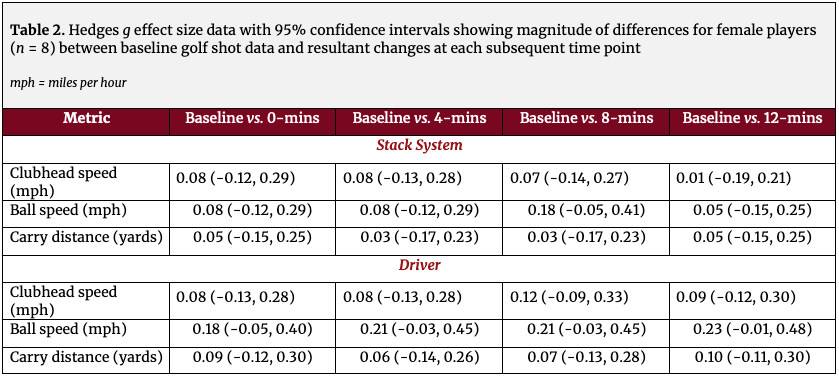
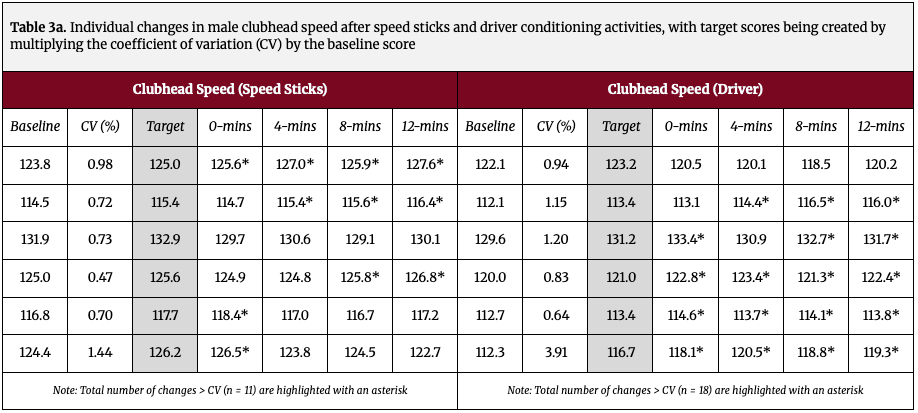
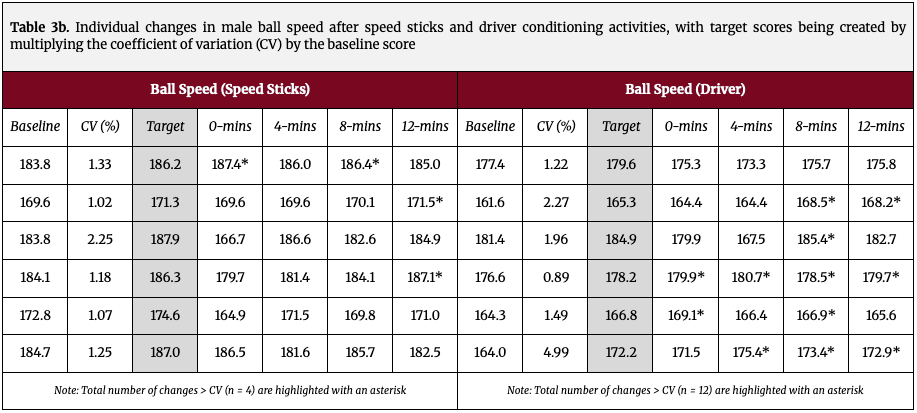
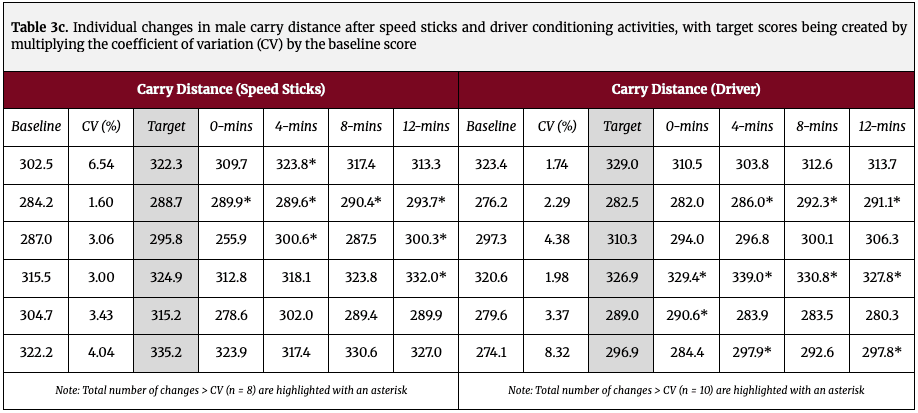
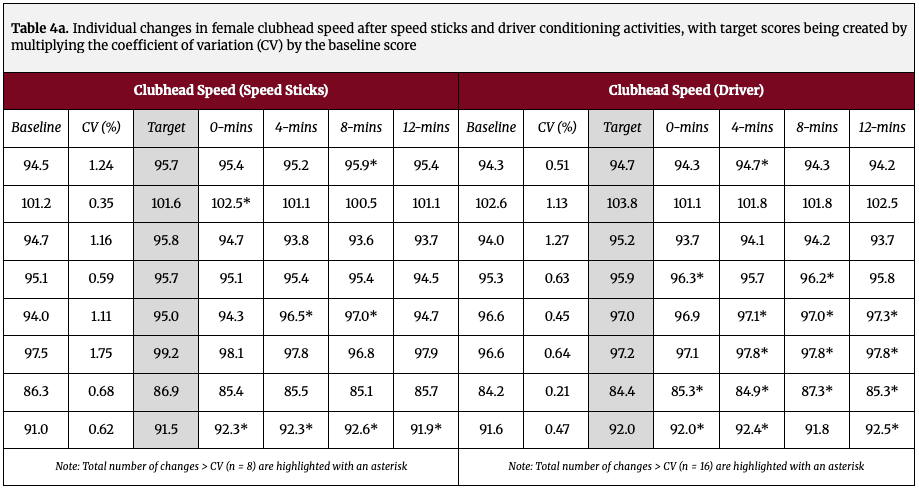
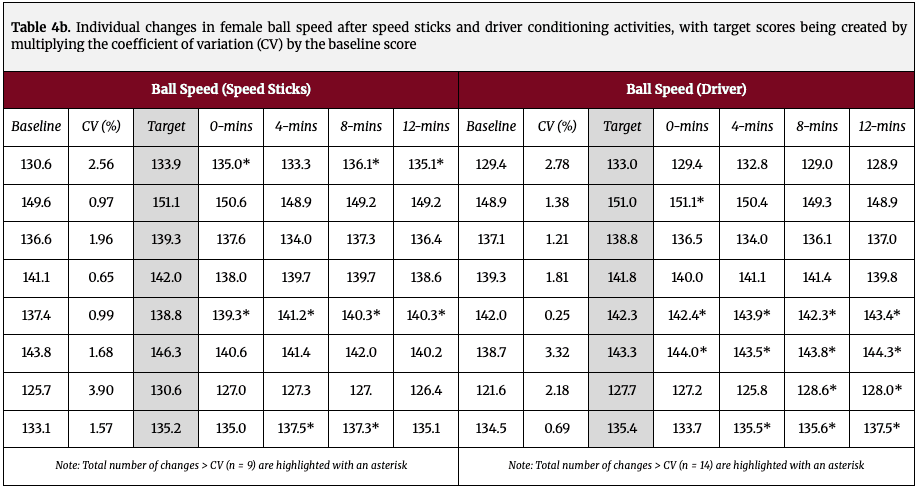
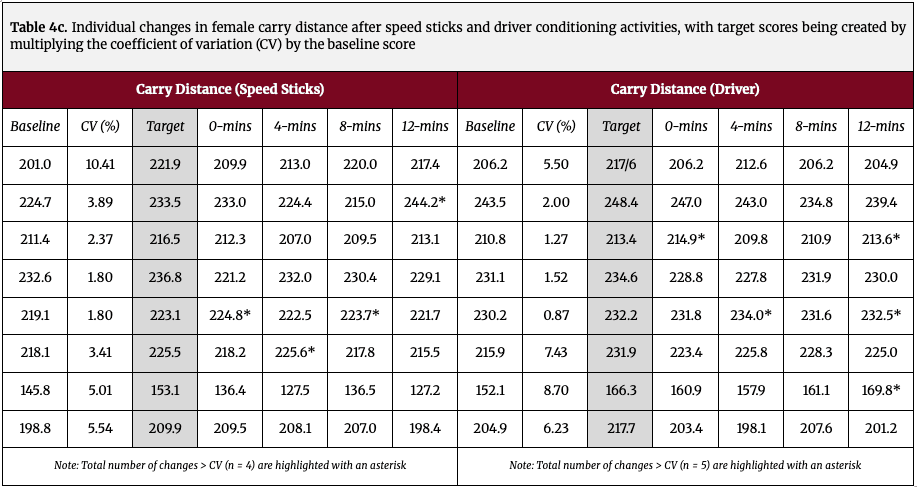
All data were initially presented as means and standard deviations (SD) in Microsoft Excel. Normality of the data was assessed and confirmed using the Shapiro-Wilk test (p > 0.05). Reliability of data was assessed using the coefficient of variation (CV) for each golf measure, calculated as: (SD/mean)*100. Interpretation of CV values was in line with suggestions by Banyard et al.1 where: < 5% = good, 5-10% = moderate and > 10% = poor. Noting that the CV can be calculated for each individual player, this value was also used to set individual target scores for each subsequent time point, and has been utilised in recent empirical investigations undertaking individual data analysis.16, 21, 26 Finally, to assess main effects, a 2 x 5 repeated measures ANOVA was used to determine the interaction effect between the Stack System and the driver over each time point, for both males and females, with statistical significance set at p < 0.05. Post-hoc analysis employed a Bonferroni test, which was required to account for multiple comparisons and reduce the type I error. To complement our null-hypothesis statistical testing, practical differences were also computed using Hedges g effect sizes with 95% confidence intervals (CI) and were interpreted in line with the following scale of interpretation: < 0.2 = trivial, 0.2-0.49 = small, 0.5-0.79 = moderate, and ≥ 0.8 = large, which is synonymous with two recent meta-analyses published in golf.8, 23 Finally, assessing changes in shot data for each individual player were also conducted. This was done by first calculating the CV for each metric, converting it into a decimal (achieved by dividing by 100), and then multiplying it by the baseline test score. This created a target value for each player which was greater than the measurement error of that metric, enabling an interpretation of changes being inside or outside the error of the test. Any changes which were greater than the target score were deemed ‘real’, as per previous suggestions for individual data analysis.16, 21, 26
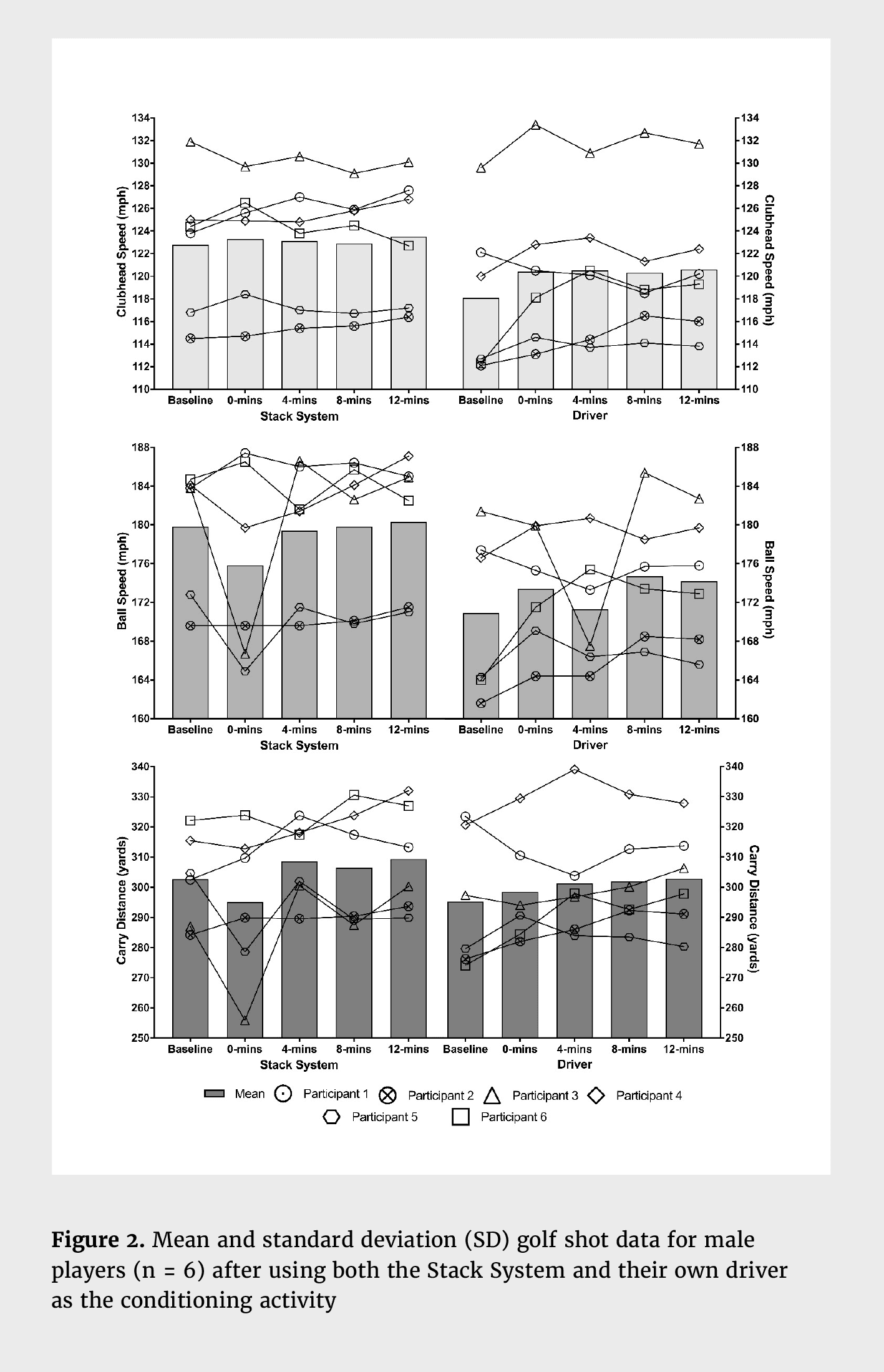
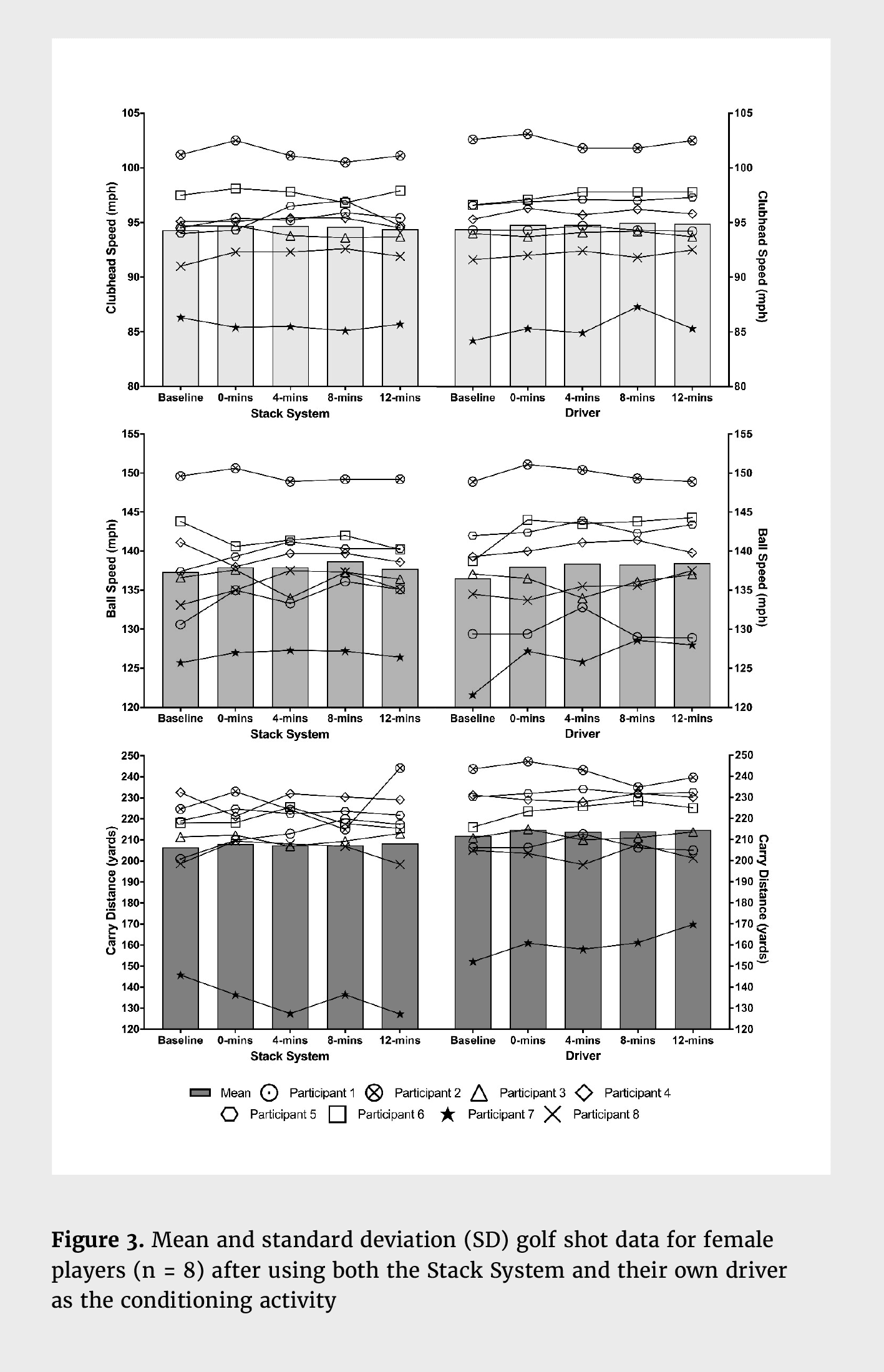
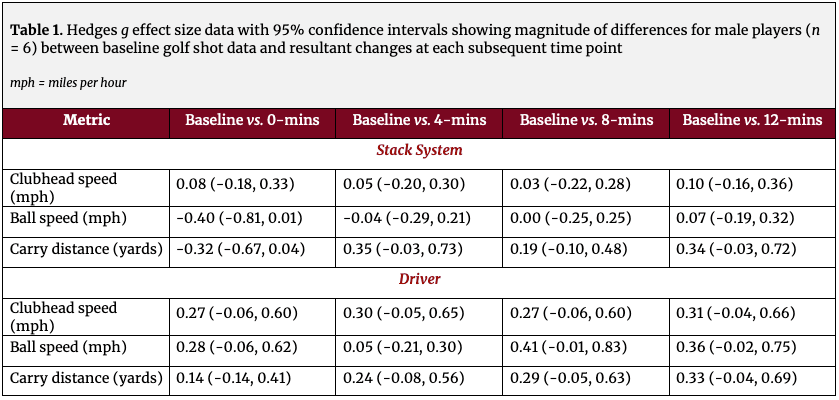
Figure 2 shows mean and SD data for each metric at the different time points for male players, with no significant differences in scores for either condition, when compared back to baseline. Practical differences are presented in Table 1 and showed differences ranged from trivial to small. Figure 3 and Table 2 show comparable information for female players, also exhibiting no significant differences compared to baseline, which was reflected by all effect sizes exhibiting only trivial to small differences.
Tables 3a, 3b and 3c exhibit individual changes for each metric, under both conditions for male players. Out of a possible 24 individual test scores for each metric and each condition, real changes were shown for CHS (Stack System, n = 11; driver, n = 18), ball speed (Stack System, n = 4; driver, n = 12) and carry distance (Stack System, n = 8; driver, n = 10). Tables 4a, 4b and 4c show comparable information for female players. Real changes were shown for CHS (Stack System, n = 8; driver, n = 16), ball speed (Stack System, n = 9; driver, n = 14) and carry distance (Stack System, n = 4; driver, n = 5).
The aim of the present study was to compare the efficacy of golfers using the Stack System vs. their own driver to acutely enhance golf shot performance, in both male and female players. When compared to baseline, neither the Stack System or the driver condition exhibited significant group changes in golf shot data for male or female players. In contrast, when individual changes were examined, using the driver as the conditioning activity exhibited a greater number of true changes than the Stack System, in both male and female players, for all metrics. Whilst the efficacy of swing speed training for golfers is not being disputed, acute improvements seem to be available by simply swinging a driver as fast as possible, when load is equated to the Stack System.
When examining mean golf shot data, male players exhibited trivial to small differences, whilst female players only trivial changes. With no significant group differences evident when compared back to baseline, it becomes challenging to generalise about the usefulness of either potentiation protocol, which disagrees with previous similar investigations.5, 17 However, such differences may be a product of the small sample sizes in each group. That said, a closer inspection of the mean differences for male players (Table 1) shows that despite CHS exhibiting virtually no change at 0 mins (g = 0.08), ball speed showed a small, immediate reduction (g = -0.40) after using the Stack System. Thus, it seems plausible to suggest that even with the slightest increase in CHS, these male golfers were unable to translate this to hitting subsequent shots in the centre of the clubface.2, 25 Interestingly as well, mean data then improved at 4 mins and remained relatively consistent after that, at each remaining time point. This shows that when golfers focus on swing speed training with a product that has a different feel and likely, differing levels of inertia, there may be an immediate drop in strike quality, which subsequently ‘bounces back’ as they become re-acclimated to swinging a driver again. Regardless, with golf being an individual sport, establishing meaningful change at the individual level: a) enables a deeper understanding of which players may have responded to the protocols of this investigation and b) represents an ecologically valid means of data analysis, given golf is an individual sport – something which has been suggested in recent golfing literature.3, 4, 7
When examining individual changes (Tables 3a-c for male players; Tables 4a-c for female players), it is evident that acute improvements in CHS, ball speed and carry distance are greater when players practice swinging as fast as they can with their own driver. It should be noted that this claim can only be made when load between the Stack System and driver are equated – noting that the load of the former can be manipulated to be lighter or heavier than was used in the present investigation. Although somewhat anecdotal, it is plausible that this could be explained by two possible reasons. Firstly, golfers may simply prefer the ‘feel’ of swinging their own driver, because this is what they are used to using and has likely been custom fit to suit their swing and resultant ball flight.15 In the present study, this preference may have enabled them to maximize any small improvements, especially in CHS, which is likely underpinned a little more by physical attributes than ball speed and carry distance.8 Second, it seems plausible that the Stack System could have elicited different shaft stiffness characteristics. This is something we did not measure and is out of the scope of the current investigation, but does seem like a viable explanation, given prior research has shown that when golf club moments of inertia change, it does have an effect on CHS and ball velocity.27 Consequently, this could have resulted in small variations in subsequent shot data, when players were using their own driver again during post-intervention data collection. Regardless of these speculative reasons, it does bring into question the value of an alternative swing speed product, over a golfer simply using their own driver for acute enhancements, unless the mass of the speed stick is manipulated to try and achieve a specific adaptation.
There are a few limitations that should be acknowledged in the present investigation. Firstly, whilst equating load was the primary aim in this experiment, many players may choose to modify the load of a speed stick product to try and achieve a specific desired effect. With that in mind, for those who are incorporating swing speed training into their routines, perhaps swinging with their own driver to begin with is all that is needed. In addition, although the aim was to equate load and volume in the present investigation, this may have been a reason why no significant findings were evident. However, if golfers are seeking overspeed or overload adaptations, then a lighter or heavier speed stick product may be a good option. Second, the present study was an acute study design. Where possible, future research should look to compare the chronic effects of these two forms of speed training for golfers (e.g., conducted three times per week, for a duration of 8-12 weeks). By doing so, this would provide some supporting empirical evidence for what we believe to be common practice at both the professional and elite amateur level.3 Finally, it would be remiss not to acknowledge that on testing session two (when players used their driver for the potentiation protocol), baseline swing speed was lower than on session one for some male players, which was likely due to: a) changes in weather conditions and b) our inability to counter-balance the study design. Consequently, it is feasible that day 2 provided a greater window of opportunity for these players to showcase improvements greater than their respective measurement error, despite CV values being comparable (and acceptable) on both days. Regardless, this further highlights the need for empirical studies to investigate the chronic effects of swing speed training, irrespecikltive of the equipment used.
The present investigation showed that when a conditioning activity consisting of maximal effort golf swings is employed by collegiate male and female golfers with a driver and speed sticks product, no significant changes occur at the group level. However, when assessed at the individual level, changes in shot data greater than the measurement error are evident for both a driver and the Stack System, although a greater magnitude of individual changes were evident when players used their own driver. Realistically, and although somewhat anecdotal, it seems plausible to suggest that when golfers first begin maximal effort swing training, using their own driver is likely to suffice. Only when some degree of structured experience of strength and power training has been accrued (e.g., 12-months), might players consider utilising a speed sticks product to help facilitate overspeed and overload training during the swing.

Chris is the current Head of Department at the London Sport Institute, Middlesex University and has published over 300 peer-reviewed journal articles, edited / co-edited 3 textbooks and serves as the Editor-in-Chief of the UKSCA’s Professional Strength and Conditioning Journal, as well as a Senior Editor/Associate Editor for NSCA’s 2 flagship journals. From an industry perspective, Chris has a keen interest in all things training and testing for athlete and clinical populations. More recently much of his time is dedicated to the world of Performance Science in Golf, where he is the Principle Investigator for Sports Academy – the health, medicine and performance arm of the PGA of America and also on the Science and Medical Advisory Board for The R&A, DP World Tour and Ladies European Tour.
Google Scholar: https://scholar.google.com/citations?user=jep0KcEAAAAJ&hl=en

Doug is a Professor and Unit Head of Kinesiology, Applied Health and Recreation and also the Director of Golf Research, Innovation and Performance Centre at Oklahoma State University.

Jack is a Senior Lecturer in Biomechanics and Strength and Conditioning at Anglia Ruskin University and on the Medial and Scientific Advisory Committee for the European Tour Group

Dan is Head of Strength and Conditioning for the DP World Tour, Head of Science and Medicine at England Golf and on the Medial and Scientific Advisory Committee for the European Tour Group.

Andrew is the Chief Medical and Science Officer for the European Tour Group.

Quincy is an Assistant Professor in the Jayhawk Athletic Performance Laboratory - Wu Tsai Human Performance Alliance, Department of Health, Sport & Exercise Sciences, University of Kansas, Kansas, USA.

Anthony is a Professor of Strength and Conditioning and the Research Degrees Coordinator at the London Sport Institute, Middlesex University.

Alex is a Sport Scientist at the Sports Academy at the PGA America headquarters, in Frisco, Texas, USA.