In this assessment you will present one-on-one to the assessor, who is assessing your ability to communicate your knowledge of the key coaching points of the lifts as well as your ability to demonstrate accurately. The assessment is split into two parts; approximately 10 mins on the compulsory lift – the full back squat, high bar position; and approximately 10 mins of one of the following, randomly chosen: clean and jerk, or snatch. A quality assurance/lead assessor may also be present but they are there to observe the assessor, not you.
You should detail the technical points of each phase of the lifts, accompanied by physical demonstrations showing the postures, positions and movements, consistent with your verbal description.
Following your technical demonstration, you are then required to perform three silent demonstrations of the full lift showing the fluency of movement. The assessor may then ask you questions.
You are also required to describe and demonstrate how to fail safely in the lifts and how to use squat rack safety bars.
A range of equipment such as a lifting platform, squat stands, barbell, safety clips, technique discs, broomstick or light bar, and a range of discs will be available and you can set up as you wish from the equipment provided for each lift.
If you are injured and this will limit your ability to demonstrate, we recommend that you defer your assessment until fit. If you have a more permanent physical condition, we can make reasonable adjustments to your assessment to enable you to demonstrate your knowledge and skills. This will be customised based on your specific needs, for example you may partially demonstrate a lift or be able to coach another person.
TOP TIPS
- Rehearse the technical models thoroughly, know them inside out and cover all aspects of the lift at each phase eg, position of head, shoulders, breathing and bracing, grip, posture, bar path, speed, weight distribution
- Practice coaching and demonstrating all of the lifts as your ability to demonstrate to a reasonable level is being assessed. We are not expecting a perfect demonstration, but the process of improving your own lift is a vital part of your coach development in this area. At the very least in your preparation, video yourself and compare yourself to the technical models. If you can, work with an experienced coach to improve your lifting. Learning how to use lift derivatives to improve practice is an important part of your coach development
- Know what weight enables you to demonstrate the correct technical models
- Remember this is not a theoretical test. The assessors are judging your ability to coach these movements safely and accurately to novices, not your ability to recite a set of instructions
- Remember to warm up before your assessment, you will not be given time within the 20 minute assessment to do this.
WHY DO PEOPLE FAIL THIS ASSESSMENT?
The pass rate for those on their first weight lifting assessment is around 40%, and the most important lesson to learn from those that fail is to prepare well. You know the lifts ahead of time but you don’t know which you will be allocated on the day, so prepare for them all.
In addition, don’t make these common mistakes, while not all are automatic failure points, they won’t help you demonstrate competency:
- Learn and truly understand the UKSCA’s technical models and be clear and confident when you explain these. Each point is there for a reason, understand why and don’t just learn them as a script. The vast majority of those that fail do so for this reason
- In clean and jerk, and snatch, you should ensure that the catch is in the full squat position, NOT the power version
- Ensure your demonstrations are fluent in their movement and consistent between reps
- In the back squat, know how to single person spot and be able to demonstrate failing at the point in the lift where failure is likely to occur. Also know how to safely rack and re-rack the bar in a bilateral stance
- Ensure the platform or lifting area is clear at the start of your assessment
- Make sure your demonstrations and verbal descriptions match. For example, if you are talking through the 1st pull make sure your description at the end of the 1st pull matches your demonstration at that point
- This is a coaching assessment, prepare well for it by spending time identifying failings in your own technique and working to correct them BEFORE your assessment
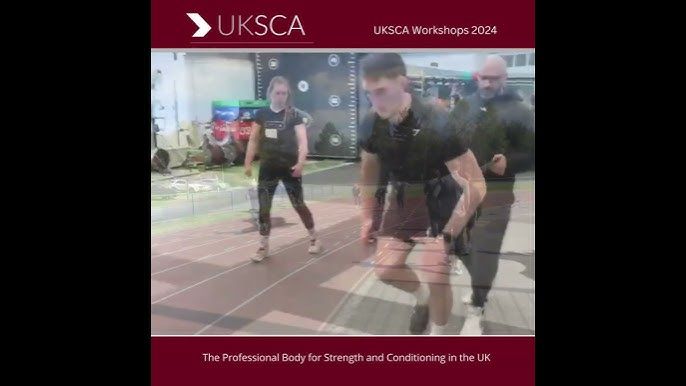
- Learn from the right people and consider attending the UKSCA weight lifting workshop. While learning from other experienced coaches is valuable, learning from UKSCA tutors and assessors will give you the best chance to meet the requirements of accreditation.