The development of motor competency in youth populations is one aspect that may increase participation in physical activity, reduce injury risk and improve performance. Athletic motor skill competencies have been identified as a collection of skills that should be developed and reinforced throughout childhood and adolescence to improve motor competency in these populations. This article aims to provide an evaluation of the application of coaching athletic motor skill competencies in youth populations, in addition to providing practitioners with resources and solutions to barriers they may face when coaching these skills. The first part of the article introduces athletic motor skill competencies, highlighting that the current body of research purports that developing these competencies can increase youth individuals’ motivation to exercise, physical self-efficacy and physical performance. The article then progresses to the ‘Coaching Athletic Motor Skill Competencies’ section, which aims to provide examples of how these concepts should be coached to youth individuals, including the need to maximise enjoyment through the use of animal shapes, games-based activities, body-management exercises and obstacle courses. Lastly, the article discusses the need to individualise interventions and aims to provide practical examples of how practitioners can achieve this.
It has been proposed that insufficient motor competency and physical illiteracy within youth populations are key contributors to declining physical activity levels.17, 24, 62 Motor competency is a global term to describe goal-directed human movement60 and it is deemed foundational to the development of physical literacy.16 Physical literacy can be described as the competence, confidence and knowledge to be physically active throughout life.4 Unsurprisingly therefore, children with poor motor competency tend to engage in less physical activity8, 38, 64 and have an increased injury risk when partaking in sport and physical activity, in comparison to children with superior motor competency.43, 46, 56 This emphasises the importance of developing motor competency in children and adolescence.30 Moreover, because young children have heightened neuroplasticity (which can increase motor leaning),2, 12, 22 childhood provides an opportunity to accelerate motor competency development.18, 36
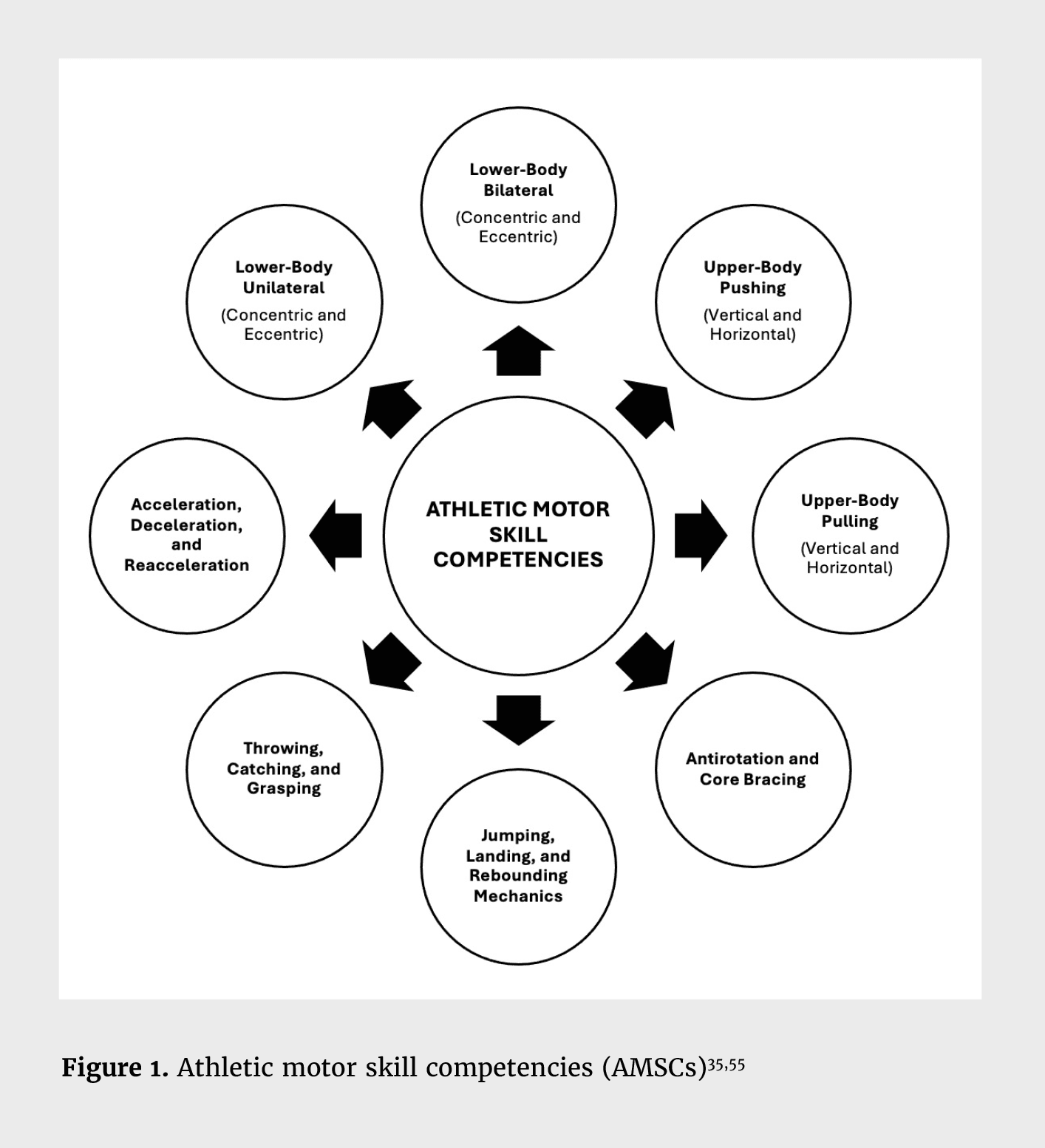
The Youth Physical Development model33 and the Composite Youth Development model34 suggest the primary focus of training in early to middle childhood should be to develop fundamental movement skills in order to improve motor competency. Fundamental movement skills represent locomotor (walk, run and jump), manipulative (catch, overhand throw and kick), and stability skills (stretch, balance and land) and are considered the collective building blocks for sport-specific skills and gross motor skills.19, 36, 38 More recently, these fundamental movement skills have been expanded upon by the proposal of athletic motor skill competencies (AMSCs)35 (Figure 1), which give practitioners a deeper set of suggestions relating to the movement skills they should be coaching for youth populations.53 AMSCs integrate the fundamental movement skills and additional motor skills considered to be the foundation upon which underpinning (more complex) athletic movements are built.35, 53, 54, 55 It is suggested that most athletic tasks and sport-specific skills require a combination of several AMSCs to be performed competently.55 Consequently, practitioners are recommended to coach and develop the full spectrum of AMSCs when working with youth populations, to prepare them for safe participation in sport and physical activity.32, 35, 53, 54
Developing the full spectrum of AMSCs, rather than solely focusing on developing specific movement patterns which mirror the actions of the sport a youth individual participates in, can help to defend against issues associated with early specialisation.28, 32, 55 Early specialisation occurs when a child plays a singular sport and completes intense sport-specific practice focused on optimising performance. This approach has been associated with increased injury incidence, increased likelihood of burnout, adverse psychological stress and heightened dropout rates from sport and physical activity.15, 25 In contrast, developing global athleticism broadens an individual’s movement portfolio, increasing the likelihood of success in sports they may pursue later in life,55 thereby reducing the risks of early specialisation. This is key because in later life, there are several reasons why an individual stops playing their chosen sport, including retirement or not making it professionally. Consequently, providing an individual with the ability to successfully participate in a range of sports or activities, can provide them with the intrinsic motivation and capability to continue partaking in long-term sport or exercise, when they stop playing their preferred sport which was prioritised at a young age.40 Furthermore, only focusing on sport-specific skills can increase the risk of overuse injuries15, 25, 28, 35 and result in a narrow movement portfolio which can further increase injury risk.55 Developing the full spectrum of AMSCs can prevent the same movement patterns being trained continuously and develops a broad movement portfolio, which may reduce injury risks associated with early specialisation.55
The benefit of developing AMSCs in youth populations has been supported by several studies52, 54 For instance, Pullen et al.54 used the Athlete Introductory Movement Screen to assess multiple AMSCs in 11–13-year-old male and female children. They observed that the ability to perform AMSCs in this screening protocol was positively correlated to standing long jump distance in males (r = 0.425; p < 0.01) and females (r = 0.397; p < 0.01). Furthermore, using self-assessment tools, Pullen et al.54 found significant positive correlations between the ability to perform AMSCs, motivation to exercise (r = 0.248; p < 0.01), and physical self-efficacy (r = 0.336; p < 0.01) in males. Similarly, a significant positive correlation between ability to perform AMSCs and motivation to exercise was found in females as well (r = 0.260; p < 0.01). Collectively, despite these associations only being small to moderate in magnitude and not being causal in nature, indicates that improving AMSCs might increase physical performance and these psychological constructs in youth populations, which in turn, could increase participation in physical activity.54
The benefit of developing AMSCs has further been supported by an additional study by Pullen and colleagues,52 who assessed the effectiveness of a six-week intervention focused on promoting AMSCs in 11-14-year-old males and females. The intervention consisted of nine sessions, in which basic resistance training equipment was incorporated into games, challenges and periods of teaching. This allowed participants to practise a range of exercises and movement patterns targeting different AMSCs, including squat, lunge and jump variations. Important to distinguish, is that the control group completed routine Physical Education classes, consisting of sampling a variety of sports. Both groups completed a battery of assessments pre- and post-interventions, including a modified version of the resistance training skills battery (to assess AMSCs) and a standing long jump (to assess lower limb strength). The modified version of the resistance training skills battery consisted of body weight squats, lunges, front support (with chest touches) and push-ups. Participants performed each exercise twice for four repetitions and were graded out of either four or five, based on a specific set of performance criteria. A key finding was that the resistance training skills battery score significantly increased in both male and female intervention groups, yet no such improvements were observed in the control group.52 This finding is unsurprising considering the intervention group were essentially practising the movements that were assessed in the test. However, the findings are still of importance as the resistance training skills battery is an example of a process-orientated measure of motor competency, meaning it assesses the quality and technique of a movement skill,38, 52 rather than an external outcome measurement (e.g., jump height or sprint speed). This form of assessment is beneficial when working with youth individuals as it reduces the effect maturational status has on the outcome measure.65 Interestingly however, the intervention did not improve standing long jump performance, suggesting there was not an improvement in lower body explosive strength.6, 52 It is possible that this was a consequence of the relatively short duration of the intervention; however, future research assessing the effects of a similar intervention over a longer duration is required to verify this suggestion. Overall, these findings highlight that such interventions can improve youth individual’s motor competency, which is beneficial because, as mentioned previously, motor competency play an important role in physical activity levels and injury risks in youth populations.8, 38, 43, 46, 56, 64
Several progression frameworks have been put forward to help guide practitioners when planning interventions to progressively develop AMSCs.32, 55 For instance, Lloyd and colleagues32 proposed (when coaching motor skills aimed at developing AMSCs), that a practitioner should firstly ensure individuals can demonstrate a ‘competent shape’, typically referring to the extreme range of the motor skill being coached. They then suggested individuals should progress to ‘holding the shape’ isometrically before starting to move ‘in and out of the shape’. Once individuals are proficient in these stages, they recommended that the resistance, movement complexity or movement velocity should be increased to allow for further progression. Practitioners must be aware there will be individual differences in the rate of progression and physical capabilities of each individual they are coaching, which will result in individuals progressing through these stages at different rates.32, 55 Therefore, practitioners must have the expertise to tailor training prescription to the specific needs of each individual in front of them – something which represents the very art of coaching.
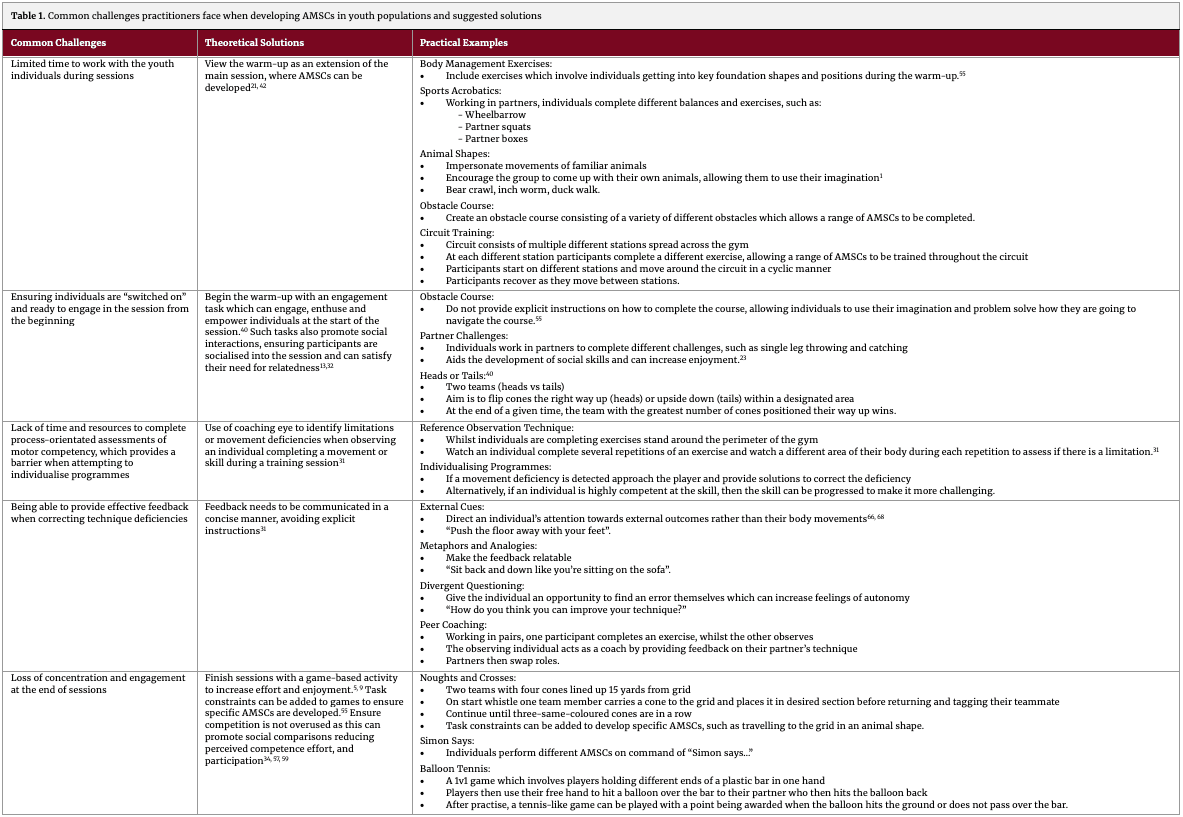
There are several challenges practitioners face when delivering interventions aimed at developing AMSCs to youth populations (Table 1). Firstly, practitioners must be able to coach these AMSCs in a fun and engaging manner because a lack of enjoyment is the primary cause of children dropping out of sport and physical activity.3, 11 To do this, practitioners should be aware that the constant use of strict repetition and loading sessions can be ineffective when working with children.10, 55 As a consequence, practitioners must alter the structure of training sessions based upon several considerations including the participants’ age, training age, socio-cultural factors and ability, in order to maximise enjoyment and engagement and subsequently improve motor competency.30, 51, 55 Practitioners can attempt to “hide the carrot in the burger” when designing drills and sessions to enhance engagement and provide an appropriate degree of structure to sessions, which they can easily adapt depending on the needs of the participants in the session. In essence, this analogy refers to masking the development of AMSCs in a fun task that individuals will engage with, without necessarily realising they are directly training certain AMSCs. Example activities practitioners can utilise include animal shapes, games-based activities, body-management exercises and obstacle courses (Table 1).55
An additional factor that practitioners must consider is how they can increase the intrinsic motivation of youth individuals to partake in the sessions, as this can improve participation levels and motor competency development.16, 69 The self-determination theory suggests the degree to which three basic psychological needs (autonomy, competency and relatedness) are met, will subsequently impact an individual’s intrinsic motivation.13, 14 Moreover, it has been highlighted that athletes reporting higher perceptions of autonomy have a reduced risk of burnout-related symptoms or drop out from their sport.26, 29, 40 Therefore, practitioners should aim to employ strategies that enhance feelings of autonomy, competency and relatedness in youth populations to increase their intrinsic motivation and hence improve their engagement within the training intervention.
When developing AMSCs, training should be tailored to the specific needs of an individual.32, 55 To inform this individualised training prescription, where possible, motor competency should be periodically assessed via process-orientated methods.20, 37, 45 However, there is currently not a single screening tool that assesses the whole spectrum of AMSCs and so practitioners must likely consider using multiple screening tools.53 For example, Pullen et al.53 recommended practitioners used the tuck jump assessment44 alongside either the resistance training skill battery39 or the athlete introductory movement screen,61 in conjunction with a strength assessment,50 to help inform individualised training prescription. However, when working with large groups, this will be a time-consuming process and therefore, practitioners may have to consider using more qualitative and less structured methods of assessment such as their own coaching eye. Coaching eye refers to a practitioner’s ability to identify limitations or movement deficiencies when observing an athlete complete a specific movement or skill.31 A limitation of using this method is that developing a good coaching eye requires experience and practice, therefore, practitioners should be mindful that relying on this may be subject to larger degrees of error in some early-career practitioners. Furthermore, once a practitioner has identified an error, it is imperative they have the ability to use appropriate solutions to correct these errors.
When correcting movement deficiencies, practitioners should consider the use of task constraints. The task constraints of an exercise or activity can be manipulated by a practitioner to influence the outcome of a movement pattern.47 For example, if a practitioner identified that an individual was not keeping their hips in line when completing a bear crawl, they could add a task constraint whereby the individual has to balance a cone on their lower back. The addition of this modification would enable the individual to find a solution to keeping the cone on their back and hence their hips, in line and correcting the movement deficiency. A benefit of such an approach is that task constraints provide an individual with external cues, rather than internal cues. Internal cues tend to include explicit information about a movement which can cause youth individuals to consciously think about specific components of a task, thus impeding performance.27, 55 Additionally, the removal of explicit instructions means the participant must work out an appropriate movement solution themselves, promoting the notion of self-organisation. Self-organisation can promote improved decision-making, greater retention of skills and increased intrinsic motivation, as athletes are given greater autonomy to explore and discover effective movement solutions.13, 14, 58 Furthermore, the use of external cues is thought to positively affect performance in youth populations7, 48 as they direct an individual’s attention towards the environment and external outcomes and away from their body movements,66, 68 thus allowing for unconscious information processing and movement control.67 This is beneficial as it has been shown that when developing motor skills, implicit learning can be more effective than explicit learning.63, 69, 70
In conjunction with task constraints, practitioners may have to provide corrective feedback to correct movement deficiencies. For feedback to be effective, it must be communicated in a clear and concise way, using age-appropriate language and avoiding explicit information relating to the process of performing the movement.31 With this in mind, the use of metaphors and analogies can be beneficial as they can make the feedback relatable to youth individuals, allowing them to process the information effectively.55 Similarly to the use of task constraints, these techniques also promote self-organisation and implicit learning, which as previously highlighted, can be beneficial for motor skill development.58, 63, 69, 70 Furthermore, divergent questioning gives an individual the opportunity to find a solution to a technique error themselves, promoting problem solving and critical thinking which can enhance learning.49 Using such an approach allows individuals to learn to correct their movements through their mistakes, linking to the method of amplification error, which has previously been identified as an effective method of correcting motor skill errors in youth individuals.41
In summary, AMSCs provide practitioners with a guide of the movement skills they should be coaching youth populations in order to develop motor competency.35 Previous research has indicated that developing AMSCs in youth populations can improve motivation to exercise, physical self-efficacy and physical performance.52, 54 However, in practice, practitioners face several challenges when delivering interventions aimed at developing AMSCs. These challenges include maintaining enjoyment to sustain engagement and identifying feasible methods of assessing motor competency to inform individualised training prescription. Therefore, the present article has aimed to provide theoretical and practical examples of how these challenges can be overcome to support the safe, progressive development of AMSCs, which in turn, can improve motor competency and promote long-term participation in physical activity.
1. Baumgarten S, Pagnano-Richardson K. Educational gymnastics: Enhancing children’s physical literacy. Journal of Physical Education, Recreation & Dance, 81(4): 18-25. 2010.
2. Behringer M, vom Heede A, Matthews M, Mester J. Effects of strength training on motor performance skills in children and adolescents: A meta-analysis. Pediatric Exercise Science, 23(2): 186-206. 2011.
3. Butcher J, Lindner KJ, Johns DP. Withdrawal for competitive youth sport: A retrospective ten-year study. Journal of Sport Behavior, 25(2): 145-163. 2002.
4. Cairney J, Dudley D, Kwan M, Bulten R, Kriellaars D. Physical literacy, physical activity and health: Toward an evidence-informed conceptual model. Sports Medicine, 49(3): 371-383. 2019.
5. Castle N, Howells K. A model for effective learning in competition: A pedagogical tool to enhance enjoyment and perceptions of competency in physical education lessons for young children. Children, 11(1): 111. 2024.
6. Castro-Piñero J, Artero EG, España-Romero V, Ortega FB, Sjöström M, Suni J, Ruiz JR. Criterion-related validity of field-based fitness tests in youth: A systematic review. British Journal of Sports Medicine, 44(13): 934-943. 2010.
7. Chow JY, Koh M, Davids K, Button C, Rein R. Effects of different instructional constraints on task performance and emergence of coordination in children. European Journal of Sport Science, 14(3): 224-232. 2014.
8. Cliff DP, Okely AD, Morgan PJ, Jones RA, Steele JR, Baur LA. Proficiency deficiency: Mastery of fundamental movement skills and skill components in overweight and obese children. Obesity, 20(5): 1024-1033. 2012.
9. Cooke A, Kavussanu M, Mclntyre D, Ring C. The effects of individual and team competitions on performance, emotions, and effort. Journal of Sport and Exercise Psychology, 35(2): 132-143. 2013.
10. Côté J, Baker J, Abernethy B. Practice to play in the development of sport expertise. In Handbook of Sport Psychology. G Tenenbaum and R Eklund Eds. Hoboken, NJ: Wiley, 2007. pp.184-202.
11. Crane J, Temple V. A systematic review of dropout from organized sport among children and youth. European Physical Education Review, 21(1): 114-131. 2015.
12. Dayan E, Cohen LG. Neuroplasticity subserving motor skill learning. Neuron, 72(3): 443-454. 2011.
13. Deci EL, Ryan RM. Intrinsic Motivation and Self-determination in Human Behaviour. New York: Plenum Press. 1985.
14. Deci EL, Ryan RM. Self-determination theory: A macrotheory of human motivation, development, and health. Canadian Psychology, 49(3): 182-185. 2008.
15. DiFiori JP, Benjamin HJ, Brenner JS, Gregory A, Jayanthi N, Landry GL, Luke A. Overuse injuries and burnout in youth sports: A position statement from the American Medical Society for Sports Medicine. British Journal for Sports Medicine, 48(4): 287-288. 2014.
16. Edwards LC, Bryant AS, Keegan RJ, Morgan K, Jones AM. Definitions, foundations and associations of physical literacy: A systematic review. Sports Medicine, 47(1): 113-126. 2017.
17. Faigenbaum AD, Rebullido TR, MacDonald JP. Pediatric inactivity triad: A Risky PIT. Current Sport Medicine Reports, 17(2): 45-47. 2018.
18. Ford P, De Ste Croix M, Lloyd R, Meyers R, Moosavi M, Oliver J, Till K, Williams C. The Long-Term Athletic Development model: Physiological evidence and application. Journal of Sports Sciences, 29(4): 389-402. 2011.
19. Gallahue DL, Ozmun JC. Understanding Motor Development: Infants, Children, Adolescents, Adults. New York: McGraw-Hill. 2006.
20. Gamble P. Movement screening protocols: Rationale versus evidence. New Zealand Journal of Sports Medicine, 40: 83-87. 2013.
21. Gil MH, Neiva HP, Sousa AC, Marques MC, Marinho DA. Current approaches on warming up for sports performance: A critical review. Strength and Conditioning Journal, 41(4): 70-79. 2019.
22. Gogtay N, Giedd JN, Lusk L, Hayashi KM, Greenstein D, Vaituzis AC, Nugent TF, Herman DH, Clasen LS, Toga AW, Rapoport JL, Thompson PM. Dynamic mapping of human cortical development during childhood through early adulthood. Proceedings of the National Academy of Sciences of the United States of America, 101(21): 8174–8179. 2004.
23. Goudas M, Magotsiou E. The effects of a cooperative physical education program on students’ social skills. Journal of Applied Sports Psychology, 21(3): 356-364. 2009.
24. Hardy LL, Reinten-Reynolds T, Espinel P, Zask A, Okely AD. Prevalence and correlates of low fundamental movement skill competency in children. Pediatrics, 130(2): e390-e398. 2012.
25. Jayanthi N, Pinkham C, Dugas L, Patrick B, LaBella C. Sports specialization in young athletes: Evidence-Based Recommendations. Sports Health, 5(3): 251-257. 2013.
26. Jowett GE, Hill AP, Curran T, Hall HK, Clements L. Perfectionism, burnout, and engagement in dance: The moderating role of autonomy support. Sport, Exercise, and Performance Psychology, 10(1): 133–148. 2021.
27. Koedijker JM, Poolton JM, Maxwell JP, Oudejans RRD, Beek PJ, Masters RSW. Attention and time constraints in perceptual-motor learning and performance: Instruction, analogy, and skill level. Consciousness and Cognition, 20(2): 245-256. 2011.
28. LaPrade RF, Agel J, Baker J, Brenner JS, Cordasc FA, Côté, J, Engebretsen L, Feeley BT, Gould D, Hainline B, Hewett T, Jayanthi N, Kocher MS, Myer GD, Nissen CW, Philippon MJ, Provencher MT. AOSSM early sport specialization consensus statement. The Orthopaedic Journal of Sports Medicine, 4(4): 2325967116644241. 2016.
29. Larson H, Young B, McHugh TL, Rodgers W. A multi-theoretical investigation of the relative importance of training volume and coach autonomy support for preventing youth swimming attrition. Current Issues in Sport Science, 5: 007. 2020.
30. Lloyd RS, Cronin JB, Faigenbaum AD, Haff GG, Howards R, Kraemer WJ, Micheli LJ, Myer GD, Oliver JL. National Strength and Conditioning Association position statement on long-term athletic development. Journal of Strength and Conditioning Research, 30(6): 1491-1509. 2016.
31. Lloyd RS, Moeskops S, Cropley B, Faigenbaum AD. Coaching young athletes. In Strength and Conditioning for Young Athletes: Science and Application. R Lloyd and J Oliver Eds. London: Routledge, 2019b. pp.77-99.
32. Lloyd RS, Moeskop, S, Granacher U. Motor skill training for young athletes. In Strength and Conditioning for Young Athletes: Science and Application. R Lloyd and J Oliver Eds. London: Routledge, 2019a. pp.103-130.
33. Lloyd RS, Oliver JL. The youth physical development model: A new approach to long-term athletic development. Strength and Conditioning Journal, 34(3): 61-72. 2012.
34. Lloyd RS, Oliver JL, Faigenbaum AD, Howar R, De Ste Croix MBA, Williams CA, Best TM, Alvar BA, Micheli LJ, Thomas DP, Hatfield DL, Cronin JB, Myer GD. Long-term athletic development – Part 1: A pathway for all youth. Journal of Strength and Conditioning Research, 29(5): 1439-1450. 2015a.
35. Lloyd RS, Oliver JL, Faigenbaum AD, Howard R, De Ste Croix MBA, Williams CA, Best TM, Alvar BA, Micheli LJ, Thomas DP, Hatfield DL, Cronin JB, Myer GD. Long-term athletic development, part 2: Barriers to success and potential solutions. Journal of Strength and Conditioning Research, 29(5): 1451-1464. 2015b.
36. Lloyd RS, Oliver JL, Meyers RW, Moody JA, Stone MH. Long-term athletic development and its application to youth weightlifting. Strength and Conditioning Journal, 34(4): 56-66. 2012.
37. Lloyd RS, Oliver JL, Radnor JM, Rhodes BC, Faigenbaum AD, Myer GD. Relationships between functional movement screen scores, maturation and physical performance in young soccer players. Journal of Sports Sciences, 33(1): 11-19. 2015c.
38. Lubans DR, Morgan PJ, Cliff DP, Barnett LM, Okely AD. Fundamental movement skills in children and adolescents. Sports Medicine, 40(12): 1019-1035. 2010.
39. Lubans DR, Smith JJ, Harries SK, Barnett LM, Faigenbaum AD. Development, test-retest reliability, and construct validity of the resistance training skills battery. Journal of Strength and Conditioning Research, 28(5): 1373-1380. 2014.
40. Maloney SJ. Engage, enthuse, empower: A framework for promoting self-sufficiency in athletes. Strength and Conditioning Journal, 45(4): 486-497. 2023.
41. Milanese C, Facci G, Cesari P, Zancanaro C. “Amplification of error”: A rapidly effective method for moto performance improvement. The Sport Psychologist, 22: 164-174. 2008.
42. Myburgh GK, Pfeifer CE, Hecht CJ. Warm-ups for youth athletes: Making the first 15-minutes count. Strength and Conditioning Journal, 42(6): 45-53. 2020.
43. Myer GD, Faigenbaum AD, Chu DA, Falkel J, Ford KR, Best TM, Hewett TE. Integrative training for children and adolescents: Techniques and practices for reducing sports-related injuries and enhancing athletic performance. The Physician and Sportsmedicine, 39(1): 74-84. 2011.
44. Myer GD, Ford KR, Hewett TE. Tuck jump assessment for reducing anterior cruciate ligament injury risk. International Journal of Athletic Therapy and Training, 13(5): 39-44. 2008.
45. Myer GD, Kushner AM, Brent JL, Schoenfeld BJ, Hugentobler J, Lloyd RS, Vermeil A, Chu DA, Harbin J, McGill SM. The back squat: A proposed assessment of functional deficits and technical factors that limit performance. Strength and Conditioning Journal, 36(6): 4-27. 2014.
46. Myer GD, Kushner AM, Faigenbaum AD, Kiefer A, Kashikar-Zuck S, Clark JF. Training the developing brain, part 1: Cognitive developmental considerations for training youth. Current Sports Medicine Reports, 12(5): 304-310. 2013.
47. Newel KM. Constraints on development of coordination. In Motor Development in Children: Aspects of Coordination and Control. MG Wade and HTA Whiting Eds. Amsterdam: Martin Nijhoff, 1986. pp. 341-361.
48. Oliver JL, Barillas SR, Lloyd RS, Moore I, Pedley J. External cueing influences drop jump performance in trained young soccer players. Journal of Strength and Conditioning Research, 35(6): 1700-1706. 2021.
49. Partington M, Cushion C. An investigation of the practice activities and coaching behaviours of professional top-level youth soccer coaches. Scandinavian Journal of Medicine and Science in Sports, 23(3): 374-382. 2013.
50. Pichardo AW, Oliver JL, Harrison CB, Maulder PS, Lloyd RS, Kandoi R. The influence of maturity offset, strength, and movement competency on motor skill performance in adolescent males. Sports, 7(7): 168. 2019.
51. Plisk SS, Stone MH. Periodization strategies. Strength and Conditioning Journal, 26(6): 19-37. 2003.
52. Pullen BJ, Oliver JL, Lloyd RS, Knight CJ. The effects of strength and conditioning in physical education on athletic motor skill competencies and psychological attributes of secondary school children: A pilot study. Sports, 8(10): 138. 2020.
53. Pullen BJ, Oliver JL, Lloyd RS, Knight CJ. Assessing athletic motor skill competencies in youths: A narrative review of movement competency screens. Strength and Conditioning Journal, 44(1): 95-110. 2022a.
54. Pullen BJ, Oliver JL, Lloyd RS, Knight CJ. Relationship between athletic motor skill competencies and maturity, sex, physical performance, and psychological constructs in boys and girls. Children, 9(3): 375. 2022b.
55. Radnor JM, Moeskops S, Morris SJ, Mathews TA, Kumar NTA, Pullen BJ, Meyers RW, Pedley JS, Gould ZI, Oliver JL, Lloyd RS. Developing athletic motor skill competencies in youth. Strength and Conditioning Journal, 42(6): 54-70. 2020.
56. Read PJ, Olive JL, De Ste Croix MBA, Myer GD, Lloyd RS. Assessment of injury risk factors in male youth soccer players. Strength and Conditioning Journal, 38(1): 12-21. 2016.
57. Reinboth M, Duda JL, Ntoumanis N. Dimensions of coaching behavior, need satisfaction, and the psychological physical welfare of young athletes. Motivation and Emotion, 28(3): 297-313. 2004.
58. Renshaw I, Chow JY, Davids K, Hammond J. A constraints-led perspective to understanding skill acquisition and game play: A basis for integration of motor learning theory and physical education praxis. Physical and Sport Pedagogy, 15(2): 117-137. 2010.
59. Robinson LE. Effects of a mastery climate motor program on object control skills and perceived physical competence in preschoolers. Research Quarterly for Exercise and Sport, 82(2): 355-359. 2011.
60. Robinson LE, Stodden DF, Barnett LM, Lopes VP, Logan SW, Rodrigues LP, D’Hondt E. (2015) Motor competence and its effect on positive developmental trajectories of health. Sports Medicine, 45(9): 1273-1284. 2015.
61. Rogers SA, Hassmén P, Roberts AH, Alcock A, Gilleard WL, Warmenhoven JS. Development and reliability of an Athlete Introductory Screen for use in emerging junior athletes. Pediatric Exercise Science, 31(4): 448-457. 2019.
62. Sandercock GRH, Cohen DD. Temporal trends in muscular fitness of English 10-year-olds 1998-2014: An allometric approach. Journal of Science and Medicine in Sport, 22(2): 201-205. 2019.
63. Shea CH, Wulf G, Whitacre C, Park JH. Surfing the implicit wave. Quarterly Journal of Experimental Psychology, 54(3): 841-862. 2001.
64. Stodden DF, Goodway JD, Langendorfer SJ, Roberton MA, Rudisill ME, Garcia C, Garcia LE. A developmental perspective on the role of motor skill competence in physical activity: An emergent relationship. Quest, 60(2): 290-306. 2008.
65. Viru A, Loko J, Harro M, Volver A, Laaneots L, Viru M. Critical periods in the development of performance capacity during childhood and adolescence. European Journal of Physical Education, 4(1): 75-119. 1999.
66. Winkelman NC, Clark KP, Ryan LJ. Experience level influences the effect of the attentional focus on sprint performance. Human Movement Science, 52: 84-95. 2017.
67. Wulf G. Attentional focus and motor learning: A review of 15 years. International Review of Sport and Exercise Psychology, 6(1): 77-104. 2013.
68. Wulf G, Höß M, Prinz W. Instructions for motor learning: Differential effects of internal versus external focus of attention. Journal of Motor Behavior, 30(2): 169-179. 1998.
69. Wulf G, Lewthwaite R. Optimizing performance through intrinsic motivation and attention for learning: The OPTIMAL theory of motor learning. Psychonomic Bulletin & Review, 23(5): 1382-1414. 2016.
70. Wulf G, Schmid RA. Variability and implicit motor learning. Journal of Experimental Psychology: Learning, Memory, and Cognition, 23(4): 987-1006. 1997.
Ross Evans is a MSc Strength and Conditioning graduate from the University of Brighton. He has previously volunteered as a Youth Physical Development Coach in collaboration with the University of Brighton and Sussex County Cricket Club. He also has experience working in professional football including previous roles with Crawley Town FC and Portsmouth FC.

Floris Pietzsch leads both undergraduate and postgraduate Strength and Conditioning programmes at the University of Brighton, aligned with UKSCA and CIMSPA professional standards. With extensive experience across elite sport, including roles with the Lawn Tennis Association and previously with the English Institute of Sport, he specialises in bridging applied practice with academic delivery. Floris maintains an active profile in professional development, industry engagement and coach education.

Dr James Wallis has designed and led multiple curriculum areas covering pedagogy and the science behind teaching, coaching and movement. His edited texts cover a wide range of contemporary concerns in the field, his specialism is in the development and management of youth sport and performance.