Lead author:
Uzo Ehiogu, St Marys University, Royal Orthopaedic Hospital Birmingham
Co-authors:
Gareth Jones, Volker Schoffl, Jo Neame, Gareth Jones, Hayley Jennings, Matthew Buckthorp, Stephen Patterson, The Climbing Rehabilitation Delta Group
Royal Orthopaedic Hospital Birmingham, University of Birmingham, St Marys University, Leeds Becket University, Isokinetic UK, Sportmedizin FRG
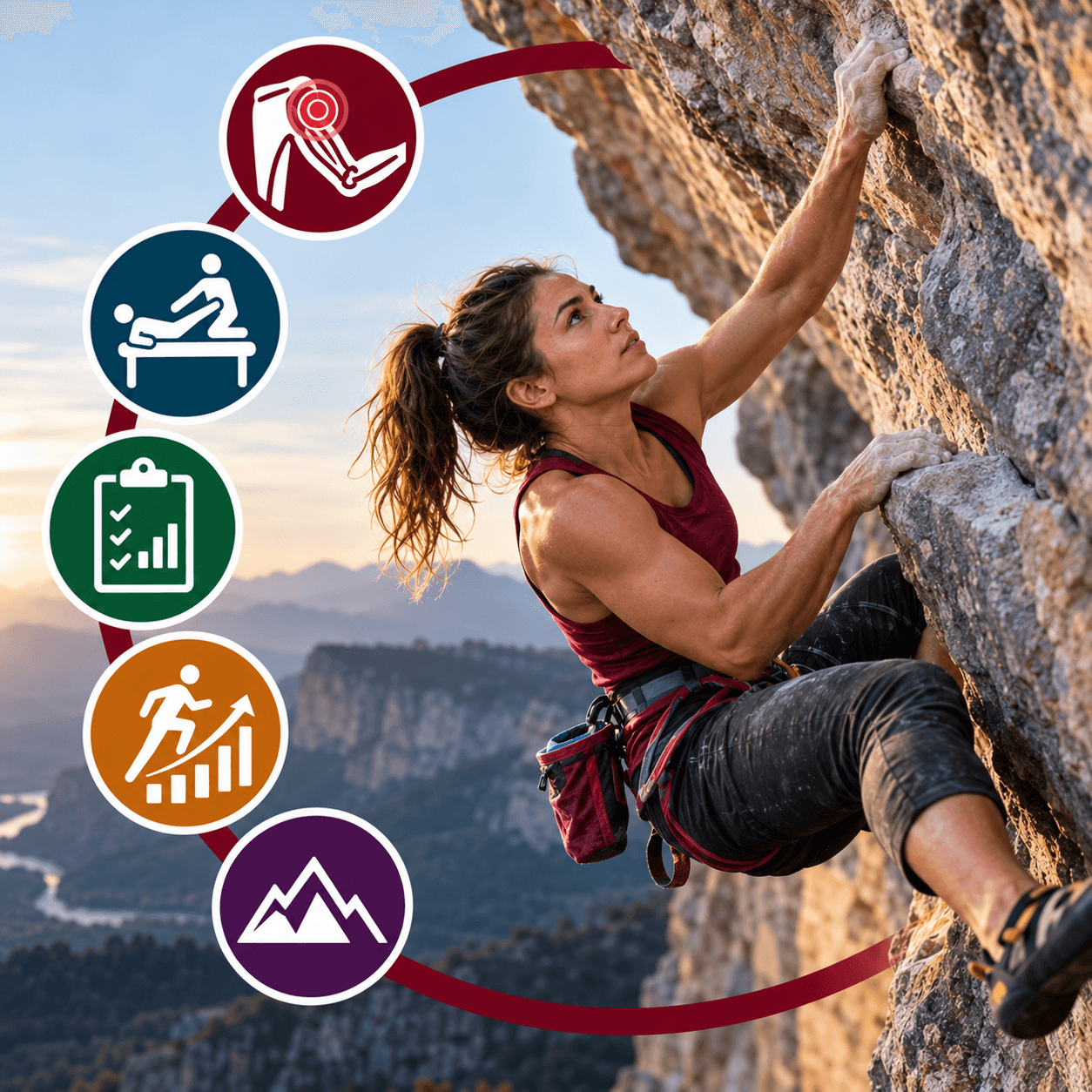
Climbing is a popular participation sport and Olympic discipline in its own right. In 2021 it was included in the Olympics games featuring the three competition disciplines, Lead climbing, speed climbing and bouldering. These demands place substantial load on the upper limb, particularly the fingers, wrist, elbow, and shoulder and contribute to a broad spectrum of acute and chronic injuries in both elite and recreational climbers. Although, climbing injury patterns are well documented and surgical procedures are frequently reported, rehabilitation and return to sport parameters after injury remains limited. It requires structured clinical assessment, progressive tissue loading, development of physical capacities, appropriate periodisation and graded sports specific programming. The aim of this study was to develop an International consensus based framework across the rehabilitation, physical preparation and a return to climbing pathway for adult climbers. The framework covers acute injury management, chronic injury management, intermediate and advance phases, outcome measures, progression rules for the safe return to performance in an applied setting.