Background: Eumenorrheic and naturally menstruating females experience cyclic variations in ovarian hormones attributed to the menstrual cycle (MC) which may impact neuromuscular function, musculoskeletal properties and lower-limb performance. This systematic review aimed to examine the effects of MC phases on lower-limb multi-joint isometric and vertical jumping force-time characteristics derived from force platform or sensor assessments in eumenorrheic and naturally menstruating females, to establish whether a particular MC phase may impact performance.
Methods: The review was conducted in accordance with PRISMA guidelines. PubMed, MEDLINE, SPORTDiscus and Web of Science were searched from inception to Dec 15th, 2025, for studies examining MC phase effects on lower-limb multi-joint isometric and/or vertical jumping force-time characteristics. Inclusion criteria were: 1) injury-free females (16-40 years); 2) performed multi-joint isometric and/or vertical jumping assessments that collected force-time characteristics using force platforms/sensors; 3) observational comparative study designs that compared ≥ 1 force-time metric across ≥ 2 defined MC phases.
Results: Six studies met the inclusion criteria, primarily examining team-sport or recreationally active female athletes. Most studies utilised vertical jumping tasks, observing generally non-significant, trivial differences in global outcome measures (e.g., jump height) between MC phases. However, conflicting phase-dependent fluctuations were noted in ratio and kinetic metrics (e.g., flight-time-to-contraction-time ratio, power), where superior performance was occasionally observed in either the mid-luteal or follicular phases. One study reported greater isometric relative peak force in the mid-luteal phase, yet markers of rapid force production (e.g., early-phase impulse) were superior during the early follicular phase. Methodological quality was generally moderate; however, inconsistent biochemical phase verification, limited reporting of reliability or familiarisation and infrequent consideration of measurement error when interpreting changes in performance, limit the certainty of these findings.
Conclusion: While fluctuations in ovarian hormones may theoretically modulate physiological mechanisms and therefore force-generating capacity, evidence does not support consistent performance differences across MC phases. No phase was found to consistently enhance or inhibit isometric or vertical jump force-time characteristics. Practitioners should therefore avoid blanket, phase-based training adjustments and instead prioritise individualised, autoregulatory, monitoring strategies. Until higher-quality research integrates biochemical phase verification with detailed kinetic and kinematic analyses, lower-limb force-time performance can be considered relatively stable across the MC.
Understanding the physiological factors influencing athletic performance is crucial for optimising training, recovery, and competition strategies, particularly in female athletes. The menstrual cycle (MC) is a key consideration in female athletes because cyclical fluctuations in ovarian hormones, primarily oestrogen and progesterone, may influence neuromuscular performance7, 11, 32 in both eumenorrheic (i.e., 21-35 day MC length with biochemical hormonal phase verification) or naturally menstruating females (i.e., 21-35 day MC length without biochemical hormonal phase verification). The MC is commonly divided into distinct phases: follicular, ovulatory, and luteal,11 each characterised by varying concentrations of these hormones. Proposed mechanisms underpinning performance changes across the MC involve complex interactions between hormonal fluctuations, neuromuscular function and musculoskeletal properties (e.g., alterations in tendon stiffness and compliance, ligament laxity, collagen synthesis).11, 40, 47, 51 Oestrogen, for example, is suggested to have an anabolic effect on skeletal muscle,5, 26 potentially enhancing muscle protein synthesis and promoting muscle hypertrophy. It also appears to have a neuroexcitatory effect, increasing the excitability of the nervous system and potentially improving motor unit recruitment, which in turn, may also enhance force production.1 Conversely, progesterone has been suggested to have an inhibitory effect on cortical excitability, which could negatively impact motor unit recruitment and force production;43 thus, the ratio of oestrogen to progesterone, which varies across the MC phases, may be a critical determinant of neuromuscular performance. Despite these plausible mechanisms, findings across existing studies remain conflicting and inconsistent. For instance, some systematic reviews have indicated trivial reductions in overall exercise performance during the early follicular phase compared with other phases,32 while Blagrove et al.7 found non-significant, small or trivial effect sizes in each comparison between phase for strength-related variables. Similarly, linear and multidirectional speed performance have shown trivial to small non-significant differences between MC phases.16 With this in mind, the evidence to date fails to confirm the existence of super or inferior exercise performance during a specific MC phase.
To comprehensively evaluate neuromuscular function, isometric lower-limb multi-joint strength testing and dynamic assessments such as vertical jumping are widely employed.3, 6, 15, 45 While various methods exist for assessing vertical jump performance, including contact mats and camera-based systems, force platforms offer distinct advantages by providing detailed force-time data during the movement.3, 28, 29, 30, 31, 44 However, it is worth noting that advanced camera systems can provide detailed joint-level kinematic data, which force platforms alone cannot capture. Nonetheless, unlike simpler tools that often rely solely on jump height or flight time, force platforms allow for a more comprehensive evaluation of both the outcome and the underlying strategy (kinetics and kinematics) of jumping performance.3, 28, 29, 30, 31, 44 Specifically, many variable types can be derived from force platforms during vertical jump assessments, such as ratio (e.g., reactive strength index), outcome (e.g., jump height), strategy (e.g. ground contact time), and kinetic (e.g., mean propulsive force) metrics. Additionally, detailed analyses of force-time data from vertical jump assessments can produce in-depth information about neuromuscular function during different phases of movement, such as assessing the impulse (force production over time) characteristics of the braking and propulsive phases of jumping.3 Such analyses offer deeper insights into how an athlete generates force and executes movement, which is particularly important given that different neuromuscular strategies can yield similar jump heights,3 and these strategies could potentially vary across MC phases in females.
While accessible tools like contact mats estimate jump height based on flight time, they are susceptible to errors from body configuration variations at landing.29 Conversely, force platform technology enables the estimation of jump height via the take-off velocity method (derived through the impulse-momentum relationship and numerical integration), providing a high-fidelity measurement that is inherently independent of an athlete's landing posture or body configuration.31 This approach permits the detection of subtle, yet potentially meaningful, performance changes that might otherwise go unnoticed with simpler systems (i.e., contact mats).3 However, it should be noted that determining an accurate body weight is essential when using force-platforms due to the integration processes to derive net impulse, which is used to calculate take-off velocity and estimate jump height. A further advantage of force platform technology is the ability to directly measure body weight, which can be utilised to examine potential MC phase-specific changes. For example, any increases in body weight across the MC, potentially due to fluid retention,11 could theoretically make vertical jumping more challenging, requiring one to produce a greater net propulsive impulse to achieve the same take-off velocity and thus jump height. For this to be achieved, one would be required to produce greater net propulsive force, increase propulsive duration, or a combination of both. It is also important to state that in this scenario (i.e., a maintenance of take-off velocity with an increased body mass) that take-off momentum would also have increased.28 Such critical insights, including the monitoring of body weight and associated changes in specific kinematic and kinetic metrics, requires force platform technology, thus highlighting integral role of such technology in better understanding how the MC may impact neuromuscular and stretch shortening cycle function.
Despite growing interest in MC-related exercise performance fluctuations, particularly regarding strength characteristics,7, 11, 32 the existing literature is characterised by considerable variability in methodological quality, generally small sample sizes, and inconsistent MC phase verification methods, limiting the development of clear, evidence-based guidelines and recommendations.7, 11, 17, 32 Although maximal dynamic strength, often assessed using free weight or machine-based assessments, has been examined across the MC,7, 11, 32 rapid force production characteristics (e.g., net force, impulse, and rate of force development (RFD) over critical time intervals such as 50-300 ms) may be more relevant for dynamic, time-constrained tasks like jumping, sprinting, deceleration, and change of direction, given their short time windows for external net impulse generation.46 Maximal and rapid force production characteristics of the lower-limb can also be assessed using multi-joint tasks like the isometric squat19 and isometric mid-thigh pull15 when performed using technologies (i.e., force platforms) capable of measuring force-time characteristics. Currently, there remains a critical need to synthesise evidence from studies employing high-fidelity instrumentation, such as force platforms, to determine whether specific MC phases are associated with practically meaningful changes in isometric and dynamic force-time characteristics, addressing the methodological shortcomings of previous research.
Therefore, the aim of this systematic review was to examine the effects of the MC phase on lower-limb isometric and vertical jumping force-time characteristics derived from force platform or sensor-based assessments in eumenorrheic and naturally menstruating women. The inclusion of both eumenorrheic and naturally menstruating cohorts is a deliberate methodological choice designed to capture the full landscape of contemporary female athlete research. While biochemical verification remains the 'gold standard,'41 it is often logistically and financially prohibitive in applied high-performance environments. Therefore, excluding unverified 'naturally menstruating' cohorts would systematically omit ecologically valid data from elite populations where force-platform monitoring is routine, but clinical hormonal profiling is unavailable. It was hypothesised that practically meaningful differences in isometric and dynamic force-time characteristics would be observed between MC phases. By synthesising available evidence, this review seeks to provide a clearer understanding of the extent to which MC phase variations, if any, influence neuromuscular function (e.g., rapid and maximal force production, stretch shortening cycle function) with the goal of informing physical profiling, training and competition strategies, and physical preparation for female athletes.
This review was conducted according to the PRISMA 2020 statement guidelines36 (Supplementary material 1) and was unregistered.
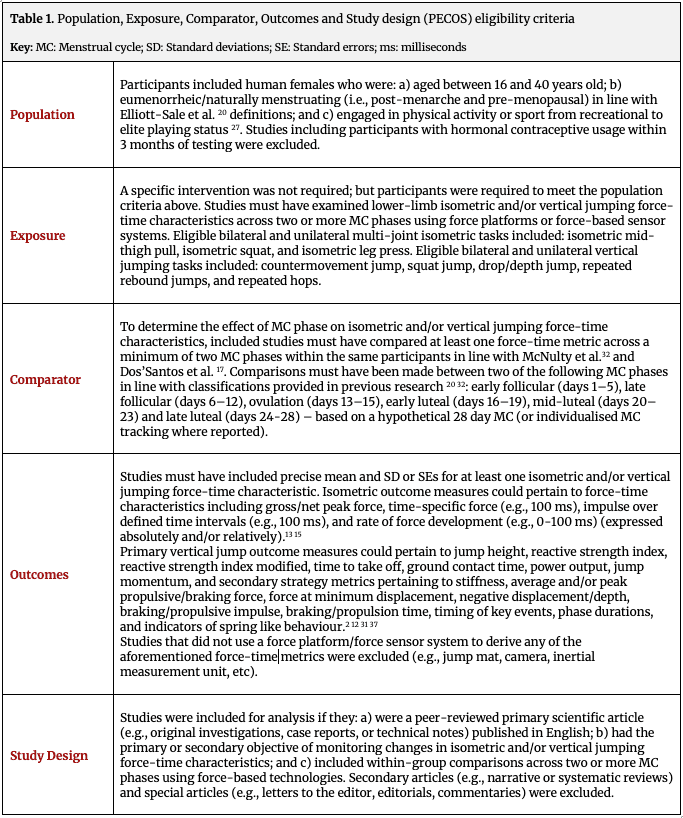
The Population, Exposure, Comparator, Outcomes, and Study design (PECOS) was used to establish the parameters within which the review was conducted.33 The PECOS strategy is presented in Table 1. Studies not meeting the PECOS eligibility criteria were excluded.
Literature searches were performed using PubMed, MEDLINE (OVID), SPORTDiscus, and Web of Science databases from inception to Dec 15th 2025 (final search date) by two reviewers (TDS and SS), with search results exported to Rayyan software for screening.35 Forward and backward citation tracking using Google Scholar was performed to identify any additional eligible material.
Search terms were as follows: (“female” OR “women” OR “woman”)
AND (“menstrual" OR "menstrual cycle" OR "menstruation" OR "follicular” OR "luteal " OR "ovulation" OR "ovulatory" OR “menses” OR ”estradiol” OR “oestradiol” OR “estrogen” OR “oestrogen” OR “progesterone” OR “sex hormones” OR “bleeding”)
AND (“isometric” OR “jump*” OR “hop” OR “rebound”)
AND ("force-time" OR "perform*" OR "strength" OR “impulse” OR “kinetic*” or “kinematic*” OR “power” OR “explo*” OR “force” OR “rate of force” OR “reactive strength” or “height” or “biomechanics” OR “force production” OR “neuromuscular” OR “momentum” OR “plyo” OR “SSC” OR “stretch shortening cycle” OR “displacement” OR “work”)
Database-specific syntax was adjusted for each platform and truncation symbols were verified to ensure compatibility with each database’s unique requirements.
Bibliographies of prospectively eligible studies were compiled and searched by two independent reviewers (TDS and SS) to screen for further suitable studies. Studies were first assessed based on title and abstract to identify eligibility and the full text of these studies were then read to confirm if they met the inclusion criteria. If disagreements on eligibility occurred between the two reviewers (TDS and SS), a third independent reviewer (AF) was consulted and their decision deemed as final.
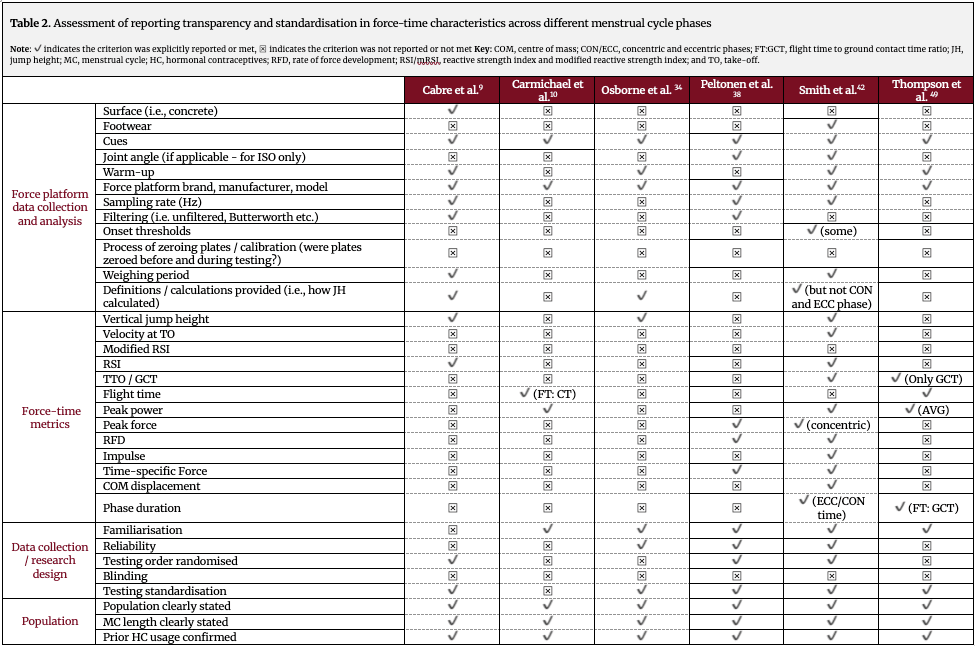
The study characteristics, including methodology, participant characteristics, MC phase classification and verification methods, isometric and vertical jump outcome measures, reliability measures and results (Table 2) were obtained by two independent reviewers (TDS and SS). Upon completion, the two reviewers compared the extracted data, with inconsistencies between the two reviewers resolved by discussion.
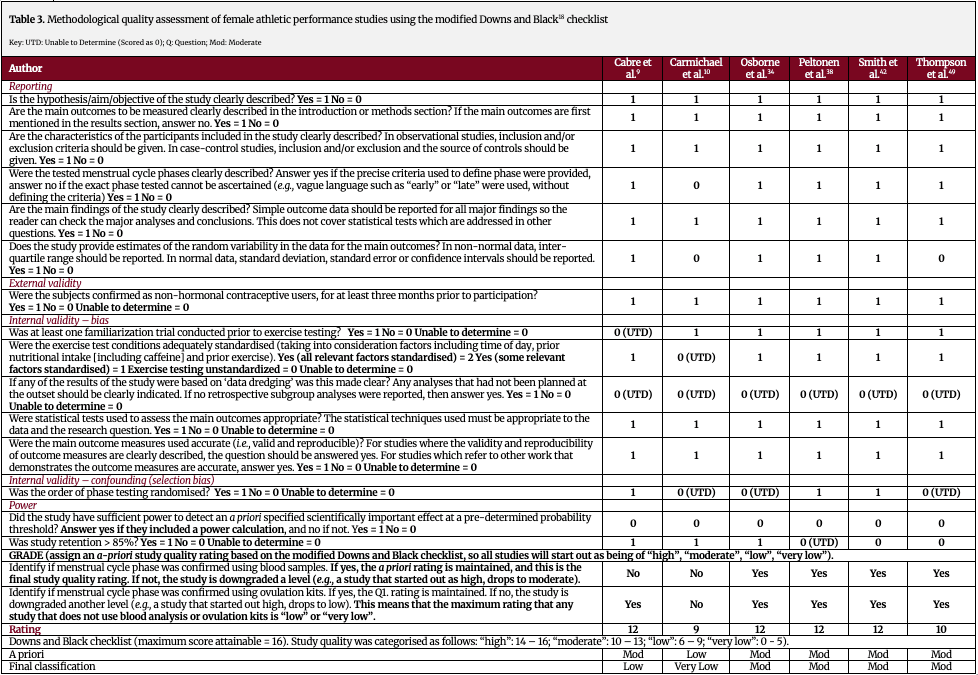
Study quality was assessed by two reviewers (TDS and SS) and independently verified by one reviewer (AF). Methodological quality was assessed using a modified Downs and Black18 checklist according to McNulty et al.32 who previously conducted a review examining the effect of MC on exercise performance and thus, developed a more appropriate tool for the present review. The modified Downs and Black checklist18, 32 were comprised of 15 outcomes, from five domains: (1) reporting; (2) external validity; (3) internal validity—bias; (4) internal validity—confounding; and (5) power. A maximum attainable score of 16 could be awarded (with 14 items graded as one point, and one item worth two points), whereby study quality was categorised as follows: “high” (14–16); “moderate” (10–13); “low” (6–9); or “very low” (0–5).32 The results of the modified Downs and Black assessment were used to assign an a priori quality rating to each study. In accordance with McNulty et al.32 the a priori rating was then either maintained, or downgraded a level, based on the response to two questions that were considered key to the directness of these research studies: Q.1) was the MC phase confirmed using blood samples? If the authors reported using blood samples to confirm MC phase, the a priori rating was maintained and if not, the study was downgraded a level (e.g., a study that started out as “high” in quality, but did not confirm MC phase using a blood sample, was then dropped to “moderate” in quality); and Q.2) was the MC phase confirmed using urinary ovulation detection kits? If the authors reported the use of a urinary ovulation detection kit to identify MC phase, the Q.1 rating was maintained; if not, the study was downgraded a level. As such, the maximum rating for any study that did not use biochemical verification or urinary ovulation detection kits to identify and verify MC phase was “low”.32 Included articles were further classified as bronze, silver and gold based on the audit framework presented by Smith et al.41
The strength of evidence was evaluated based on the number and quality of supporting studies, adhering to criteria similar to Van Tulder et al.50 and Balachandar et al.4 Strong evidence required multiple high-quality studies (minimum two). Moderate evidence included multiple studies with at least two high-quality ones, or multiple low-quality studies. Limited evidence encompassed multiple low-quality studies or a single high-quality study. Very limited evidence derived from a single low-quality study. Conflicting evidence arose when multiple studies yielded insignificant overall results despite some individually showing statistical significance.
To evaluate the effects of MC phase on lower-limb isometric and vertical jumping force-time characteristics, results of included studies were collated through identifying significant (p < 0.05) and non-significant findings (p > 0.05) for outcome measures, with effect sizes, and percentage changes also extracted if provided by the authors. If the authors did not provide effect sizes or percentage changes,14 these were calculated manually based on the authors’ reported mean and SD, including Hedges’ g effect sizes21 in line with Lakens25 and interpreted as trivial (≤ 0.19), small (0.20-0.59), moderate (0.60-1.19), large (1.20-1.99), very large (2.00-3.99), and extremely large (≥ 4.00).22
Figure 1 presents a flow diagram summarising the study selection process, including the number of records identified, screened, excluded, and included in the final synthesis.
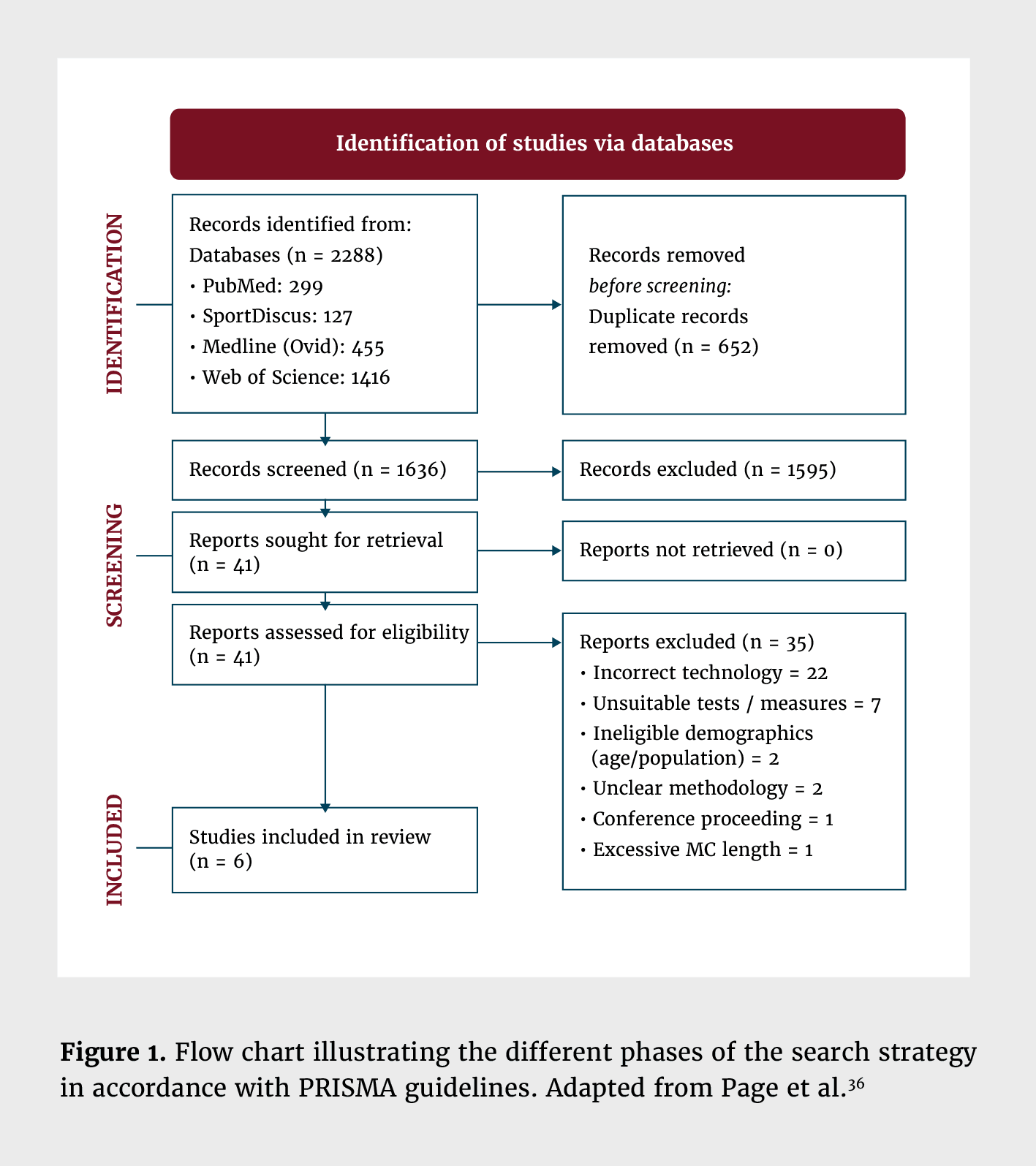
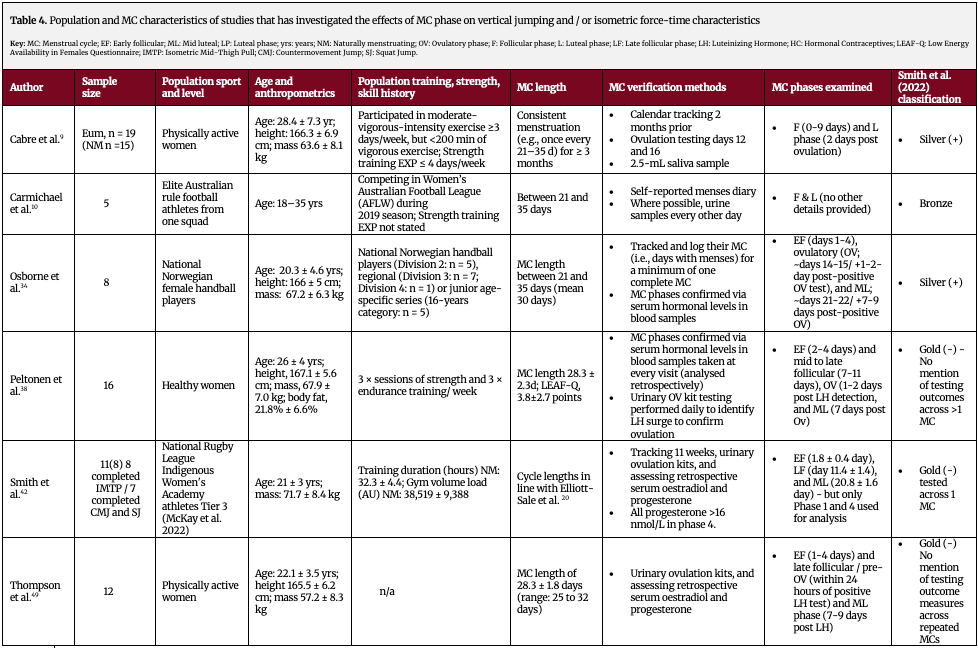
Six studies met the inclusion criteria for this review.9, 10, 34, 38, 42, 49 Study characteristics and primary findings are presented in Tables 2-5, and an overview of the methodological quality assessment is provided in Table 3. Sample sizes ranged from five to 19 participants. Participant characteristics were generally well-described across all studies; predominantly examining team sport athletes competing in field and court-based sports, including rugby league,42 Australian football10 and handball,34 whereas three studies examined physically active (recreationally trained) women.9 38, 49 All studies provided participant playing status, including national,34, 42 national league10 and recreational standards.9, 38, 49 However, reporting of training history was inconsistent, with only three studies providing information detailing training volumes and resistance training history (Table 4).9, 38, 42
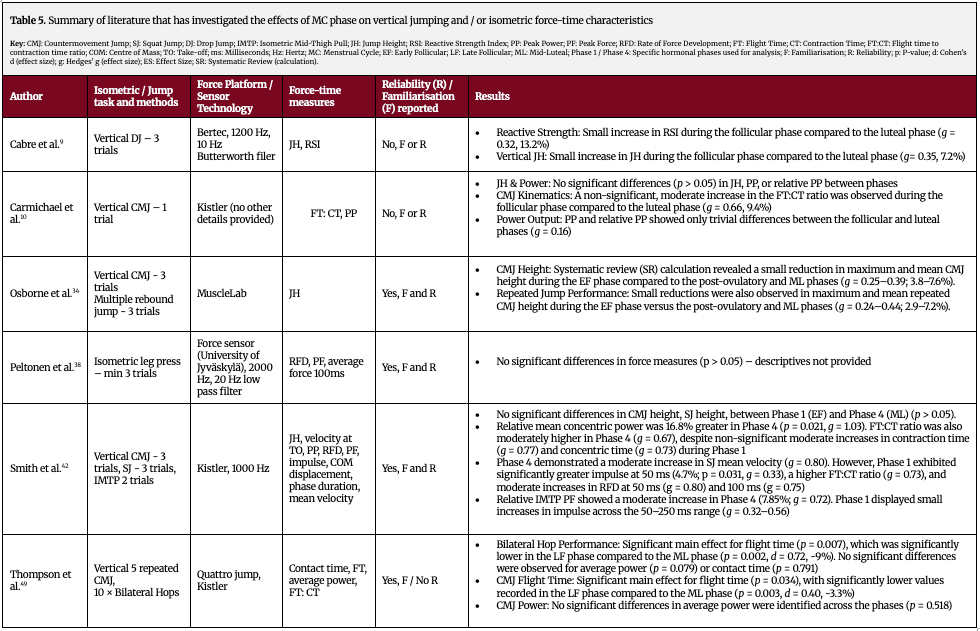
Tables 2-4 provide specific information pertaining to tasks examined, where four studies primarily examined vertical jump performance,9, 10, 34, 49 one study examined jumping and isometric mid-thigh pull performance,42 and one study examined bilateral isometric leg press.38 Measurement techniques primarily consisted of measuring vertical jump height, 9, 34, 42 peak and mean power,10, 49 maximum voluntary contraction force38 and RFD42 via portable force platforms (Tables 2-5). Additionally, Tables 3-4 provide information pertaining to hormonal contraception use, tiered classification based on MC phase verification method in accordance with current recommendations,41 and MC phases examined, ranging from 2-4 phases in accordance with recommendations32 for all included studies. Generally, predefined MC phase descriptions across studies were adequately described with respect to the intended phase of examination across the MC, with five studies9, 34, 38, 42, 49 providing clear identification of exact MC test timepoints in accordance with current recommendations.32 Regarding classification of MC phase verification methods, three studies38, 42, 49 were classified Gold (i.e., employing blood biochemical analysis and confirmed ovulation testing with outcome measures examined across one MC only), two studies were classified Silver, employing saliva sampling9 and blood biochemical analysis34 in conjunction with confirmed ovulation testing to confirm hormonal status and one study was classified Bronze employing urine analysis and calendar tracking only10 (Table 4).
The influence of the MC phase on vertical jump height and flight time demonstrated varying results across the included studies (Table 5). Cabre et al.9 reported a small increase in jump height during the follicular phase compared to the luteal phase (g = 0.32). In contrast, Osborne et al.34 observed small reductions in CMJ maximum and mean height during the early follicular (EF) phase compared to the post-ovulatory and mid-luteal (ML) phases (g = 0.25–0.39). Similar small reductions were noted in repeated CMJ maximum and mean height during the EF compared to post-ovulatory and ML phases (g = -0.24 to 0.44). Thompson et al.49 identified a significant main effect of MC phase for flight time (p = 0.034), which was significantly lower in the late follicular phase than in the ML phase for both bilateral hops (p = 0.002, g = 0.72) and the CMJ (p = 0.003, g = 0.40). Conversely, Smith et al.42 reported no significant changes in CMJ or SJ height across the MC phases (EF vs ML) (p > 0.05).
Metrics associated with reactive strength and SSC efficiency, specifically the reactive strength index (RSI) and flight-time-to-contraction-time (FT:CT) ratio, demonstrated phase-dependent fluctuations (Table 5). Carmichael et al.10 reported a moderate increase in the FT:CT ratio during the follicular phase compared to the luteal phase (g = 0.66), while Cabre et al.9 noted a small positive increase in RSI during the follicular phase compared to luteal phase (Table 4). However, Smith et al.42 found that the CMJ FT:CT ratio was greater in the ML phase (Phase 4) compared to the EF phase (Phase 1) (g = 0.67). Although non-significant, moderate increases in CMJ total contraction time (i.e., time to take off) (g = 0.77) and concentric time (i.e., propulsion time) (g = 0.73) were observed in the EF phase versus the ML phase. For the SJ, Smith et al.42 reported a moderate increase in mean velocity in the ML phase (g = 0.80), though the SJ FT:CT ratio was greater in the EF phase (g = 0.73).
3.3.3 Vertical jump kinetics
Phase-related differences in force-time and power variables were mixed although some peak metrics favoured the ML phase (Table 5). Smith et al.42 identified that CMJ relative mean concentric (i.e., propulsive) power was greater in the ML phase than the EF phase (p = 0.021, g = 1.03). During the EF phase, Smith et al.42 reported a significantly greater SJ impulse at 50 ms compared to the ML phase (p = 0.031, g = 0.33). The EF phase also showed moderate increases in SJ RFD at 50 ms (g = 0.80) and 100 ms (g = 0.75). Thompson et al.49 observed no significant phase effect for average power in the bilateral hop (p = 0.079) or CMJ (p = 0.518).
Evidence regarding isometric strength was limited to two studies and yielded inconsistent findings (Table 5). Smith et al.42 identified a non-significant, moderate increase in isometric mid-thigh pull relative peak force during the ML phase (Phase 4) (g = 0.72), whereas small increases in impulse over 50–250 ms intervals were observed during the EF phase (Phase 1; g = 0.32–0.56). In contrast, Peltonen et al.38 reported no statistically significant differences across the MC for isometric maximal voluntary force during a leg press task. However, a lack of descriptive data in the original report precluded the calculation of effect sizes or percentage differences, rendering these specific findings inconclusive.
Only three studies randomised the testing order across MC phases9, 38, 42 (Tables 2-3). Five studies clearly stated that testing conditions were standardised between MC phases,9, 34, 38, 42, 49 while no studies confirmed that the examiner was blinded to the MC phase9, 10, 34, 38, 42, 49 (Table 2). Four studies stated that a familiarisation period or session was provided prior to data collection10, 34, 38, 42, 49 (Table 2). Three studies reported the reliability of measuring vertical jump or isometric strength performance,34, 38, 42 but only one study compared and interpreted the change in outcome measures between MC phases relative to measurement error42 (Table 2).
Methodological quality assessment data is presented in Tables 2-3. Initially, five9, 34, 38, 42, 49 studies were classed as moderate, and one study was classed as low10 quality, with scores ranging from 9 to 12. However, two studies were downgraded following this initial a priori quality rating due to the failure to confirm MC phases using biochemical verification,9, 10 of which one study was further downgraded for not verifying MC phases using ovulation kits10 in accordance with McNulty et al.32 Thus, only four studies maintained their a priori quality rating of moderate.
The primary aim of this systematic review was to evaluate the influence of MC phases on lower-limb isometric and vertical jumping force-time characteristics in eumenorrheic and naturally menstruating females. The collective evidence indicates that despite the theoretical potential for cyclical hormonal fluctuations, specifically oestrogen and progesterone, to modulate neuromuscular function, most studies reported trivial or conflicting effects in isometric and vertical jumping performance metrics across the MC (Table 5). While oestrogen has been suggested to provide neuroexcitatory and anabolic benefits,1 progesterone has been linked to inhibitory effects on cortical excitability,43 and fluctuations in these hormones may impact musculoskeletal properties (e.g., tendon compliance stiffness, ligament laxity, collagen synthesis),11, 40, 47, 51 these physiological mechanisms do not appear to manifest as consistent, large-scale changes in global force production, jump height or related performance indices (Table 5). These observations support previous systematic reviews that have also reported inconclusive effects of the MC phase on exercise performance,32 strength,7 linear and multidirectional speed16 and anterior cruciate ligament injury risk factors.17 Consequently, for most eumenorrheic and naturally menstruating female athletes, the MC phase may not be a primary driver of performance variability in dynamic jumping and isometric assessments. However, this observation must be interpreted with caution given the limited statistical power and significant methodological heterogeneity common across current literature in this field (Table 2-4). While broad, phase-dependent adjustments to training and competition strategies may not be universally required, individualised monitoring remains warranted, particularly for symptomatic athletes.
Despite the theoretical underpinning of hormonal influence on neuromuscular function, the current lack of consensus in the literature necessitates a shift in how MC research is conducted. To enhance the quality and practical applicability of future investigations, the following recommendations and considerations are proposed:
Implementation of gold-standard phase verification: Future studies should move away from calendar-based estimations. To ensure accurate MC phase identification and classification, researchers should implement rigorous MC verification techniques.24, 41 This includes the combined use of longitudinal calendar tracking, urinary ovulation kits to identify the Luteal Hormone (LH) surge, and, most critically, biochemical verification via serum or salivary analysis of 17β-oestradiol and progesterone concentrations. Such measures are essential to confirm that hormonal profiles align with the targeted MC phases and to facilitate the exclusion of participants with luteal phase deficiency. In the absence of these gold-standard methodologies, researchers must explicitly acknowledge the inherent limitations of their verification strategies and adopt a more conservative tone when interpreting the practical significance of their findings.8
Longitudinal tracking across multiple cycles: In accordance with the methodological recommendations proposed by Smith et al.27 future research should transition from cross-sectional designs to longitudinal frameworks that monitor athletes over a minimum of two to three consecutive MC. This approach is necessary to account for the inherent intra-individual variability in hormonal fluctuations and to establish the reliability of force-time characteristics for each participant. By tracking multiple MCs, researchers can better distinguish between cyclical biological trends and random variation, providing a more robust baseline of an athlete's neuromuscular profile across the different phases.
Technical transparency and force platform standardisation: A significant finding of this systematic review is the pervasive lack of technical detail regarding force platform data acquisition and signal processing, which severely hinders methodological replication and the verification of "best-in-class" practices. To enhance the rigour of future research, investigators must transition away from "black box" (i.e., where data collection and processing algorithms remain opaque and undisclosed) reporting and explicitly detail hardware configurations, including sampling frequencies (≥1000 Hz) and surface conditions, alongside specific signal processing parameters such as digital filter types, cut-off frequencies, and clear definitions for phase identification and onsets (i.e., braking, propulsive, touch down etc). Standardisation of phase-detection algorithms and onset thresholds is imperative, as discrepancies in these procedures, particularly the duration of weighing periods and the sensitivity of movement initiation markers, can lead to significant variations in duration-dependent metrics. Moreover, to enhance technical transparency and reduce unintended variability, future research should standardise and report the verbal instructions and external cues provided during testing. This is particularly important when using force platforms, as jump strategies can be altered depending on the specific instructions and cueing (e.g., if the intended outcome, such as prioritising jump height over movement velocity, is not standardised). Adhering to established recommendations3, 15, 31 is essential to ensure that any observed fluctuations in force-time characteristics are attributable to biological factors rather than methodological inconsistencies.
Integration of strategy metrics and rapid force production: Future investigations should in addition to focusing on outcome measures, such as jump height, adopt a more granular analysis of kinematic, kinetic and strategy metrics across the MC. It is plausible that an athlete may maintain a consistent outcome (e.g., jump height) by adopting compensatory strategies, such as increasing countermovement depth or extending the time to take-off. Notably, Smith et al.42 was the only identified study to comprehensively examine a broad range of underlying kinetic and kinematic variables during vertical jump assessments across MC phases. Furthermore, future research must account for fluctuations in body mass associated with the MC and may also consider utilising jump momentum as a primary metric of interest.28 Since jump height is determined by take-off velocity, an athlete who maintains jump height while experiencing an increase in body mass (e.g., during the luteal phase) must have generated a greater net vertical impulse and thus higher take-off momentum (which is equal to net propulsive impulse). In such instances, relying on outcome metrics alone would fail to reflect the increased neuromuscular demand and mechanical work required to accelerate the greater system mass. Consequently, while dynamic assessments reveal the compensatory strategies used to maintain performance, they may mask subtle changes in underlying neuromuscular capacity. To isolate these changes, there is a secondary need for research utilising multi-joint isometric assessments, such as the multi-joint isometric assessment. By removing the complexity of movement strategy, these tests allow for a focused analysis of rapid and maximal force production characteristics, including time-specific force, RFD, and impulse. These metrics provide a more sensitive evaluation of how hormonal fluctuations may modulate intrinsic neuromuscular function, even when global, strategy-dependent outcomes remain stable.
Standardisation of confounding factors: An additional factor that may contribute to performance variability across the MC, but which has been largely overlooked, is menstrual-related symptomology (e.g., pain, bloating, fatigue, mood changes).32 These symptoms can negatively influence both subjective and objective performance, independent of hormonal phase.23 Moreover, diet and hydration status are well-known modulators of neuromuscular performance.39 Future research should systematically monitor and control for these factors, alongside biochemical verification, to accurately isolate the influence of MC phase on force-time characteristics.
Statistical power and individual response analysis: To improve the clarity of the evidence base, studies must employ larger sample sizes to ensure sufficient statistical power to detect potentially small, yet practically meaningful, performance shifts. Furthermore, researchers should adopt individual response analysis16, 17 to account for the high inter-individual variability observed in female athletes across the MC. By incorporating measurement error (e.g., typical error and smallest detectable difference), practitioners can better distinguish between true biological changes and instrumentation noise.48 Only one study42 accounted for measurement error when interpreting their findings in this systematic review. Furthermore, it is critical to quantify the within-session absolute and relative reliability of the measures of interest. By reporting these reliability statistics (e.g., coefficient of variation and typical error), changes in performance measures can be interpreted relative to inherent test variability, ensuring that any observed differences across the MC are recognised as 'true' physiological changes rather than noise. Adopting a more robust statistical framework will allow for a clearer determination of whether observed changes in force-time characteristics are a result of MC phase or fall within the expected range of intra-individual variation.
Future directions for research: Future research should extend beyond the assessment of neuromuscular performance and isolated proxies of sporting success. While metrics such as jump height and isometric strength provide valuable physiological insights, there is a need to examine the influence of the MC on ecologically valid, sport-specific actions. For example, research could examine the role of ovarian hormones on golf swing performance (e.g., club head speed and swing mechanics) or tennis serve accuracy and velocity. Evaluating these complex, skill-based tasks would provide a more comprehensive understanding of how ovarian hormonal profiles impact real-world athletic performance and technical proficiency and coordination.
In conclusion, while distinct physiological mechanisms exist that could theoretically modulate a eumenorrheic or naturally menstruating female’s capacity to generate maximal and rapid force during isometric and dynamic vertical jumping tasks, the current body of evidence remains conflicting and inconclusive. This systematic review indicates that no specific MC phase consistently yields meaningfully superior or inferior force-time characteristics. Consequently, practitioners are advised against implementing prescriptive, "blanket" training adjustments based solely on the menstrual calendar. Instead, a framework of individualised monitoring, utilising daily wellness markers, perceived exertion and autoregulatory strategies, should be prioritised to account for the high inter-individual variability in symptomatic response. Until further high-quality, biochemically verified research is conducted that examine underlying kinetic, kinematic and strategy metrics, the force-time characteristics of vertical jumps and isometric assessments should be viewed as relatively stable across the MC for the majority of eumenorrheic and naturally menstruating female athletes.
Conflicts of interest The authors have none to declare.
1. Ansdell P, Brownstein CG, Škarabot J, et al. Menstrual cycle-associated modulations in neuromuscular function and fatigability of the knee extensors in eumenorrheic women. Journal of Applied Physiology 126(6): 1701-1712, 2019.
2. Badby AJ, Mundy PD, Comfort P, et al. The validity of Hawkin Dynamics wireless dual force plates for measuring countermovement jump and drop jump variables. Sensors 23(10): 4820, 2023.
3. Badby AJ, Ripley NJ, McMahon JJ, et al. Scoping review of methods of monitoring acute changes in lower body neuromuscular function via force plates. PLoS One 20(5): e0322820, 2025.
4. Balachandar V, Marciniak J-L, Wall O, et al. Effects of the menstrual cycle on lower-limb biomechanics, neuromuscular control, and anterior cruciate ligament injury risk: a systematic review. Muscles, Ligaments and Tendons Journal 7(1): 136–146, 2017.
5. Baltgalvis KA, Greising SM, Warren GL, et al. Estrogen regulates estrogen receptors and antioxidant gene expression in mouse skeletal muscle. PloS One 5(4): e10164, 2010.
6. Bishop C, Jordan M, Torres-Ronda L, et al. Selecting metrics that matter: Comparing the use of the countermovement jump for performance profiling, neuromuscular fatigue monitoring, and injury rehabilitation testing. Strength and Conditioning Journal 45(5): 545-553, 2023.
7. Blagrove RC, Bruinvels G, Pedlar CR. Variations in strength-related measures during the menstrual cycle in eumenorrheic women: A systematic review and meta-analysis. Journal of Science and Medicine in Sport 23(12): 1220-1227, 2020.
8. Burden RJ, Altini M, Ferrer E, et al. Measure do not guess: a call to action to end assumed and estimated menstrual cycle phases in research: British Medical Journal Specialist Journals 24: e002095, 2024.
9. Cabre HE, Joniak KE, Ladan AN, et al. Effects of hormonal contraception and the menstrual cycle on maximal strength and power performance. Medicine and Science in Sports and Exercise 56(12): 2385–2393, 2024.
10. Carmichael MA, Thomson RL, Moran LJ, et al. A pilot study on the impact of menstrual cycle phase on elite Australian football athletes. International Journal of Environmental Research and Public Health 18(18): 9591, 2021.
11. Carmichael MA, Thomson RL, Moran LJ, et al. The Impact of Menstrual Cycle Phase on Athletes’ Performance: A Narrative Review. International Journal of Environmental Research and Public Health 18(4): 1667, 2021.
12. Chavda S, Bromley T, Jarvis P, et al. Force-time characteristics of the countermovement jump: Analyzing the curve in Excel. Strength and Conditioning Journal 40(2): 67-77, 2018.
13. Chavda S, Turner AN, Comfort P, et al. A practical guide to analyzing the force-time curve of isometric tasks in excel. Strength and Conditioning Journal 42(2): 26-37, 2020.
14. Cole TJ, Altman DG. Statistics Notes: What is a percentage difference? British Medical Journal 358: j3663, 2017.
15. Comfort P, Dos' Santos T, Beckham GK, et al. Standardization and Methodological Considerations for the Isometric Mid thigh Pull. Strength and Conditioning Journal 41(2): 57-79, 2019
16. Dos' Santos T, Stephens S, Birdsey LP, et al. Effects of Menstrual Cycle Phase on Linear and Multidirectional Speed Performance in Eumenorrheic and Naturally Menstruating Females: A Systematic Review and Call for Rigorous Research. Strength and Conditioning Journal 47(6): 697-712, 2025.
17. Dos Santos T, Stebbings GK, Morse C, et al. Effects of the menstrual cycle phase on anterior cruciate ligament neuromuscular and biomechanical injury risk surrogates in eumenorrheic and naturally menstruating women: A systematic review. PloS One; 18(1):e02808001, 2023
18. Downs SH, Black N. The feasibility of creating a checklist for the assessment of the methodological quality both of randomised and non-randomised studies of health care interventions. Journal of Epidemiology & Community Health 52(6): 377-384, 1998.
19. Drake D, Kennedy R, Wallace E. The Validity and Responsiveness of Isometric Lower Body Multi-Joint Tests of Muscular Strength: a Systematic Review. Sports Medicine-Open; 3(1): 23, 2017.
20. Elliott-Sale KJ, Minahan CL, de Jonge XAJ, et al. Methodological considerations for studies in sport and exercise science with women as participants: a working guide for standards of practice for research on women. Sports Medicine 51(5): 843-61, 2021.
21. Hedges L, Olkin I. Statistical Methods for Meta-Analysis. New York: Academic Press 1985.
22. Hopkins WG. A scale of magnitudes for effect statistics. A new view of statistics 2002:Retrieved from http://sportsci.org/resource/stats/effectmag/html.
23. Ihalainen JK, Takalo S, Mjøsund K, et al. Self-reported performance and hormonal-cycle-related symptoms in competitive female athletes. Women in Sport and Physical Activity Journal; 32(1), 2024.
24. Janse De Jonge X, Thompson B, Han A. Methodological recommendations for menstrual cycle research in sports and exercise. Medicine and Science in Sports and Exercise 51(12): 2610-2617, 2019.
25. Lakens D. Calculating and reporting effect sizes to facilitate cumulative science: a practical primer for t-tests and ANOVAs. Frontiers in Pyschology 4:62627, 2013.
26. Lowe DA, Baltgalvis KA, Greising SM. Mechanisms behind estrogen's beneficial effect on muscle strength in females. Exercise and Sport Sciences Reviews 38(2): 61-67, 2010.
27. McKay AK, Stellingwerff T, Smith ES, et al. Defining Training and Performance Caliber: A Participant Classification Framework. International Journal of Sports Physiology and Performance 17(2): 317-31, 2022.
28. McMahon JJ, Lake JP, Ripley NJ, et al. Vertical jump testing in rugby league: A rationale for calculating take-off momentum. Journal of Applied Biomechanics 36(6): 370-374, 2020.
29. McMahon JJ, Lake JP, Suchomel TJ. Vertical jump testing. Performance assessment in strength and conditioning 96-116, 2018.
30. McMahon JJ, Rej SJE, Comfort P. Sex differences in countermovement jump phase characteristics. Sports 5(1): 8, 2017
31. McMahon JJ, Suchomel TJ, Lake JP, et al. Understanding the key phases of the countermovement jump force-time curve. Strength and Conditioning Journal 40(4): 96-106, 2018.
32. McNulty KL, Elliott-Sale KJ, Dolan E, et al. The effects of menstrual cycle phase on exercise performance in eumenorrheic women: a systematic review and meta-analysis. Sports Medicine 50: 1813–1827, 2020.
33. Methley AM, Campbell S, Chew-Graham C, et al. PICO, PICOS and SPIDER: a comparison study of specificity and sensitivity in three search tools for qualitative systematic reviews. BMC Health Services Research;14(1): 1-10, 2014.
34. Osborne JO, Kildalsen I, Pedersen S, et al. Test–retest reliability of strength, power, agility, and sprint performance in female team handball players. Journal of Science and Medicine in Sport 28(3): 249-255, 2025.
35. Ouzzani M, Hammady H, Fedorowicz Z, et al. Rayyan—a web and mobile app for systematic reviews. Systematic reviews; 5: 1-10, 2016.
36. Page MJ, Moher D, Bossuyt PM, et al. PRISMA 2020 explanation and elaboration: updated guidance and exemplars for reporting systematic reviews. British Medical Journal 372, 2021
37. Pedley JS, Radnor JM, Lloyd RS, et al. Analyzing Drop Jump Ground Reaction Forces in Microsoft Excel. Strength and Conditioning Journal 45(6): 683-697, 2022.
38. Peltonen H, Mikkonen-Taipale R, Uimonen T, et al. Power Loading–Induced Fatigue Is Influenced by Menstrual Cycle Phase. Medicine and Science in Sports and Exercise 54(7): 1190-1198, 2022.
39. Przewłócka K, Korewo-Labelle D, Berezka P, et al. Current aspects of selected factors to modulate brain health and sports performance in athletes. Nutrients 16(12): 1842, 2024
40. Raj RD, Fontalis A, Grandhi TS, et al. The impact of the menstrual cycle on orthopaedic sports injuries in female athletes. The Bone & Joint Journal;105(7): 723-728, 2023.
41. Smith ES, McKay AK, Ackerman KE, et al. Methodology review: a protocol to audit the representation of female athletes in sports science and sports medicine research. International Journal of Sport Nutrition and Exercise Metabolism 32(2): 114-127, 2022.
42. Smith ES, Weakley J, McKay AK, et al. Minimal influence of the menstrual cycle or hormonal contraceptives on performance in female rugby league athletes. European Journal of Sports Science 24(8): 1067-1078, 2024.
43. Smith MJ, Adams LF, Schmidt PJ, et al. Effects of ovarian hormones on human cortical excitability. Annals of Neurology 51(5): 599-603, 2002.
44. Spencer R, Sindall P, Hammond KM, et al. Changes in Body Mass and Movement Strategy Maintain Jump Height Immediately after Soccer Match. Applied Sciences 13(12): 7188, 2023.
45. Suchomel TJ, McMahon JJ, Lake JP. 14 Combined assessment methods. Performance Assessment in Strength and Conditioning 2018
46. Suchomel TJ, Nimphius S, Stone MH. The Importance of Muscular Strength in Athletic Performance. Sports Medicine 46(10): 1419-1449, 2016.
47. Sung E-S, Kim J-H. The difference effect of estrogen on muscle tone of medial and lateral thigh muscle during ovulation. Journal of Exercise Rehabilitation 14(3): 419-423, 2018.
48. Swinton PA, Hemingway BS, Saunders B, et al. A statistical framework to interpret individual response to intervention: paving the way for personalized nutrition and exercise prescription. Frontiers in Nutrition 5(41), 2018
49. Thompson BM, Drover KB, Stellmaker RJ, et al. The effect of the menstrual cycle and oral contraceptive cycle on muscle performance and perceptual measures. International Journal of Environmental Research and Public Health;18(20):10565, 2021.
50. Van Tulder M, Furlan A, Bombardier C, et al. Updated method guidelines for systematic reviews in the Cochrane collaboration back review group. Spine 28(12): 1290-99, 2003.
51. Yim J, Petrofsky J, Lee H. Correlation between mechanical properties of the ankle muscles and postural sway during the menstrual cycle. The Tohoku Journal of Experimental Medicine 244(3): 201-207, 2018.

Dr. Tom Dos'Santos is the co-founder of Science of Multi-directional Speed and co-edited the book: Multidirectional Speed in Sport. Tom has published over 120 peer-reviewed articles, consults for elite sports teams (EPL, NBA, NFL) and previously held S&C roles at Manchester United FC and England Para-Football. He is based in the Department of Sport and Exercise Sciences, Institute of Sport, Manchester Metropolitan University, Manchester, United Kingdom
Google Scholar: https://scholar.google.com/citations?user=1n84t_kAAAAJ&hl=en

MSc is a master’s graduate in strength and conditioning at the Department of Sport and Exercise Sciences, Institute of Sport, Manchester Metropolitan University, Manchester.

Adam holds a PhD and is a lecturer in sports performance in the Department of Sport and Exercise Sciences, Institute of Sport, Manchester Metropolitan University, Manchester, United Kingdom.

Neil has his MSc and is currently a PhD student in the Department of Sport and Exercise Sciences, Institute of Sport, Manchester Metropolitan University. He is also the Strength and Conditioning Coach in the Physical Performance Department, Burnley F.C. Women, Burnley, United Kingdom.

Andy is a strength and conditioning coach at Blackburn Rovers football club and works in the Department of Sports Science and Medicine, Blackburn Rovers F.C., Blackburn, United Kingdom.