Declines in youth physical activity and motor competence, coupled with rising injury and mental health concerns, highlight the need for developmentally appropriate approaches to movement. This article presents the Carnegie Strength and Conditioning (S&C) Academy programme, designed for 11–14 year olds, integrating athletic motor skill competencies with youth-centred, evidence-based pedagogy. Through structured variability, meaningful activities and active engagement, the programme fosters competence, motivation, social connection and lifelong physical literacy, offering a practical pathway from theory to real-world practice.
Global declines in physical activity 71 and motor competence, 37, 67, 71 increasing injury 10, 13, 31 and mental health concerns, 60 combined with psychosocial and systemic barriers 76, 86 and pedagogical limitations, 39 demonstrate a pressing need for a comprehensive, developmentally appropriate approach to support all young people. Motor competence (i.e., a person’s capacity to execute a range of motor skills, where outcomes are shaped by movement quality, control and coordination), offers the physical foundation for safe, enjoyable and effective participation in movement, physical activity and sport. Physical literacy provides a framework for understanding young people’s holistic relationship with movement and physical activity. Existing Long-Term Athletic Development (LTAD) and Youth Physical Development (YPD) models offer conceptual direction but often lack accessible, pedagogically informed strategies suitable for delivering age and stage appropriate motor competence within community clubs, schools and talent pathways. This article aims to:
1) Synthesise the evidence across physical literacy, motor competence, long-term athletic development, barriers to participation and youth-centred pedagogy.
2) Present the Carnegie Strength and Conditioning (S&C) Academy programme designed to support the motor competence and physical literacy of all young people.
This programme aims to integrate physical development principles with evidence-based pedagogical strategies to enhance motor competence, motivation and lifelong engagement in movement, physical activity and sport.
Across schools, clubs and community physical activity and sporting environments, young people are experiencing a broad and well-documented decline in physical activity, physical fitness and fundamental motor skills,50, 71 alongside rising concerns relating to weight status,62 musculoskeletal injury13, 30, 31 and mental health.60 Fewer than half of school-aged children achieve the recommended 60 minutes of daily moderate-to-vigorous physical activity and almost 30% accumulate less than 30 minutes of movement, including activities as light as a brisk walk.78 At the same time, children’s motor competencies are decreasing, despite these providing essential foundations for healthy biological growth, physical development and long-term engagement in movement, physical activity and sport.37, 67 Mental health indicators show a similarly concerning trajectory, whereby one in five children now present with a possible mental health disorder, even though light physical activity can reduce the risk of depression and improve existing symptoms more rapidly than medication.60 Loneliness among children is also at its highest recorded level, yet shared movement and physical exercise remain key protective factors, as they foster social interaction, a sense of belonging and opportunities for peer connection.63, 79 Beyond these immediate health concerns, regular physical activity consistently enhances academic attainment, self-esteem, weight management, social connectedness, resilience, employability and overall life satisfaction.50, 78 Combined, these converging trends highlight an urgent need to address the physical, psychological and social foundations of young people’s engagement in movement, physical activity and sport.
The decline in foundational motor competence is particularly concerning given the strong associations between motor competence, physical activity, fitness and psychosocial well-being.11, 67 Young people with higher motor competence are more physically active, fitter and more confident (eg, socially and physically) than their less competent peers,37 while those with lower competence demonstrate increased risk of inactivity, poorer health outcomes and disengagement from movement, physical activity and sport. Motor competence also relates to reduced injury risk32 and greater preparedness for sport-specific training.49 Contemporary cohort data suggests that today’s young people demonstrate reduced motor competence and fitness relative to previous generations, with notable differences linked to sex and biological maturation.11 These developmental disparities have important implications for both immediate sporting performance and lifelong engagement in movement, physical activity and sport.
Physical literacy offers a valuable framework for understanding how young people develop motivation, confidence, motor competence and social connection through movement, physical activity and sport. The Sport England consensus defines physical literacy as “our relationship with movement and physical activity throughout life”.73 Movement and physical activity is an umbrella term encompassing “a wide range of activities that involve movement, including but not limited to sport, active recreation, play, exercise, lifestyle activities and active transport”.73 This holistic perspective mirrors Whitehead’s82 foundational work emphasising the interplay of physical, cognitive, affective and social domains. Research consistently shows that young people with higher levels of physical literacy are more likely to participate in movement, physical activity and sport, remain active through adolescence and sustain engagement into adulthood.40, 82
Across all movement, physical activity and sport youth-settings, the environments in which young people train play a decisive role in shaping their physical literacy. Yet many youth sport structures prioritise competition, performance and early talent identification ahead of enjoyment, autonomy and holistic development.48 Such environments may risk undermining perceived competence and reducing motivation, both of which are fundamental to sustaining long-term participation.64 In contrast, youth-settings that intentionally promote social belonging, enjoyment and developmentally appropriate challenges and competition, support stronger physical literacy outcomes.76 These findings underline the need to embed physical literacy principles not only in schools but across clubs, academies and community movement, physical activity and sport systems.
Motor competence has been highlighted as a key aspect of developing movement capability to support the holistic development of young people. One framework to consider motor competence is the athletic motor skill competencies (AMSC) developed by Moody et al.57 Athletic motor skill competencies include lower-body bilateral; lower-body unilateral; upper-body pushing; upper-body pulling; anti-rotation, core and bracing; acceleration, deceleration and reacceleration; jumping, landing and rebounding; and throwing, grasping and catching movements. These AMSC’s help form the movement foundation for safe and effective participation across all physical activities and sports as per the muscle and bone strengthening physical activity guidelines.68 Regular participation in sport and physical activity alone does not guarantee that young people develop these skills, as many sports do not provide sufficient neuromuscular or strength-based stimulus for robust movement development.10 AMSC development early in life supports athleticism, reduces injury risk and prepares young people for future progression.32, 49 These competencies provide a universal base that transcends specific sports or performance levels, making them essential for all young people.
Evidence from intervention studies shows that structured S&C programmes can significantly improve AMSC in adolescents.67 Improvements in AMSC are often accompanied by enhanced motivation and greater perceived competence, particularly when programmes embed games-based or developmentally appropriate approaches.66 Higher AMSC levels are positively associated with performance measures such as jump distance and strength, and with psychological constructs such as motivation and self-efficacy.66 Integrative neuromuscular training has also been shown to reduce injury risk in young people24, 58, 59 and enhance the chances of sustaining long-term enjoyable participation in physical activity and movement when implemented consistently.16 Collectively, this evidence positions AMSC as a critical component of youth athletic development and long-term relationship with movement and physical activity.
Multiple models offer conceptual guidance for LTAD. The Developmental Model of Sport Participation emphasises early sampling before gradual sport specialisation.19 The LTAD framework proposes stage-based progression aligned with biological maturation.2 More recent evidence-driven frameworks such as the YPD and Composite Youth Development (CYD) models highlight that all fitness qualities, including strength, speed, agility and AMSC, are trainable throughout childhood and adolescence.49, 50 The National Strength and Conditioning Association’s position statement on long-term athletic development further outlines ten pillars supporting safe, inclusive and holistic development applicable to all young people.48 Integrating these models show how resistance training, plyometrics and conditioning models can be aligned within developmental pathways.65, 8
Despite the conceptual value of these frameworks, practical implementation across diverse movement, physical activity and sport youth-settings remains challenging. Many models emphasise elite pathways, assume specialist resources or provide limited guidance for coaches working in community clubs or mixed-ability environments.80 Moreover, few models explicitly integrate psychosocial development, pedagogical quality or physical literacy principles.50 Systemic pressures, such as early selection, competitive priorities and inconsistent coaching qualifications, can inhibit the holistic application of LTAD or YPD models.76 These limitations highlight the need for accessible, flexible frameworks that unify motor competence and positive athlete experience to develop physical literacy.
Young people face numerous psychosocial and environmental barriers that limit participation and progression in movement, physical activity and sport. Common barriers include academic pressure, fatigue, low motivation, appearance concerns and fear of judgement.86 Sex-specific patterns are evident, with girls reporting more internal barriers, such as low confidence and body image concerns, and boys more external constraints, including time and logistical challenges, such as school obligations and competing commitments.86 Adolescence is a particularly sensitive period due to heightened self-consciousness and developing self-regulation.74 Without developmentally appropriate approaches, these barriers can undermine athletes’ engagement, perceived competence and enjoyment.
Movement, physical activity and sport youth-systems can also contribute to participation challenges. Early specialisation and high training volumes elevate injury risk and contribute to burnout.10, 41, 42 Talent identification systems often favour early maturers, increasing dropout rates among later-developing athletes and narrowing opportunities for multisport exposure.76 Performance-centred cultures may reduce enjoyment, limit autonomy and weaken physical literacy foundations.50 Addressing these structural issues is essential if youth movement, physical activity and sport is to support sustainable development and long-term engagement.
Pedagogy plays a vital role in shaping athletes’ motivation and engagement. Self-Determination Theory (SDT) emphasises the importance of autonomy, competence and relatedness for intrinsic motivation.22, 23 Similarly, research in meaningful physical education identifies enjoyment, challenge, relevance, social interaction and perceived competence as core features of positive movement experiences.3, 4, 5, 9 Athlete-centred coaching that incorporates voice, choice, reflection and shared decision-making, fosters deeper engagement and long-term adherence.14, 34, 81
Despite compelling evidence, many movement, physical activity and sport training interventions in young people adopt adult-oriented, prescriptive methods dominated by instruction, correction and rigid exercise prescription. A scoping review by Helme and colleagues39 found that research studies using fitness interventions with children, failed to use or report detail on practitioner behaviours, motivational climate and strategies that promote enjoyment or autonomy. This pedagogical gap limits the translation of interventions into real-world movement, physical activity and sport youth-contexts. Moreover, excessive technical instruction can inhibit implicit learning, whereas external cueing and analogy-based approaches support more robust skill acquisition.44, 53, 85 Approaches that lack developmental appropriateness may improve short-term fitness but fail to nurture physical literacy or long-term engagement.25
Taken together, these findings highlight that young people’s engagement in movement, physical activity and sport is shaped by an interplay of motor competence, physical literacy, psychosocial factors and pedagogical quality. The following section introduces the Carnegie S&C Academy programme, which operationalises these principles by integrating physical development with evidence-based pedagogical strategies to enhance motor competence and physical literacy.
The Carnegie S&C Academy operates within the Carnegie School of Sport at Leeds Beckett University, a renowned centre for sport science education and applied human performance services. The Academy forms part of the broader Health and Performance Hub, which provides evidence-based performance support and development opportunities across a range of age groups and abilities using expert coaches and state-of-the-art facilities. The Academy delivers evidence-based strength and conditioning provision across a range of age groups, underpinned by youth-centred sport science, pedagogy and coaching practice research. While the Academy supports participants from childhood through to late adolescence (~19 year olds), the present article is explicitly and exclusively focused on the Year 7–9 curriculum component.
The Year 7–9 programme, designed for pupils aged approximately 11–14 years, represents the Academy’s entry-level secondary school provision and serves as a foundational stage within its broader developmental pathway. This phase is deliberately structured to prioritise early athletic development, physical literacy and motor competence, rather than sport-specific performance outcomes. The curriculum is delivered through age- and gender-specific weekly sessions and is tailored to reflect the physical, cognitive and psychosocial characteristics of early adolescence.
The current programme seeks to develop AMSC proposed by Moody et al.57 The programme utilises a spiral curriculum, which is a dynamic and learner-centred approach whereby key topics are re-visited multiple times throughout a period, each time with greater depth and complexity than the last.35 Research has proposed that this approach reinforces learning by frequently revisiting key topics, deepening understanding with each visit, and connecting previous knowledge with new learnings to support cumulative learning and retention.35 Considering the importance of frequency and variability in the development of movement skills in children,45, 69 spiral curriculums would appear to be a strong approach for AMSC development.
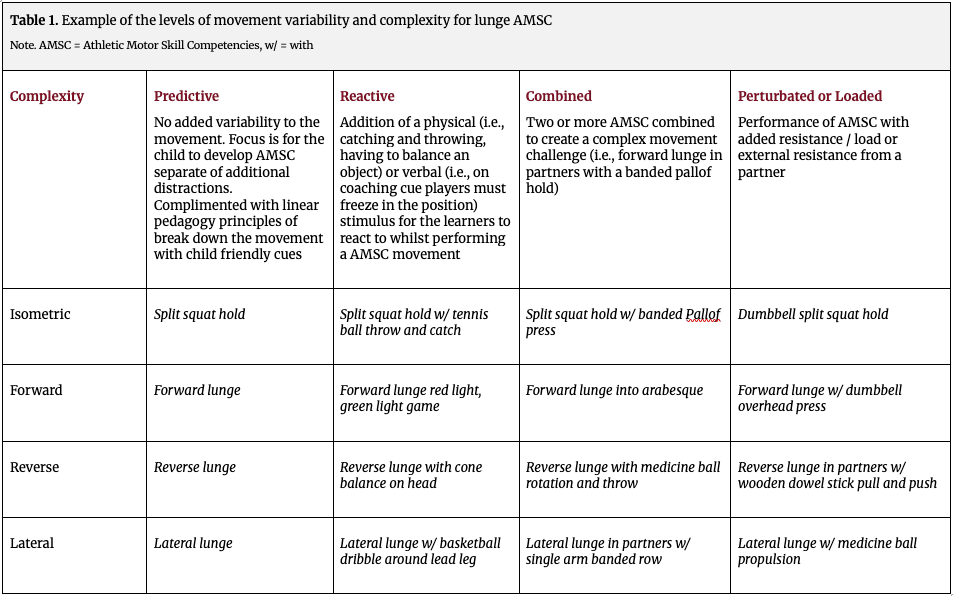
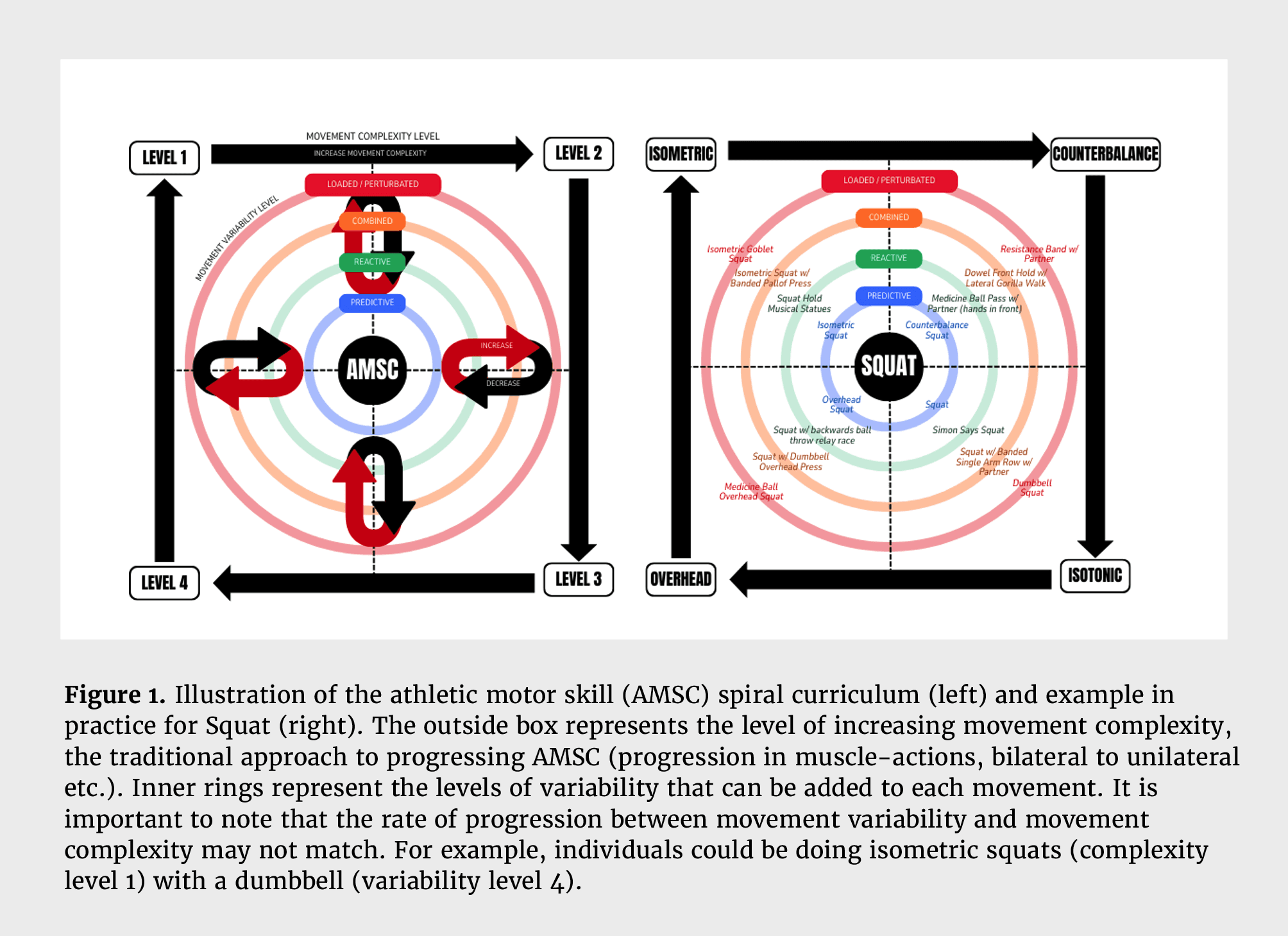
Figure 1 illustrates the overarching curriculum and provides a specific example for how this can be applied when using a squat exercise within the framework. The spiral curriculum is organised into four levels of increasing AMSC exercise complexity, as outlined by Radnor et al.68 Progression is achieved by manipulating muscle actions (isometric, eccentric, isotonic), body position (back squat vs front squat), and, when appropriate, performing exercises bilaterally or unilaterally (double leg vs single leg squat). Movement variability itself is structured into four categories; predictive, reactive, combined and loaded or perturbated (Table 1), which may be applied independently or combined (eg, a loaded reactive movement or a loaded combined movement, such as a goblet squat 'red light, green light' or a dumbbell squat-to-overhead press) to increase challenge. This variability is achieved through systematic constraint manipulation, such as coaching cues, equipment or task modifications, which encourages learners to explore movement patterns and fosters skill adaptation which is favoured over skill acquisition.45, 69, 70 Importantly, variability must remain purposeful and excessive or poorly targeted variation can become nonfunctional and hinder learning outcomes.15 Examples of applied variability for a lunge are presented in Table 1.
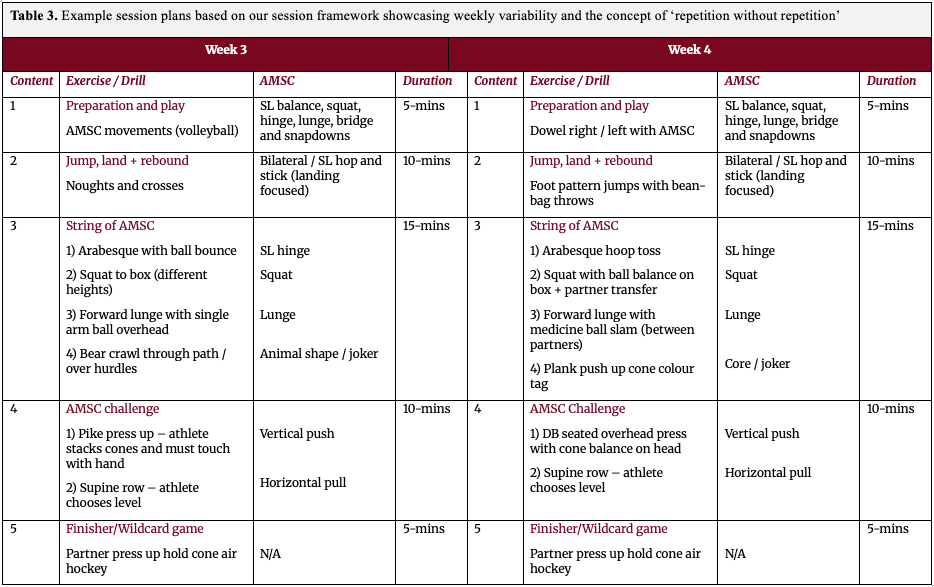
Repetition is essential for developing AMSC in young people, yet repeated practice without variation can reduce engagement and limit skill development.34 To address this, the curriculum emphasises a non-linear approach to skill practice, whereby foundational movements are revisited frequently but deliberately disguised through variations in task design, equipment use, social interaction and game-based challenges.26, 75, 81 This emphasis on variability aligns with ecological dynamics and non-linear pedagogy, which view skill development as emerging from interactions between the learner, the task and the environment,12, 17, 84 treating movement skills as adaptable solutions rather than fixed techniques and allowing children to self-organise in response to changing constraints.47 For example, children may perform an isometric squat with a Pallof press in one session and an isometric squat with a dumbbell in the next. Unlike linear approaches, which can restrict adaptability by promoting fixed techniques.39 this method fosters exploration, experimentation, enjoyment and sustained engagement. By expanding the range of exercises from four traditional progressions to up to sixteen variations, children experience 'repetition without repetition', practising essential skills repeatedly while keeping sessions dynamic and socially engaging. Such variability promotes movement adaptability, dexterity and enjoyment, fostering a sustainable learning environment tailored to the needs and preferences of young athletes.46
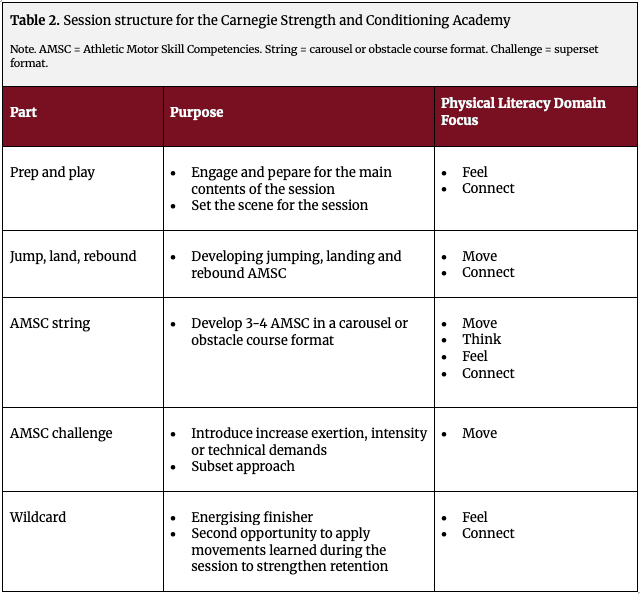
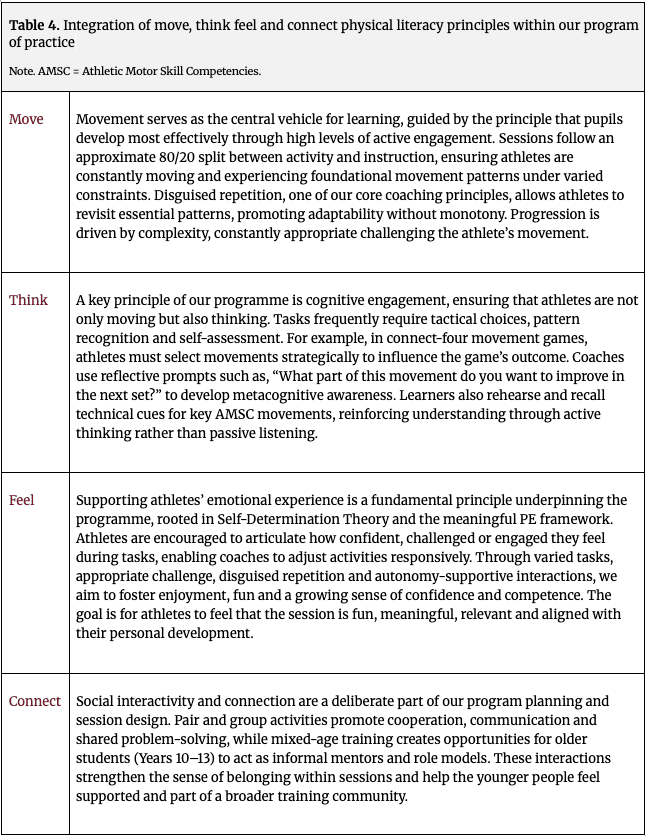
The following section describes our approach to session design and structure to deliver our curriculums and principles. Our approach to session design in grounded in delivering curriculum and principles through environments that foster MOVE, THINK, FEEL and CONNECT. These domains are essential for unlocking full engagement and supporting long-term participation in physical activity.28 Each domain holds equal importance and without purposeful considerations to facilitate each, physical literacy and lifelong involvement in physical activity are unlikely to be achieved.28 Within any given session, the emphasis may shift depending on the activity (Table 2). By involving physical literacy in our planning process, our sessions aim to nurture motivation, confidence, physical competence and knowledge to develop physical literacy.
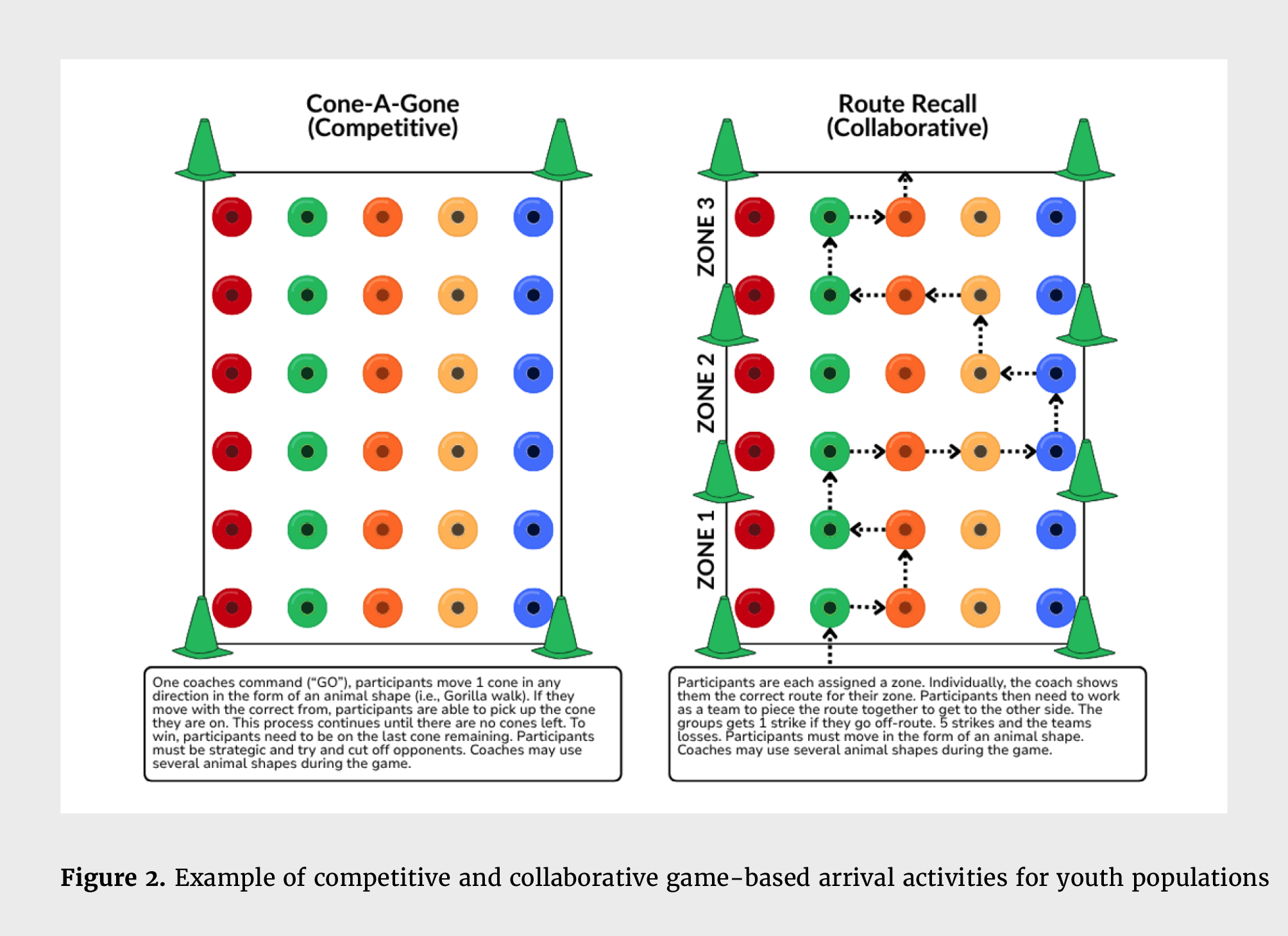
Arrival activities offer an opportunity to engage children immediately, setting the theme for the session and providing a vehicle for purposeful movement exposure from the start, whilst also raising the body’s temperature and preparing tissues for the main contents of the session.54 It is important that this part of the session is a purposeful and engaging activity, rather than relying on ‘traditional’ approaches (e.g., running laps, static stretching) or typical sports-specific warm-ups such as the FIFA 11+, which involve limited play and do little to foster engagement and motivation in children.33 For children, the use of games-based activities (eg, red-light-green-light, movement-based connect four, animal shape relay race, etc), with incorporation of overt and disguised AMSC is proposed for developing movement competency.68 These low-structure activities increase child engagement and enjoyment,83 while remaining intentionally aligned with specific movement outcomes. In doing so, the programme reflects principles evident in meaningful physical education case studies, where fun, relevance and appropriate challenge are integrated without compromising learning intentions.4, 6 Furthermore, these formats offer an opportunity for the development of skills that often receive less attention in structured training programmes such as locomotion, manipulation, throwing, catching and stabilisation.68
Including competitive elements during these activities may also increase engagement and effort levels of children participating18 and it can be assumed that many practitioners, particularly those with sports backgrounds, may gravitate towards competitive formats anyway. However, it is important to consider the balance of competition and collaboration, particularly for girls, as high-competition environments have been highlighted as potential barriers for participation in physical activity.1, 52 Thus, greater focus on non-competitive and collaborative formats that facilitate peer support may help create a more inclusive environment for young people.27 Practitioners should consider the needs and preferences of the group by offering both competitive and collaborative options. As shown in Figure 2, simple changes to constraints and rules can dictate whether an arrival activity is competitive or collaborative. While open, game-based activities likely enhance engagement, they may also compromise movement quality if the focus shifts solely to the task-outcome.68 As suggested by Radnor et al.,68 coaches should apply task constraints aimed at preserving movement quality to ensure skill development remains the priority.
Teaching children under conditions of lower fatigue allows them to explore and master more complex movements with greater success.77 After initial preparation and play, children are introduced to jumping, landing and rebounding tasks. These skills are often embedded within engaging formats with competitive (connect-4 hop and stick) games or collaborative challenges (the floor is lava hop) to sustain motivation and enjoyment. By teaching and practicing these movements before progressing to the development of fundamental movements such as squats, lunges and hinges, children can develop complex skills with minimal fatigue. This approach aligns with established guidelines that recommend structuring activities from least fatiguing to most fatiguing,55 ensuring that skill acquisition is optimised.
The main body of each session is structured around a short sequence of foundational athletic movement skill components. Limiting the focus to three or four movements allows children to encounter tasks with sufficient depth and repetition to support motor learning, while avoiding cognitive overload (Figure 3). By concentrating on a small, stable set of skills, the framework helps pupils build familiarity, confidence and movement consistency, which are precursors to long-term skill retention.72 These movements can be delivered in a carousel arrangement or an obstacle-course format. Both approaches promote autonomy, exploration and efficient use of space, while also encouraging social interaction and cooperative learning. The flexible format enables practitioners to match session flow to the group’s developmental stage and energy levels. Crucially, each movement is ‘disguised’ using equipment, social interaction, specific tasks or variations in its format. While the underlying movement pattern remains consistent across weeks, their complexity, constraints or disguise can be adapted. This approach allows practitioners to preserve the stability required for skill consolidation while introducing sufficient novelty to challenge learners and maintain enjoyment within the AMSC sequence.84
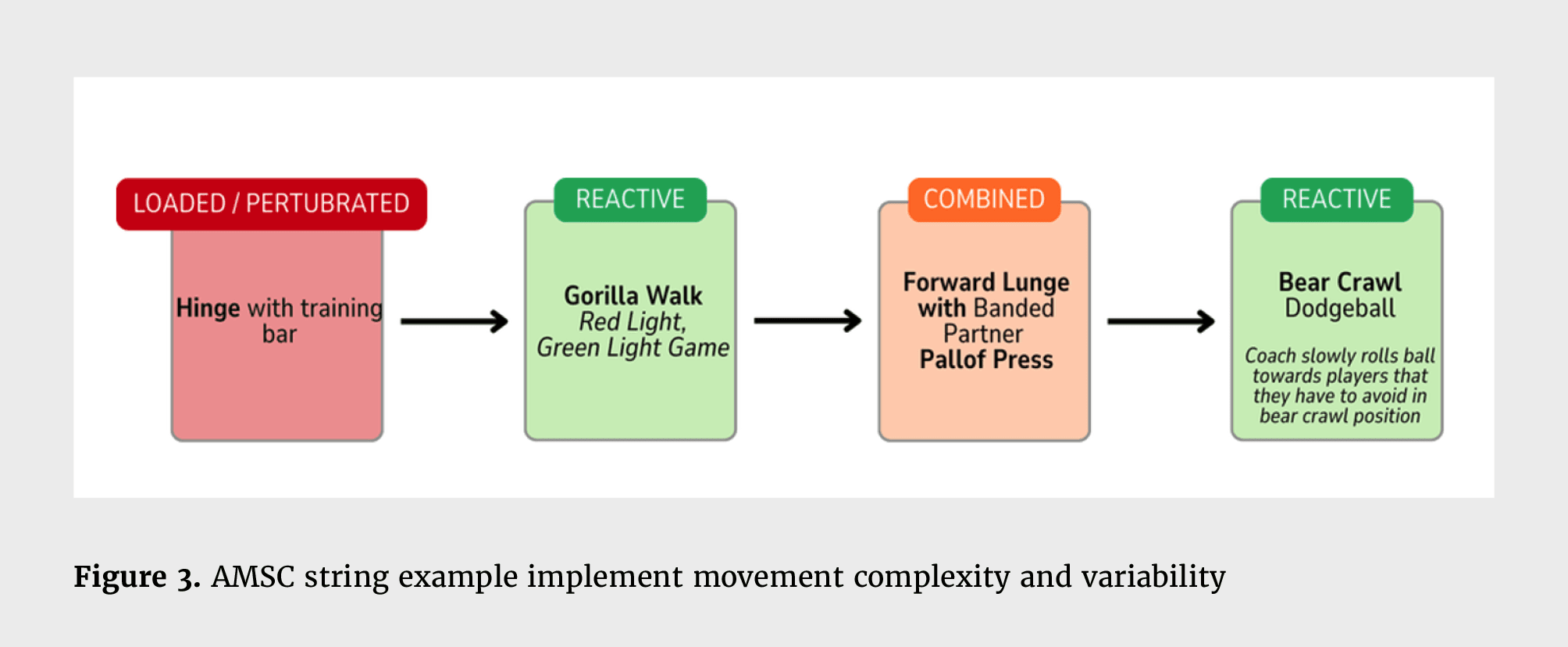
The challenge component introduces a deliberate shift in exertion, intensity or technical demand. This may take the form of a superset, a selected movement performed under time or load constraints, or a task requiring heightened precision or coordination. Pedagogically, this section leverages the motivational value of challenge. When well-scaffolded, it supports children in recognising their own progression, sustained attention and sense of achievement. The challenge can be physical eg, increased repetitions or speed, or technical eg, refining movement quality, tempo or control. This dual emphasis helps develop both physical literacy and metacognitive awareness of effort, control and execution.
The session concludes with a playful, game-based activity that intentionally revisits earlier skills in a highly engaging context. By beginning 'where we left off', children are given a second opportunity to apply movements learned during the session, strengthening retention and enabling the transfer of skills into more dynamic, unpredictable environments. It finishes the session on an energising, inclusive note, reinforcing positive attitudes towards physical activity and movement exploration.
Our academy programme adopts a youth-centred pedagogical approach guided by literature on creating meaningful experiences and grounded by physical literacy and SDT, with student voice positioned as a central design principle rather than an add-on.7, 14, 22
The programme implements a physical literacy lens through the interrelated domains of ‘move, think, feel and connect’, drawing on work that conceptualises physical literacy as a holistic, lifelong construct rather than a narrow measure of motor competence.29, 51 Table 4 provides examples of how we look to integrate these four principles within our program of practice. It is essential that all four-domains are covered to facilitated sustained engagement.28 By continually revisiting these four domains during planning and reflection, the programme aims to develop physical literacy in all athletes.
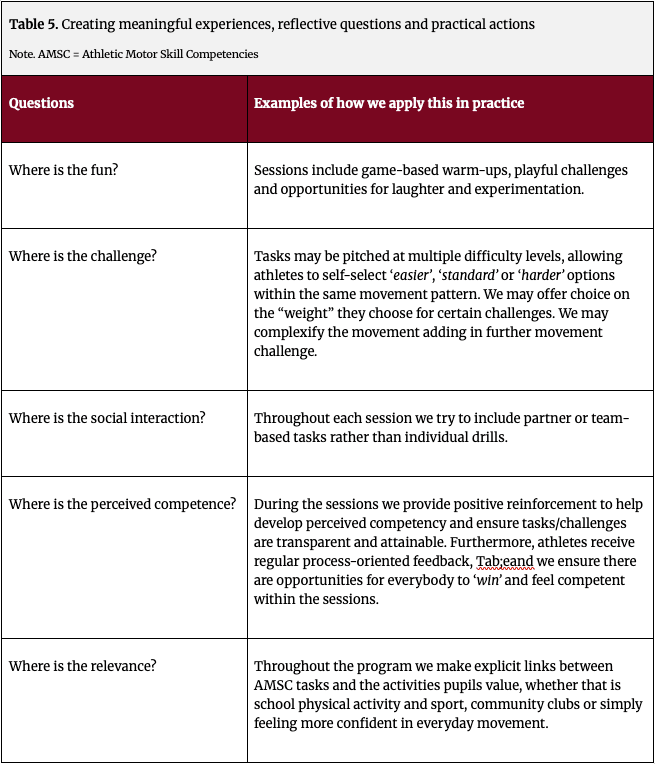
Meaningful experiences in movement and physical activity are central to the development of physical literacy, because they shape not only how people move, but how they feel, think, and value being physically active across their lives. Across the PE and youth sport literature, young people consistently describe meaningful experiences as those that are fun, appropriately challenging, socially connected, competence-affirming and personally relevant.4, 8, 26, 75 These principles offer a language and planning framework, encouraging coaches to focus not only on what is taught, but how/why tasks are organised.6, 61 Within our programme, we use this framework to check and challenge our sessions to ensure we are creating meaningful experiences for all young people who attend sessions at our academy. This mirrors the intentional, feature-based planning highlighted in primary and secondary PE studies, where teachers used the meaningfulness framework as a filter for decisions about task design, grouping, feedback and reflection.6, 36 Based on this proposed framework, Table 5 presents the types of questions, we might ask ourselves when designing sessions and reflecting on our practice, alongside practical examples of how we aim to address them. Importantly, what is meaningful is viewed as context dependent and ever-evolving, not as a fixed checklist4, 36 and as such, we revisit these questions regularly with athletes and adjust in response to their feedback about what currently is relevant to them.
Consistent with SDT-informed research on PE engagement,22, 38 within the programme we aim to support autonomy, competence and relatedness to help improve self-motivation and ultimately more positive experience for all athletes. A first point of emphasis is the development of competence, where learning experiences are shaped to help young people feel capable, confident and increasingly skilled.82 Rather than relying on dense technical breakdowns, instruction is based on brief, external and analogy-based cues that promote implicit learning and reduce self-consciousness.39 For example, hip hinge patterns are coached with cues such as: “push your hips back like a bow and arrow” or “close the cupboard/door with your bum”, while squatting is guided by “sit down like you would on a chair”. This approach aligns with evidence that overly technical instruction can heighten performance anxiety and inhibit learning and feelings of incompetency.39 Competence is further supported through deliberate use of positive reinforcement to strengthen feelings of confidence. Confidence and competence are two psychological needs that are particularly fragile during adolescence.23 Within our sessions we regularly highlight what is working or what they have improved/progressed on (eg, “you have really improved the depth of your squat”, “look at how you can now do a full push-up on the lower down box height”). Positive reinforcement is aimed at helping athletes notice their own improvements, helping develop feelings of self-competence.
Alongside competence, the programme aims to nurture autonomy by positioning coaches as facilitators who support athletes’ autonomy rather than acting as controllers.8, 26 We routinely offer choices in activity format or challenge (e.g., “how many points do you want to get too?”, “pick a weight you feel comfortable using, choose what feels right for you today” or “would you like to change anything?”) Furthermore, we invite athletes to share their perspectives (e.g., “How did that feel?”, “Do you want one more round or are you ready to move onto the upper body challenge?”) These everyday interactions are reflective of autonomy-supportive practice and research suggests they play a significant role in enhancing enjoyment and sustaining engagement.20, 56
The third SDT need, relatedness, is addressed by creating a training environment in which athletes feel understood, connected and part of a supportive learning community. One way this is enacted, is through the provision of meaningful rationales for training tasks, such as linking a lower body strength (from hinging, squatting, bridging and lunging) to kicking within football or jumping within netball. These explanations help young people see the relevance of training and understand how particular movements contribute to their broader development, thereby fostering a sense of connection both to the task and to the coaching process.21
Child voice is not treated as a one-off consultation but as an ongoing process of co-creation, sense-making and shared ownership, consistent with Lundy’s 2007 model43 of participation (space, voice, audience, influence) and activist approaches to pedagogy.14, 34, 81 Drawing from this work, our programme creates structured opportunities for pupils to contribute to what happens, how it happens and how success is judged. Part way through the program, athletes co-create a small set of session values. In one cohort, these were agreed as: “collaborative, fun and purposeful”. These values then serve as a shared reference point for decisions about activities and behaviour. During sessions, pupils use a simple thumbs system to evaluate whether the environment is aligned with these values (thumbs up), acceptable but not optimal (sideways), or off-track (down). Crucially, the check is athlete-led: coaches ask, “Where do you think we are at the moment?” rather than imposing their own judgement. This reflects Cardiff et al14 findings that children value not only having a voice but seeing that their input has influence over the lesson. Furthermore, drawing on student voice work,6, 14 we incorporate brief end-of-session conversations where athletes identify: 1) What they enjoyed; 2) What they found most challenging; 3) What they feel are key areas to work on; and 4) What they would like more of. Over time, these reflections inform programme adjustments, for example, increasing partner-based exercises when pupils emphasise social interaction.
The Carnegie S&C Academy provides a practical, evidence-informed framework for developing motor competence and physical literacy in young people. Through structured variability, playful and meaningful activities and youth-centred pedagogy, the programme nurtures competence, autonomy, relatedness and lifelong engagement in movement. This approach demonstrates how integrating physical, cognitive, affective and social domains within a flexible curriculum can address contemporary declines in youth physical activity, promoting holistic development and sustainable participation across diverse movement, physical activity and sport contexts.
1. Allender, S., G. Cowburn, and C. Foster. Understanding participation in sport and physical activity among children and adults: a review of qualitative studies. Health education research, 2006. 21(6): p. 826-835.
2. Balyi, I. and A. Hamilton. Long-term athlete development: Trainability in childhood and adolescence. Olympic coach, 2004. 16(1): p. 4-9.
3. Beni, S. Teachers’ Experiences of Implementing a Pedagogical Approach for Meaningful Physical Education. 2021.
4. Beni, S., T. Fletcher, and D.N. Chróinín. ‘It's not a linear thing; there are a lot of intersecting circles': Factors influencing teachers' implementation of Meaningful Physical Education. Teaching and Teacher Education, 2022. 117: p. 103806.
5. Beni, S., T. Fletcher, and D.N. Chróinín. Two teachers’ positioning toward Meaningful PE: agency, sensemaking and ownership. Physical Education and Sport Pedagogy, 2024: p. 1-13.
6. Beni, S., T. Fletcher, and D.N. Chróinín. Using features of meaningful experiences to guide primary physical education practice. European Physical Education Review, 2019. 25(3): p. 599-615.
7. Beni, S., T. Fletcher, and D. Ní Chróinín. Meaningful experiences in physical education and youth sport: A review of the literature. Quest, 2017. 69(3): p. 291-312.
8. Beni, S., D. Ní Chróinín, and T. Fletcher. A focus on the how of meaningful physical education in primary schools. Sport, Education and Society, 2019. 24(6): p. 624-637.
9. Beni, S., et al. Teachers’ sensemaking in implementation of Meaningful Physical Education. Physical Education and Sport Pedagogy, 2025. 30(6): p. 593-606.
10. Bergeron, M.F., et al. International Olympic Committee consensus statement on youth athletic development. British Journal of Sports Medicine, 2015. 49(13): p. 843-851.
11. Burton, A.M., et al. Motor Competence, Physical Fitness, Psychosocial, and Physical Activity Characteristics in 9-to 14-Year-Olds: Sex Differences and Age and Maturity Considerations. Research Quarterly for Exercise and Sport, 2025. 96(1): p. 171-182.
12. Button, C., et al. Dynamics of skill acquisition: An ecological dynamics approach. 2021: Human Kinetics Publishers.
13. Caine, D., N. Maffulli, and C. Caine. Epidemiology of injury in child and adolescent sports: injury rates, risk factors, and prevention. Clinics in sports medicine, 2008. 27(1): p. 19-50.
14. Cardiff, G., et al. ‘Just let them have a say!’Students’ perspective of student voice pedagogies in primary physical education. Irish Educational Studies, 2023. 42(4): p. 659-676.
15. Cardis, M., M. Casadio, and R. Ranganathan. High variability impairs motor learning regardless of whether it affects task performance. Journal of Neurophysiology, 2018. 119(1): p. 39-48.
16. Carter, C.W. and L.J. Micheli. Training the child athlete: physical fitness, health and injury. British Journal of Sports Medicine, 2011. 45(11): p. 880-885.
17. Chow, J.Y., et al. Ecological dynamics and transfer from practice to performance in sport. Skill Acquisition in Sport, 2019: p. 330-344.
18. Cooke, A., et al. The effects of individual and team competitions on performance, emotions and effort. Journal of Sport and Exercise Psychology, 2013. 35(2): p. 132-143.
19. Côté, J. and M. Vierimaa. The developmental model of sport participation: 15 years after its first conceptualization. Science & Sports, 2014. 29: p. S63-S69.
20. Cowley, E.S., et al. “Girls aren’t meant to exercise”: Perceived influences on physical activity among adolescent girls—The HERizon Project. Children, 2021. 8(1): p. 31.
21. Cronin, L., et al. A self-determination theory based investigation of life skills development in youth sport. Journal of Sports Sciences, 2022. 40(8): p. 886-898.
22. Curran, T. and M. Standage. Psychological needs and the quality of student engagement in physical education: Teachers as key facilitators. Journal of Teaching in Physical Education, 2017. 36(3): p. 262-276.
23. Deci, E.L. and R.M. Ryan. The" what" and" why" of goal pursuits: Human needs and the self-determination of behavior. Psychological Inquiry, 2000. 11(4): p. 227-268.
24. DiFiori, J.P., et al. Overuse injuries and burnout in youth sports: a position statement from the American Medical Society for Sports Medicine. British Journal of Sports Medicine, 2014. 48(4): p. 287-288.
25. Dismore, H. and R. Bailey. Fun and enjoyment in physical education: Young people’s attitudes. Research papers in education, 2011. 26(4): p. 499-516.
26. Domville, M., et al. Children’s perceptions of factors that influence PE enjoyment: A qualitative investigation. Physical Education and Sport Pedagogy, 2019. 24(3): p. 207-219.
27. Duffey, K., et al. Barriers and facilitators of physical activity participation in adolescent girls: a systematic review of systematic reviews. Frontiers in Public Health, 2021. 9: p. 743935.
28. Durden-Myers, E.J. Operationalising physical literacy within physical education teaching practice through professional development. 2020.
29. Durden-Myers, E.J. and S. Keegan. Physical literacy and teacher professional development. Journal of Physical Education, Recreation & Dance, 2019. 90(5): p. 30-35.
30. Emery, C. and H. Tyreman. Sport participation, sport injury, risk factors and sport safety practices in Calgary and area junior high schools. Paediatrics & Child Health, 2009. 14(7): p. 439-444.
31. Fabricant, P.D., et al. Youth sports specialization and musculoskeletal injury: a systematic review of the literature. The Physician and Sportsmedicine, 2016. 44(3): p. 257-262.
32. Faigenbaum, A.D., et al. Citius, Altius, Fortius: beneficial effects of resistance training for young athletes: narrative review. British Journal of Sports Medicine, 2016. 50(1): p. 3-7.
33. Franchina, M., et al. FIFA 11+ Kids: Challenges in implementing a prevention program. Journal of Children's Orthopaedics, 2023. 17(1): p. 22-27.
34. Gray, S., J. Treacy, and E.T. Hall. Re-engaging disengaged pupils in physical education: An appreciative inquiry perspective. Sport, Education and Society, 2019. 24(3): p. 241-255.
35. Harden, R.M. What is a spiral curriculum? Medical Teacher, 1999. 21(2): p. 141-143.
36. Harding-Kuriger, J. Conceptualizing meaningful physical education: A secondary school study. 2021.
37. Hardy, L.L., et al. Prevalence and correlates of low fundamental movement skill competency in children. Pediatrics, 2012. 130(2): p. e390-e398.
38. Haug, E., et al. Body-related concerns and participation in physical education among adolescent students: the mediating role of motivation. Frontiers in Psychology, 2023. 14: p. 1266740.
39. Helme, M., I. Cowburn, and K. Till. Developing the Physical Fitness of Children: A Systematic Scoping Review of Pedagogy in Research. Sports, 2025. 13(9): p. 309.
40. Hurter, L., et al. Physical literacy consensus for England: Evidence review. 2022.
41. Jayanthi, N., et al. Sports specialization in young athletes: evidence-based recommendations. Sports Health, 2013. 5(3): p. 251-257.
42. Jayanthi, N.A., et al. Health consequences of youth sport specialization. Journal of Athletic Training, 2019. 54(10): p. 1040-1049.
43. Kennan, D., B. Brady, and C. Forkan. Space, voice, audience and influence: The Lundy model of participation (2007) in child welfare practice. Practice, 2019. 31(3): p. 205-218.
44. Koedijker, J.M., et al. Attention and time constraints in perceptual-motor learning and performance: Instruction, analogy, and skill level. Consciousness and Cognition, 2011. 20(2): p. 245-256.
45. Komar, J., et al. Narrowing the coordination solution space during motor learning standardizes individual patterns of search strategy but diversifies learning rates. Scientific Reports, 2023. 13(1): p. 2009.
46. Lindsay, R. and M. Spittle. The adaptable coach–a critical review of the practical implications for traditional and constraints-led approaches in sport coaching. International Journal of Sports Science & Coaching, 2024. 19(3): p. 1240-1254.
47. Lindsay, R.S., et al. The influence of linear and nonlinear pedagogies on movement exploration of a weightlifting skill. Acta Psychologica, 2025. 258: p. 105212.
48. Lloyd, R.S., et al. National Strength and Conditioning Association position statement on long-term athletic development. Journal of Strength and Conditioning Research, 2016. 30(6): p. 1491-1509.
49. Lloyd, R.S. and J.L. Oliver. The youth physical development model: A new approach to long-term athletic development. Strength & Conditioning Journal, 2012. 34(3): p. 61-72.
50. Lloyd, R.S., et al. Long-term athletic development-part 1: a pathway for all youth. The Journal of Strength & Conditioning Research, 2015. 29(5): p. 1439-1450.
51. Lyngstad, I. and E. Sæther. The concept of ‘friluftsliv literacy’ in relation to physical literacy in physical education pedagogies. Sport, Education and Society, 2021. 26(5): p. 514-526.
52. Martins, J., et al. Adolescents’ perspectives on the barriers and facilitators of physical activity: a systematic review of qualitative studies. Health Education Research, 2015. 30(5): p. 742-755.
53. Masters, R.S. Theoretical aspects of implicit learning in sport. International Journal of Sport Psychology, 2000.
54. McGowan, C.J., et al. Warm-up strategies for sport and exercise: mechanisms and applications. Sports Medicine, 2015. 45(11): p. 1523-1546.
55. McGuigan, M. Principles of test selection and administration. Essentials of Strength Training and Conditioning, 4th ed.; Haff, GG, Triplett, NT, Eds, 2016: p. 249-258.
56. Mitchell, F., S. Gray, and J. Inchley. ‘This choice thing really works…’ Changes in experiences and engagement of adolescent girls in physical education classes, during a school-based physical activity programme. Physical Education and Sport Pedagogy, 2015. 20(6): p. 593-611.
57. Moody, J.A., F. Naclerio, and P. Green. Motor skill development in youths, Strength and Conditioning for Young Athletes. 2013, Routledge. p. 71-87.
58. Myer, G.D., et al. When to initiate integrative neuromuscular training to reduce sports-related injuries and enhance health in youth? Current Sports Medicine Reports, 2011. 10(3): p. 155-166.
59. Myer, G.D., et al. The influence of age on the effectiveness of neuromuscular training to reduce anterior cruciate ligament injury in female athletes: a meta-analysis. The American Journal of Sports Medicine, 2013. 41(1): p. 203-215.
60. Newlove-Delgado, T. et al., Mental Health of Children and Young People in England, 2022-wave 3 follow up to the 2017 survey. 2022.
61. Ní Chróinín, D., et al. Using meaningful experiences as a vision for physical education teaching and teacher education practice. Physical Education and Sport Pedagogy, 2019. 24(6): p. 598-614.
62. Ogden, C.L., et al. Trends in obesity prevalence among children and adolescents in the United States, 1988-1994 through 2013-2014. Jama, 2016. 315(21): p. 2292-2299.
63. Pearce, M., et al. Association between physical activity and risk of depression: a systematic review and meta-analysis. JAMA Psychiatry, 2022. 79(6): p. 550-559.
64. Penney, D., et al. Curriculum, pedagogy and assessment: Three message systems of schooling and dimensions of quality physical education. Sport, Education and Society, 2009. 14(4): p. 421-442.
65. Pichardo, A.W., et al. Integrating models of long-term athletic development to maximize the physical development of youth. International Journal of Sports Science & Coaching, 2018. 13(6): p. 1189-1199.
66. Pullen, B.J., et al. Assessing athletic motor skill competencies in youths: a narrative review of movement competency screens. Strength & Conditioning Journal, 2022. 44(1): p. 95-110.
67. Pullen, B.J., et al. The effects of strength and conditioning in physical education on athletic motor skill competencies and psychological attributes of secondary school children: A pilot study. Sports, 2020. 8(10): p. 138.
68. Radnor, J.M., et al. Developing athletic motor skill competencies in youth. Strength & Conditioning Journal, 2020. 42(6): p. 54-70.
69. Ranganathan, R., M.-H. Lee, and K.M. Newell. Repetition without repetition: Challenges in understanding behavioral flexibility in motor skill. Frontiers in Psychology, 2020. 11: p. 2018.
70. Renshaw, I., et al. Talent identification and development in sport: international perspectives. 2012.
71. Sandercock, G.R. and D.D. Cohen. Temporal trends in muscular fitness of English 10-year-olds 1998–2014: An allometric approach. Journal of Science and Medicine in Sport, 2019. 22(2): p. 201-205.
72. Schmidt, R.A., et al. Motor control and learning: A behavioral emphasis. 2018: Human kinetics.
73. Sport-England. Physical Literacy Consensus Statement for England published. 2023; Available from: https://www.sportengland.org/news-and-inspiration/physical-literacy-consensus-statement-england-published?
74. Steinberg, L., et al. Around the world, adolescence is a time of heightened sensation seeking and immature self‐regulation. Developmental Science, 2018. 21(2): p. e12532.
75. Tannehill, D., et al. What young people say about physical activity: the Children's Sport Participation and Physical Activity (CSPPA) study. Sport, Education and Society, 2015. 20(4): p. 442-462.
76. Till, K., et al. Challenges and Solutions to Supporting Physical Literacy within Youth Sport. Sports Medicine, 2025: p. 1-13.
77. Tomporowski, P.D. et al., Exercise and children’s intelligence, cognition, and academic achievement. Educational Psychology Review, 2008. 20(2): p. 111-131.
78. Tremblay, M.S., et al. Canadian 24-hour movement guidelines for children and youth: an integration of physical activity, sedentary behaviour, and sleep. Applied Physiology, Nutrition, and Metabolism, 2016. 41(6): p. S311-S327.
79. Tubić, T., et al. Loneliness in sports active and non-active school-age children: Can sport protect children against loneliness? Frontiers in Psychiatry, 2023. 13: p. 1063714.
80. Varghese, M., S. Ruparell, and C. LaBella. Youth athlete development models: a narrative review. Sports Health, 2022. 14(1): p. 20-29.
81. Walseth, K., B. Engebretsen, and L. Elvebakk. Meaningful experiences in PE for all students: An activist research approach. Physical Education and Sport Pedagogy, 2018. 23(3): p. 235-249.
82. Whitehead, M. Physical literacy: Throughout the lifecourse. 2010: Routledge.
83. Williams, M.D., A. Hammond, and J. Moran. Beyond athletic development: The effects of parkour-based versus conventional neuromuscular exercises in pre-adolescent basketball players. Plos One, 2023. 18(7): p. e0288439.
84. Wood, M.A., et al. Learning to coach: An ecological dynamics perspective. International Journal of Sports Science & Coaching, 2023. 18(2): p. 609-620.
85. Wulf, G. Attentional focus and motor learning: a review of 15 years. International Review of Sport and Exercise Psychology, 2013. 6(1): p. 77-104.
86. Zelenović, M., et al. Barriers to physical activity in adolescents: A systematic review. Turkish Journal of Kinesiology, 2021. 7(1): p. 22-30.

Postdoctoral Researcher at Leeds Beckett University, Leader within the Centre for Child and Adolescent Physical Literacy and UKSCA Accredited Strength & Conditioning Coach. Ffion’s work focuses on enhancing physical literacy, movement competency and holistic development, bridging evidence-based research with practical coaching to help young athletes achieve their full potential.

Jake Beech is a Postdoctoral Researcher at the Carnegie School of Sport, Leeds Beckett University and a Strength and Conditioning Coach. He currently works with The Football Association, supporting England women’s youth national teams and contributing to the applied practice of athletic development within the women’s club talent pathway.

Kevin Till is a Professor of Athletic Development and Director of the Centre for Child and Adolescent Physical Literacy within the Carnegie School of Sport at Leeds Beckett University. Kevin is a UKSCA accredited coach currently working with Leeds Rhinos RLFC academy and supporting schools with Athletic Development provision.